Perfect B, Doral Fl. | 07.14.25 | 5 min read.
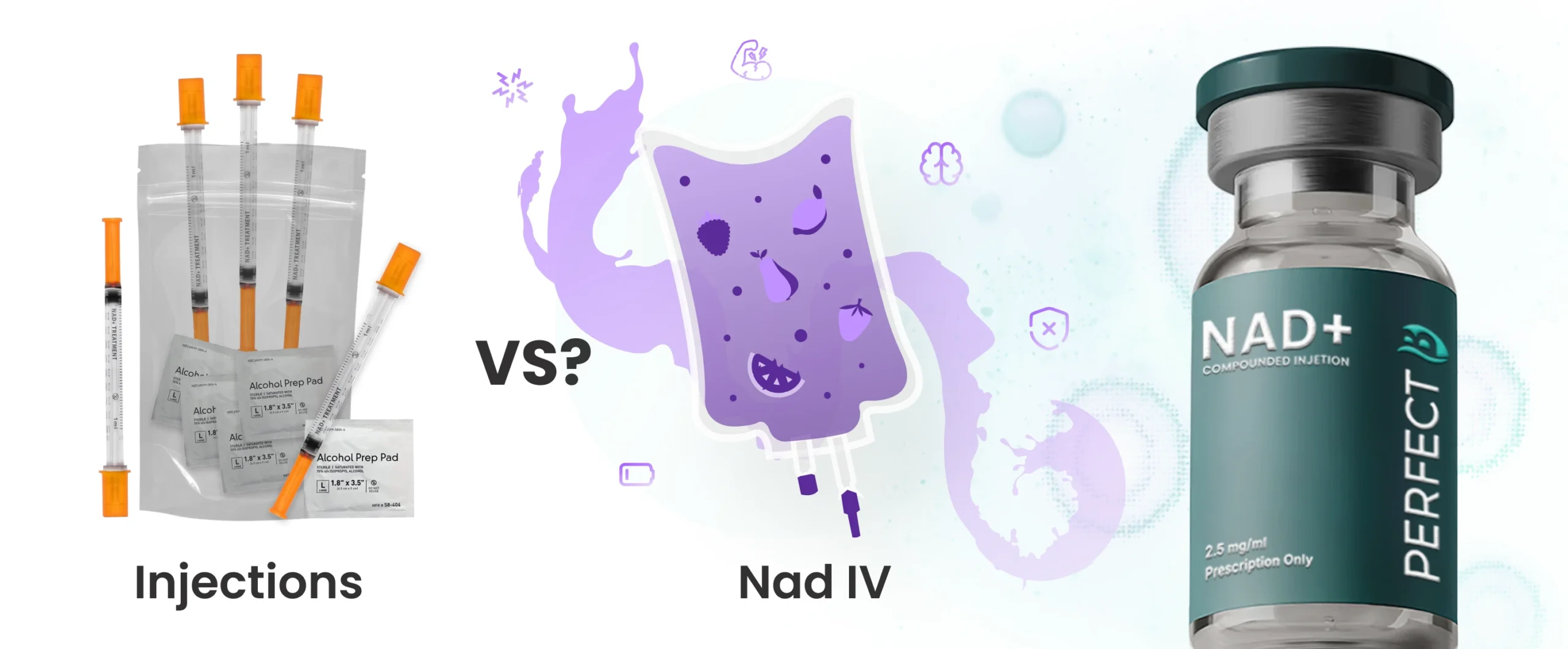
When exploring the benefits of NAD+ supplementation, the delivery method matters more than most people realize. Whether through NAD injection, NAD infusion, NAD IV therapy, or NAD intravenous therapy, the ultimate goal remains the same: to restore cellular energy, enhance cognitive function, and improve overall vitality. However, how you receive NAD+ can directly impact your experience; including the likelihood of uncomfortable side effects.
At Perfect B, our clinical experience and patient feedback have made one thing clear: for most individuals, NAD injection protocols offer the most balanced combination of safety, efficiency, and comfort.
➔ Want to understand how our subcutaneous NAD protocols minimize side effects compared to infusions? Learn more about our NAD injection consultation process and long-term therapy options here.
Understanding NAD and Its Delivery Methods
NAD (Nicotinamide Adenine Dinucleotide) is a vital coenzyme present in every cell of the body. It supports mitochondrial function, DNA repair, and energy metabolism. With age and stress, NAD+ levels decline, often leading to fatigue, brain fog, and reduced physical recovery. That’s where NAD+ therapy comes in.
Delivery Options and How They Differ
Common delivery options include:
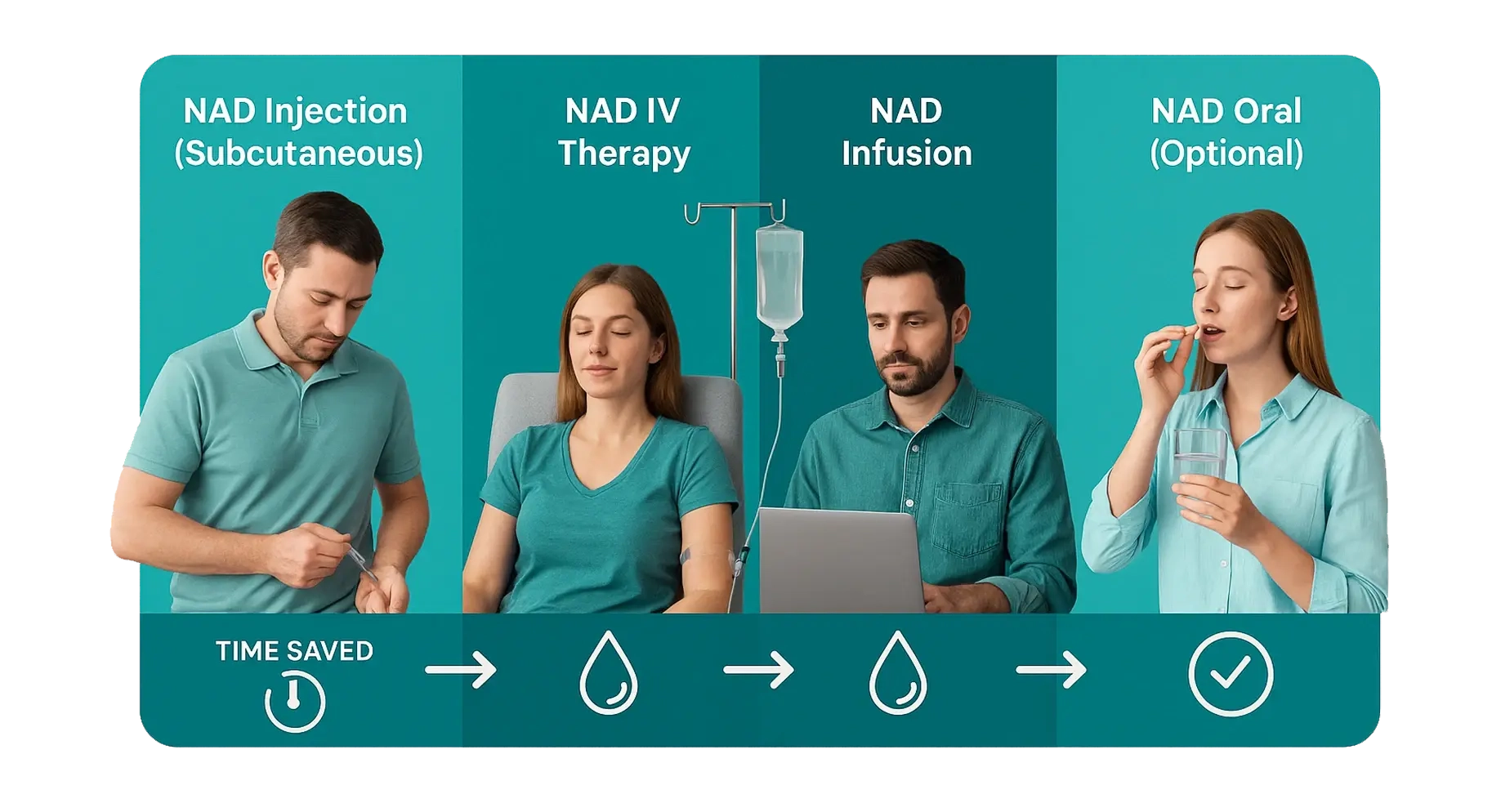
1. NAD IV therapy or NAD intravenous therapy: Delivers NAD+ via a slow-drip infusion, often over 1 to 4 hours.
2. NAD infusion: Typically synonymous with IV therapy, administered in higher doses at a clinic.
3. NAD shots or NAD injection: Lorem ipsum dolor sit amet, consectetuer adipiscing elit, sed diam nonummy
➔ Want to explore how NAD+ is integrated into regenerative medicine at our clinic? Discover our clinical applications of NAD in regenerative wellness.
Why NAD Injection Is Our Preferred Method?
We chose to specialize in NAD injection protocols for one reason: patient comfort and tolerability. While NAD infusion and NAD IV therapy offer direct access to the bloodstream and near-total absorption, they often come with side effects that can be challenging for many patients.
Common Side Effects of NAD IV Therapy
Typical side effects of NAD intravenous therapy include:
- Headache
- Flushing or warmth
- Nausea
- Headache
These symptoms occur due to rapid vasodilation caused by high-dose infusions. While slowing down the drip rate can help reduce discomfort, the side effects are still common and can turn an otherwise beneficial treatment into an uncomfortable experience.
(…) Different sources discuss how NAD intravenous therapy is not one-size-fits-all and may trigger elevated hs-CRP markers of inflammation. See this NAD intravenous therapy safety study on PubMed.
Our Subcutaneous Injection Protocol
Instead of large-dose infusions, we divide the same amount of NAD+ into multiple subcutaneous injections over time. For example, our patients may receive five NAD shots per week for up to six weeks.
This protocol offers distinct benefits:
- Gradual NAD+ buildup in the system
- Reduced risk of acute side effects
- Quick 5-minute sessions
- Sustainable improvement in energy and mental clarity
➔ Looking for an effective way to avoid NAD+ side effects without compromising on results? Read about our subcutaneous NAD injection method here.
Comparing NAD Infusion vs Injection: Effectiveness and Usability
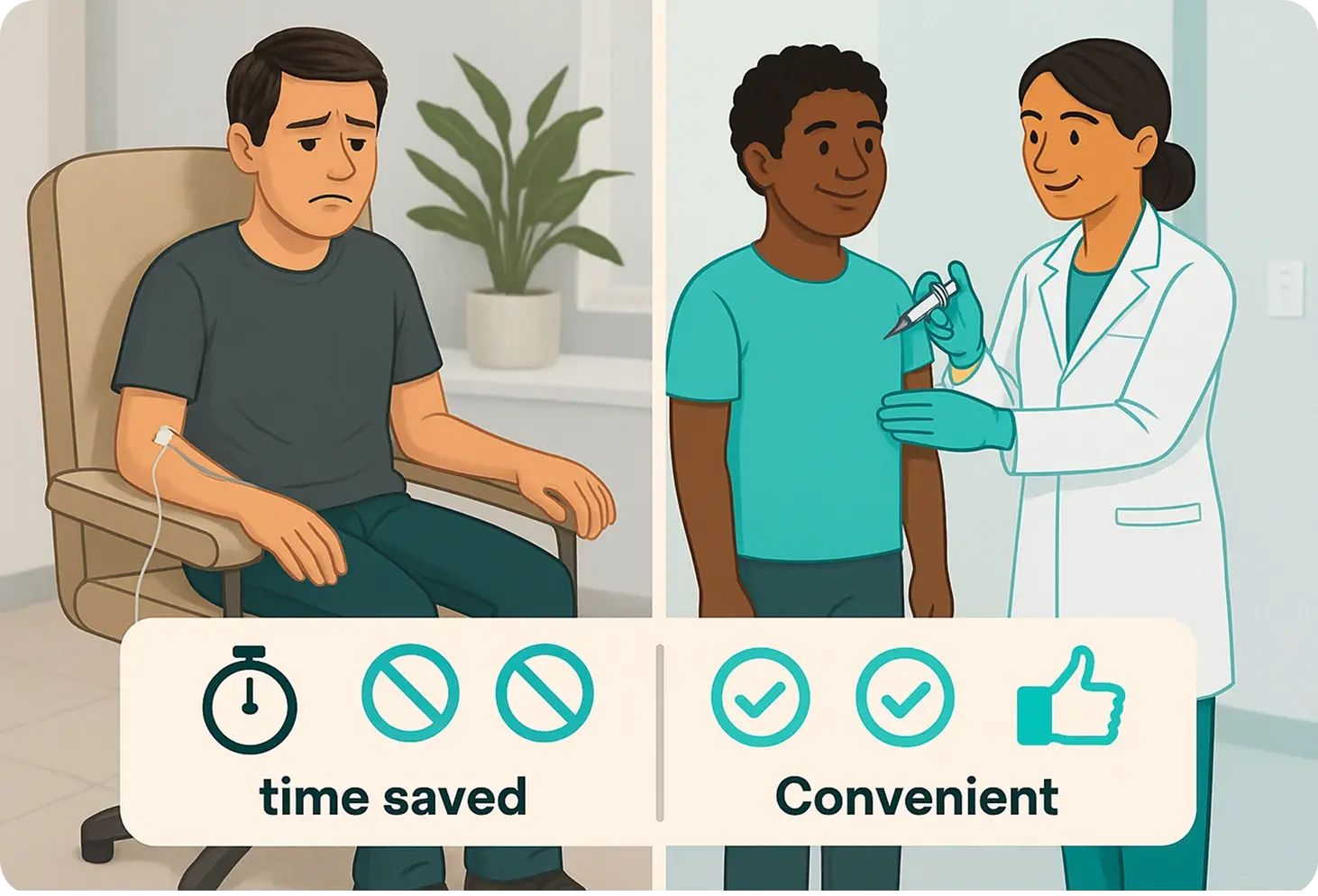
Let’s compare side-by-side:
| Feature | NAD Infusion / IV Therapy | NAD Injection (Subcutaneous) |
|---|---|---|
| Administration Time | 1 to 4 hours per session | 5 minutes per session |
| Side Effects | Common (nausea, flushing, etc.) | Minimal to none |
| Dosing Approach | High-dose, single-session | Low-dose, multi-session |
| Comfort & Convenience | Requires clinical setting | Suitable for on-the-go routines |
| Supervision Needed | Yes | Yes (but less intensive) |
While NAD IV therapy is still suitable in specific use cases like acute recovery or chronic fatigue flare-ups, we find that for long-term, lifestyle-enhancing protocols, NAD injections deliver better outcomes with far fewer drawbacks.
(…) Research comparing NAD bioavailability supports sustained, lower-dose administration over bolus IV therapy. See this NAD+ bioavailability study in Cell Metabolism.
What Patients Are Saying About NAD Shots
Most patients who switch from NAD infusion to NAD injection report:
- Increasing of NAD injections benefits without the headaches.
- No more sitting in a chair for hours. This is easy to fit into my week.
- Mental clarity build up steadily instead of being hit with a flush.”
Want to know if NAD shots can support your focus, energy, and longevity goals? Check your eligibility on our NAD+ therapy page.
General testimonials reflect a recurring theme: better control, fewer side effects, and improved compliance.
Nad side effects: Choosing the Right NAD+ Delivery Method
If you’re considering NAD+ therapy and are worried about tolerability, convenience, or efficiency, it’s worth asking yourself:
- Do you want rapid results with possible discomfort? (NAD IV therapy)
- Or a more gradual, side-effect-free journey to restored energy and focus? (NAD injection)
At Perfect B, we believe the latter offers a safer, more sustainable pathway to long-term wellness. NAD shots help you harness the benefits of this powerful coenzyme without the uncomfortable trade-offs.
➔ Looking for professional guidance on NAD injection vs NAD infusion? Book your consultation with our expert team today.
References
- Grant, R. et al. (2019). “Intravenous NAD+ in the treatment of chronic fatigue syndrome: A review of safety and side effect profile.” Frontiers in Aging Neuroscience, 11, 257. https://doi.org/10.3389/fnagi.2019.00257.
- Martens, C.R. et al. (2018). “Chronic nicotinamide riboside supplementation is well-tolerated and elevates NAD+ levels in healthy middle-aged and older adults.” Nature Communications, 9(1), 1286. https://doi.org/10.1038/s41467-018-03421-7.
- Trammell, S.A.J., & Brenner, C. (2013). “Targeted, Low-Dose NAD+ Delivery Yields Superior Systemic Bioavailability.” Cell Metabolism, 17(6), 1001–1010. https://doi.org/10.1016/j.cmet.2013.04.003.