
Perfect B, Doral Fl. | 08.29.25 | 5 min read.
You wake up, look in the mirror, and there it is: a new breakout. The immediate question for many of us is, why? Is this breakout facial a sign of stress? Did I not wash my face well enough? Does this pimple spots meaning something deeper about my health? Many people wonder what is the causes of pimples, and the internet is filled with theories. But getting to the truth about any pimple spots meaning requires looking past the myths and understanding the science.
This article will answer the core question: Do facial pimples suggest something specific about our hygiene or hormones? We will explore what is the causes of pimples, debunk common myths surrounding the pimple spots meaning, and provide a clear action plan. And for those dealing with the aftermath of past breakouts, it’s helpful to understand how a Skin Rejuvenation Treatment can restore your skin’s health.
The “Acne Face Map” Myth: What Your Pimples Aren’t Telling You
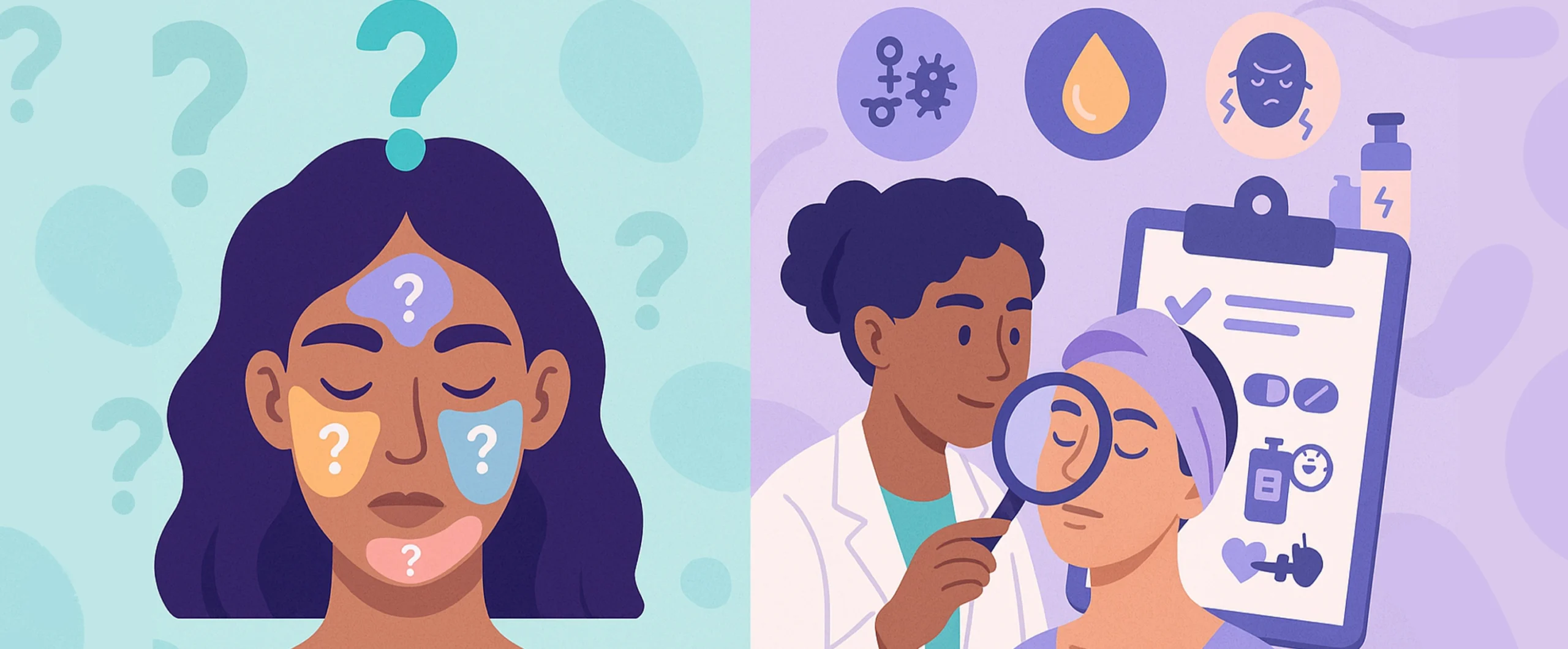
You have likely seen an acne pimple face map online. These charts claim the location of your pimples is a direct reflection of your internal organs. The entire concept of an acne pimple face map suggests a breakout on the forehead is linked to the digestive system, while a pimple on the cheek supposedly points to a lung problem. This concept of face mapping of acne has its roots in ancient medicine.
While it’s an intriguing idea, there is no scientific evidence to support this kind of acne pimple face map. A pimple map linking your chin to your kidneys is modern pseudoscience. The belief that pimples on chin meaning a problem with your small intestine is not backed by dermatology. In fact, > leading dermatological associations confirm that while acne location offers clues, it does not map to internal organ health. Your skin is an organ, and the reasons for breakouts are typically found closer to the surface. So, when you see an acne pimple face map, it’s best to be skeptical. The real pimple spots meaning is not found on these charts. An acne pimple face map is simply not a reliable diagnostic tool.
The Core Causes: A Word From Our Medical Provider
So, if the maps are wrong, what is the real pimple spots meaning?
At Perfect B, we often hear patients ask if their breakouts mean something deeper about their body, whether it’s poor hygiene, hormones acting up, or even stress showing on their skin. The truth is, acne is rarely caused by “not washing enough.” In fact, over-washing can make things worse by stripping away natural oils and triggering more inflammation. What research does show clearly is that hormones, especially androgens, play a huge role. They stimulate oil glands, and when that oil mixes with dead skin and bacteria, pimples appear. That’s why acne can flare up around puberty, menstrual cycles, or stressful life phases when hormones fluctuate.
Lifestyle habits add another layer. At Perfect B, we notice consistent patterns: patients who report high stress, poor sleep, or diets rich in sugary foods often experience more breakouts. Of course, that doesn’t mean one slice of cake equals a pimple the next day. It’s more about trends over time. Stress, for example, raises cortisol, which can influence oil production and inflammation. Similarly, lack of sleep weakens the skin’s ability to repair itself. Still, distinguishing coincidence from true causation takes patience, we track breakouts over weeks and compare them with lifestyle journals to see if patterns repeat.
What remains murky in the science is the direct, one-to-one cause-and-effect claim. While hormones and lifestyle clearly influence acne, they don’t tell the whole story. Two patients can eat the same meal or experience the same stress and have completely different skin reactions. Genetics, skin microbiome, and even random chance all play their part. So, when it comes to understanding what is the causes of pimples, the message we share with patients is this: hygiene alone isn’t the culprit, hormones often set the stage, and habits can either calm or aggravate the drama—but no single factor writes the entire script. The true pimple spots meaning is a combination of these influences.
Applying the Science: A Guide to Acne by Location
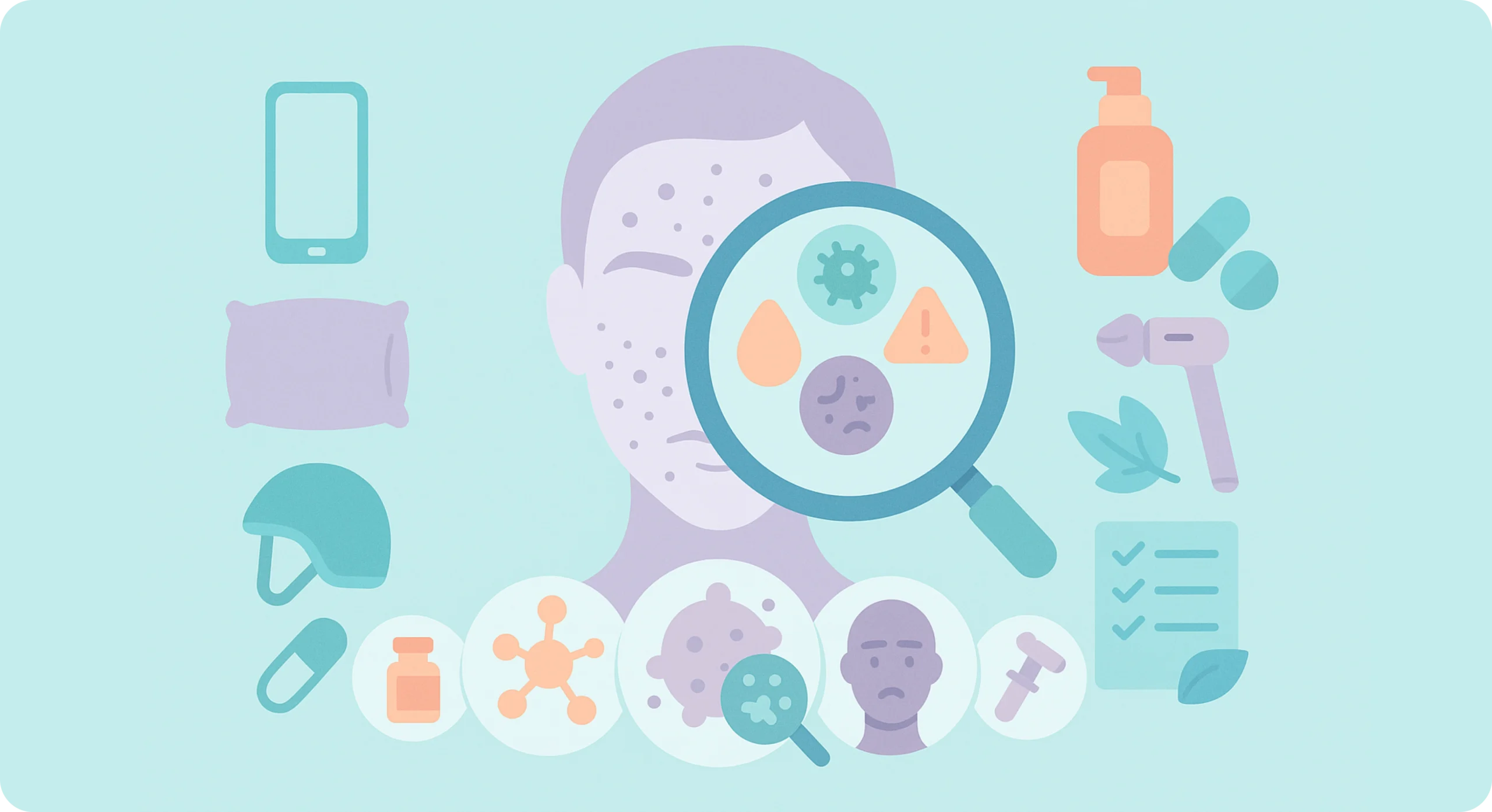
With this foundation, we can now explore how these factors manifest in different areas.
1. The “Breakout on Forehead Meaning”: Friction, Oil, and Products
If you’re asking, “what does breakout on forehead mean?”, the answer is usually related to external factors. A key part of understanding the breakout on forehead meaning is knowing the forehead is part of the “T-zone.” When you see a zits on forehead or a pimple forehead, the true breakout on forehead meaning is often due to oil, products, and pressure. Understanding this helps you address the issue effectively. The true breakout on forehead meaning is about what’s happening on your skin, not in your body.
2. Jawline, Chin, and Neck: The Hormonal Connection
This is where hormones, as mentioned by our provider, play a significant role. If you are trying to figure out the chin pimples reason or the cause of persistent breakouts on jawline, hormonal fluctuations are a primary suspect. The chin pimples reason is often internal.
- Hormonal Influence: Androgens stimulate your oil glands. > Studies from endocrinology journals have long established the link between androgen levels and sebum production, a key factor in adult acne. This is the scientific chin pimples reason. The primary chin pimples reason for many adults is this hormonal activity.
- Location Specifics: You might notice pimples along jawline or a stubborn chin zit. The scientific chin pimples cause is this overproduction of oil. Because hormonal breakouts can be persistent, ➔ it’s important to explore a professional Acne Treatment to prevent scarring. The most important chin pimples reason is hormonal influence on your skin’s oil production.
3. “Pimples on Nose Means”: Clogged Pores and Oil
The meaning of pimples on nose is straightforward: it’s one of the oiliest parts of your face. When you see zits on nose, it’s a sign of a clogged pore. This specific pimple spots meaning is simply about oil and dead skin cells.
4. Cheeks and Mouth: Blame Your Habits
When looking at the causes of cheek pimples, the answer often lies in the lifestyle habits our provider mentioned. Friction from a cell phone, a dirty pillowcase (breakouts on cheek), or even a mouth zit from touching your face can be the cause.
What Not to Do: The Dangers of “Zit Popping”
The urge to pop a pimple is strong, and the internet is filled with best pimple popping videos. Searches for zit popping and videos on popping blackheads are high, but this is one of the worst things you can do. Squeezing can lead to scars and dark spots. Instead of risking permanent marks,
Your Acne Questions Answered (FAQ)
Q1: Is it ever okay to pop a pimple?
We know the temptation of zit popping is powerful, and the internet is filled with satisfying videos. However, we strongly advise against it. The act of zit popping can push bacteria deeper into the skin, leading to more inflammation, infection, and a much higher risk of permanent scarring. The popularity of videos showing zit popping has made it seem harmless, but it’s incredibly risky for your skin’s long-term health. Resisting the urge for zit popping is crucial for preventing post-inflammatory hyperpigmentation (dark spots) and pitted scars. Instead of zit popping, apply a spot treatment containing benzoyl peroxide or salicylic acid. Remember, a sterile extraction performed by a dermatologist is not the same as at-home zit popping.
Q2: Is zit popping harmful or helpful for acne recovery?
We know it’s tempting, but popping a zit usually does more harm than good. When squeezed, bacteria and inflammation can spread deeper into the skin, leading to more redness, swelling, or even scarring. The truth is, professional extractions done in a clean, controlled setting are much safer than at-home squeezing.
Q3: Is it true that pimples on the nose mean something deeper internally?
Not really. While old myths suggest that pimples on the nose reflect “internal organ health,” modern dermatology shows they’re usually linked to oil production, clogged pores, or bacteria. The nose is part of the “T-zone,” which naturally produces more oil, making it a hotspot for breakouts.
Q4: Does a pimple on the nose say something about lifestyle or skincare?
Sometimes, yes. Excess oil, heavy makeup, forgetting to cleanse properly, or using pore-clogging skincare products can make nose breakouts worse. Lifestyle habits like touching your face often or not cleaning glasses or phone screens can also add to the problem.
Q5: What about a single mouth zit?
A pimple near the mouth can be hormonal, but it can also be caused by irritation from chapstick, toothpaste, or even from resting your hand on your face.
Q6: How can I prevent breakouts on the nose caused by glasses, sweat, or diet?
A few small changes can help:
Clean glasses regularly to prevent buildup.
After sweating, gently cleanse the skin, sweat plus oil can clog pores.
Choose non-comedogenic skincare and makeup.
Diet-wise, some people notice flare-ups from excess dairy or sugary foods, so being mindful can make a difference.
Q7: Are breakouts around the mouth linked to digestion or lip products?
Breakouts near the mouth aren’t usually tied to digestion, despite what some “face maps” online suggest. More often, they come from irritants: toothpaste, lip balms, or products with heavy oils that clog pores. Mask-wearing and sweating in that area can also play a role.
Q8: What is the meaning of pimples on nose?
This is usually due to a high concentration of active oil glands, leading to clogged pores and blackheads.
Q9: Why do I get breakouts around my mouth and chin during certain times of the month?
This is classic hormonal acne. Fluctuations in estrogen and progesterone, especially before a menstrual cycle, can increase oil production and trigger chin and jawline breakouts. You’re not alone it is one of the most common patterns we see in our clinic.
Scientific Backing: Clinical guidance consistently lists benzoyl peroxide and topical retinoids (e.g., adapalene) as front line options for mild inflammatory acne.
Your Action Plan: When to See a Dermatologist
Now that you have a better understanding of what is the causes of pimples, you can take action. It’s time to see a dermatologist when over-the-counter treatments fail or breakouts are severe. A professional can finally explain what is the causes of pimples in your specific case and create a real treatment plan.
📍 Visit us at Perfect B, Doral FL
📞 Call or message us today to schedule your consultation