Perfect B, Doral Fl. | 09.17.25 | 5 min read.
This guide is designed to define mewing in clear, clinical language and help you separate internet claims from medically accepted jawline enhancement. We’ll explain what mewing is and how to approach how to mew safely, examine whether does mewing actually work in adults, review the most common mewing device and mewing tools, outline the risks behind any mewing jawline exercise, and contrast all of this with supervised options such as orthodontics, injectables (including masseter Botox), energy-based tightening, and surgery. You’ll also find a skimmable comparison grid, a decision guide on who benefits from what, and FAQs that mirror the exact questions patients ask.
At Perfect B, our differential value is a personalized, anatomy‑guided, safety‑first plan. Many patients come to us after months of self‑directed mewing without meaningful change, or with new discomfort. We evaluate bone structure, muscle activity, bite/airway, skin quality, and fat pads to design predictable, natural‑looking results that posture alone rarely delivers. Use this article to understand how specialists define mewing versus how social media frames it, and when it’s time to move from DIY experiments to evidence‑based care.
What Is Mewing?
Many readers arrive here after searching “define mewing,” “mewing def,” “mewing define,” or “what mewing.” In simple terms, mewing refers to holding the tongue flat against the roof of the mouth, teeth lightly together, and lips closed, an oral‑posture technique promoted online to influence jawline definition and facial balance. The practice grew from ideas associated with orthotropics and spread through social media as a self‑directed method to improve facial aesthetics. If your goal is to define mewing accurately, this section will define mewing in medically neutral terms. Throughout this article we revisit define mewing so readers see how clinicians define mewing versus internet trends.
From a medical standpoint, mewing is best understood as posture. It can influence swallowing patterns and nasal breathing habits, and it may be one component of supervised myofunctional therapy in select cases. It is not a clinically validated substitute for orthodontics, skeletal surgery, or soft‑tissue contouring procedures.
How to Mew (Technique vs Reality)
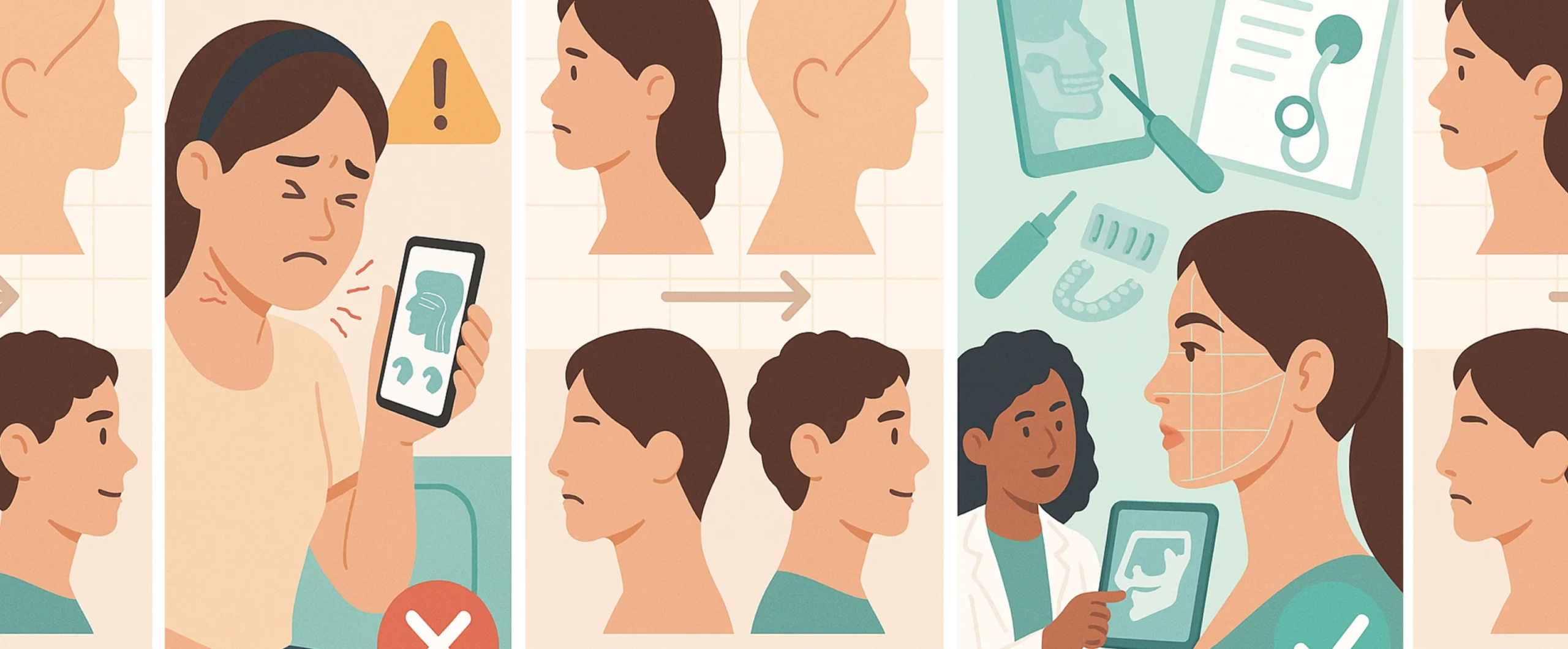
People often search “how to mew,” “mewing tutorial,” “how to mew correctly,” and “how to properly mew.” The typical instructions are: rest the entire tongue (including the posterior third) against the palate, keep the tip just behind the upper incisors (without pushing on them), maintain a light tooth contact, breathe through the nose, and sustain the posture throughout the day. For readers seeking a practical how to mew overview, our how to mew guidance prioritizes safe breathing and dental neutrality.
Reality check: posture is valuable, especially for nasal breathing and oral function, but adult facial bones are largely mature. Sustained tongue posture does not replicate the controlled, measurable changes produced by orthodontic forces, energy‑based tightening, injectables, or surgery. Use this technique for comfort and breathing, not as a stand‑alone jawline makeover.
Does Mewing Actually Work? Results & Evidence
Key queries here include “does mewing actually work,” “is mewing real,” “mewing result,” and “mewing results.” A recurring question is does mewing actually work. In adults, does mewing actually work for bone change is unlikely; does mewing actually work for functional comfort is plausible; does mewing actually work as a substitute for orthodontics is unsupported; and does mewing actually work for jawline reshaping is unproven. What the evidence suggests:
- In adults, high‑quality data showing durable skeletal/jawline change from posture alone are lacking.
- In growing patients, tongue posture and airway considerations are part of holistic care but are supervised and combined with recognized therapies.
- Aesthetics vs physiology: You may notice subjective improvements (posture, nasal breathing comfort, muscle tone), but objective jawline reshaping requires treatments that act on bone position, ligamentous support, fat compartments, or dermal collagen.
If your goal is camera‑ready definition or correction of bite asymmetry, evidence‑based modalities (below) are more predictable.
Perfect B Clinical Perspective
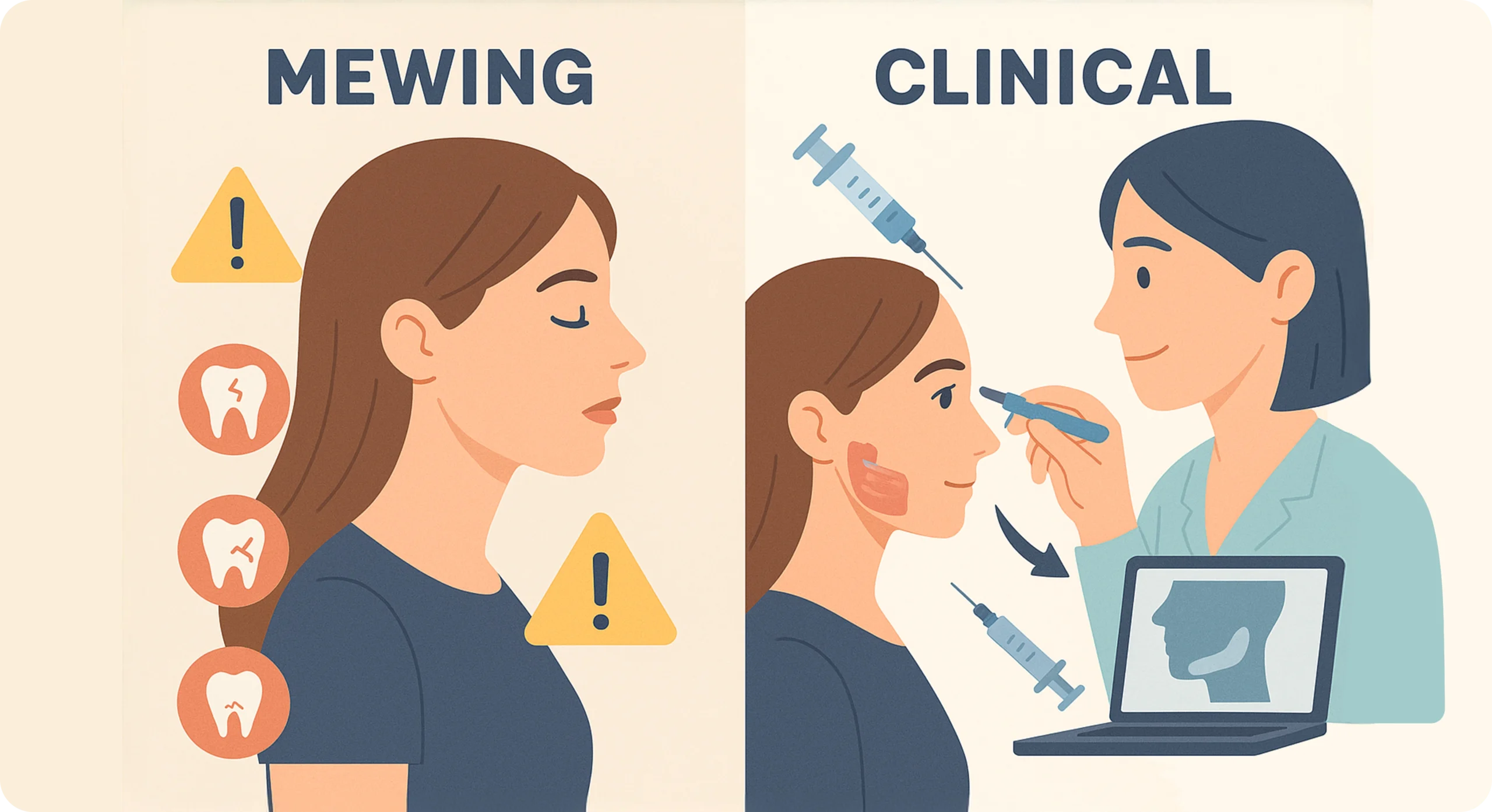
Mewing has gained attention on social media as a do-it-yourself way to “sculpt” the jawline by adjusting tongue posture. While it’s often presented as a natural alternative to cosmetic procedures, it isn’t recognized as a medical treatment. In contrast, clinically accepted jawline enhancement methods like dermal fillers, Botox for masseter reduction, or surgical contouring are grounded in anatomy, measurable outcomes, and safety protocols. The truth is, mewing tends to rely on self-guided practice without clinical oversight, which makes its results unpredictable.
At Perfect B, we see patients curious about mewing but unsure if it truly works. Many arrive after months of trying it, frustrated that they haven’t noticed real changes. Sometimes, they even report jaw tension, bite issues, or discomfort from forcing posture habits. That’s where we take a different approach. Instead of relying on “one-size-fits-all” techniques, we personalize treatments, balancing the face by considering bone structure, muscle activity, and skin quality. For example, a patient with a soft jawline might benefit from fillers to create definition, while another with overdeveloped jaw muscles might respond better to Botox.
We educate our patients about when it’s time to move from self-directed methods like mewing to medical options, usually when they want visible, reliable, and safe results. Long-term, clinical facial contouring has been shown to deliver predictable outcomes that mewing simply cannot match. While posture awareness can support good oral and facial health, true structural enhancement requires professional intervention. At Perfect B, our focus is always on safe, lasting, and natural-looking balance something mewing alone has yet to achieve.
(…) See authoritative guidance from orthodontic associations on DIY dental trends and patient safety
Mewing Devices & “Tools”: What They Are and Risks
Curiosity about gear leads to searches like “mewing device,” “mewing tools,” “mewing ball,” “mewing gum,” and “mewing exercise.” Online, you’ll find:
- Apps & reminders that coach posture habits.
- Tongue rings/“mewing ball” devices designed to cue posterior‑tongue engagement.
- Chewing products such as “mewing gum” or high‑resistance gum marketed for masseter training.
- Jaw exercisers (bite‑block gadgets) branded as a mewing device even when they simply load the bite.
Cautions:
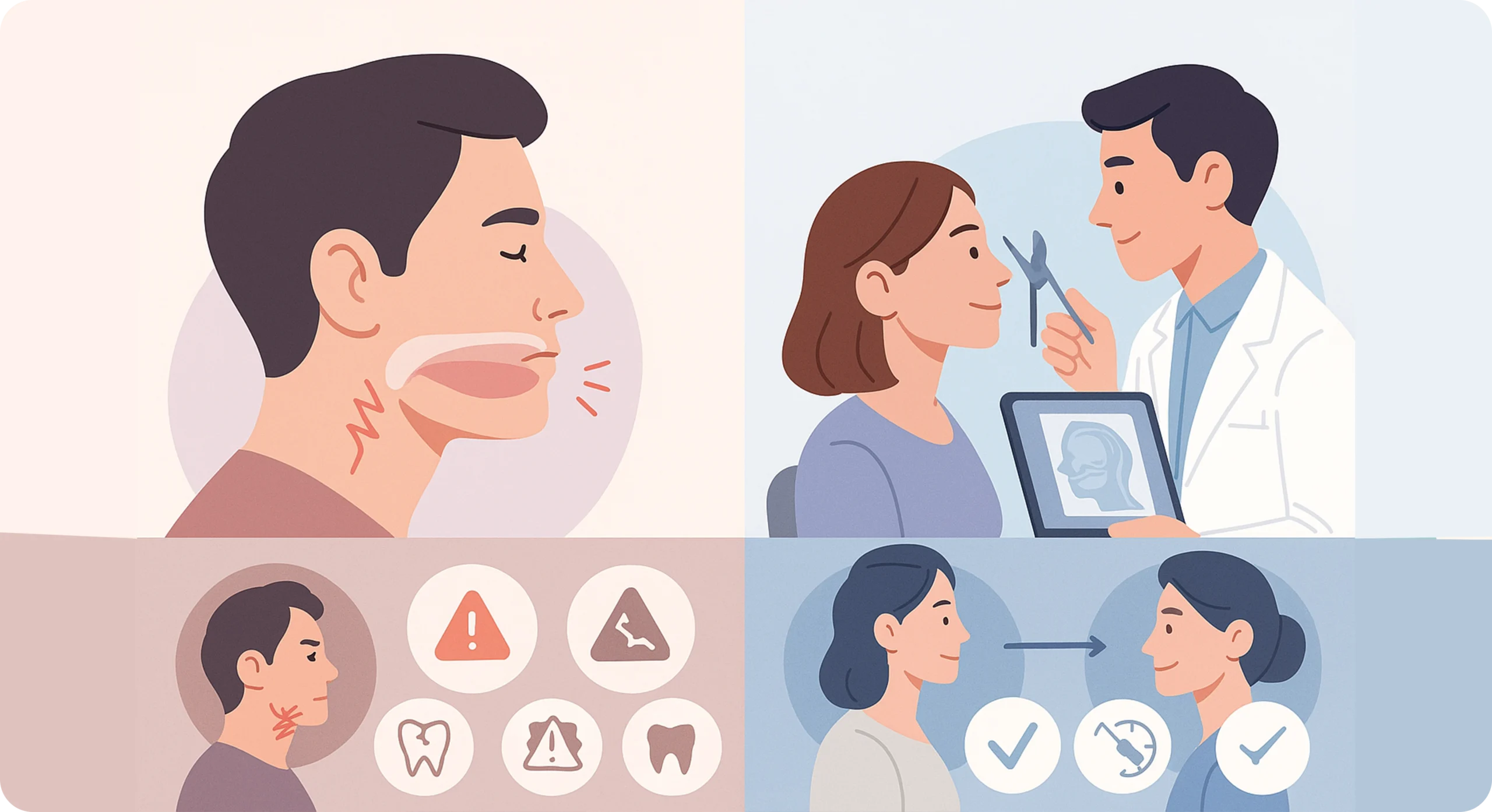
- Unsupervised jaw loading can aggravate TMJ symptoms, cause tooth wear, or worsen malocclusion.
- “Cueing” objects can be choking hazards.
- Overuse can create muscle hypertrophy that widens the lower face, the opposite of what some users want
If you’re considering any mewing tools, discuss them during a professional assessment. Before purchasing any mewing device, verify choking risk and dental history. A mewing device cannot replace supervised therapy. Selecting a mewing device requires fit and hygiene checks; discontinue any mewing device that worsens symptoms. Our clinic does not endorse a mewing device without assessment.
What Does Mewing Do to the Jawline & Face?
This section addresses “what does mewing do,” “mewing jaw,” and “mewing face.” In adults, proper oral posture may:
- Encourage nasal breathing and reduce mouth‑open resting habit.
- Improve subjective muscle tone and head‑neck posture.
- Reduce the appearance of a collapsed lower‑face at rest by changing how you hold tissues—not what they are.
It typically doesn’t move bones or tighten skin. If your concern is blunted gonial angle, jowl descent, or submental fullness, you’ll need interventions that act on structure (skeletal, ligamentous, adipose, or dermal).
Risk Profile: When DIY Trends Backfire
Searches like “mewing jawline exercise,” “mewing jaw exercises,” and “mewing exercises for jawline” hint at workouts for the mandible. Be careful:
- Excessive force can shift teeth or strain joints.
- Asymmetric loading can create asymmetry or bite changes.
- Grinding/overtraining may enlarge masseters and contribute to facial width or discomfort.
- Breathing & speech can be affected if posture is forced unnaturally.
Stop if you feel joint pain, tooth mobility, clicking, ear fullness, or headaches, and seek an evaluation. Many videos label routines as mewing jawline exercise. Approach any mewing jawline exercise with caution; if a mewing jawline exercise causes pain, stop. A safe mewing jawline exercise avoids joint loading. Remember, no mewing jawline exercise replaces diagnosis.
(…) Review systematic evidence on adult myofunctional therapy to understand indications and limits.
Medically Accepted Jawline Enhancement, Your Options
Online communities sometimes use shorthand like “mewing mew” and “mew mewing.” In clinic practice we use diagnosis‑first pathways:
- Orthodontics & Aligners: Correct bite and occlusal relationships; can refine facial harmony over time.
- Myofunctional therapy (supervised): Addresses swallowing and tongue posture when clinically indicated.
- Injectables:
- Dermal fillers to contour the mandibular angle and chin, balancing proportions.
- Neuromodulators for masseter slimming (where hypertrophy dominates).
- Energy‑based tightening: RF microneedling (Collagen Induction Therapy) and ultrasound (HIFU) stimulate remodeling in dermis/SMAS for crisper jawline.
- Submental fat reduction: Injectable lipolysis or device‑based lipolysis.
- Surgery: Genioplasty, chin/jaw implants, facelift/necklift, or targeted liposuction for definitive structural change.
Each option has indications, downtime, longevity, and risk, reviewed during consultation.
Mewing vs Medical Treatments
Search interest often centers on personalities like “mike mew,” but decisions should rest on mechanisms and outcomes:
| Approach | Mechanism | Good For | Onset | Longevity | Oversight |
|---|---|---|---|---|---|
| Mewing (posture) | Habit cues; functional posture | Breathing habits; resting pose | Weeks to habits | Ongoing habit | Self / therapist |
| Myofunctional therapy | Guided function training | Tongue posture, swallow issues | Weeks–months | Maintained with practice | Specialist |
| Orthodontics/aligners | Controlled tooth movement | Bite harmony, facial balance | Months | Permanent with retention | Orthodontist |
| Fillers / toxin | Volume shaping / muscle modulation | Definition, contour, slimming | Days–weeks | 6–24 months | Medical |
| RF microneedling (CIT) | Collagen remodeling | Skin firmness, texture | Weeks | 6–18 months | Medical |
| Ultrasound (HIFU) | Deep thermal tightening | Mild–moderate laxity | 2–4 months | 12–18+ months | Medical |
| Surgery | Structural repositioning | Significant laxity/asymmetry | Weeks recovery | Years | Surgeon |
Bottom line: posture helps function; structure changes outcomes.
Who Is a Candidate for What?
Think of habit streaks, like the motivational “mewing streak”, as great for consistency, but remember: habits don’t replace biomechanics. You’re a good candidate for:
- Posture & therapy if you have mouth‑open rest posture, tongue‑tie concerns, or swallowing patterns that need retraining.
- Injectables/energy devices if you want visible, non‑surgical contour or tightening with modest downtime.
- Surgery if you need durable, structural repositioning or substantial submental/jowl change.
Book a jawline assessment at Perfect B. We’ll evaluate bite, airway, skin quality, adipose distribution, and skeletal harmony to build an evidence‑based plan.
FAQ: Mewing Myths vs. Medical Facts
Q1 How do we define mewing in contrast to medically accepted jawline-enhancement methods?
Mewing is a self-directed technique that promotes a specific tongue posture (roof of the mouth), lip seal, and head position with the goal of subtly changing facial appearance over time. In contrast, medically accepted methods (think orthodontics, orthognathic surgery, dermal fillers, and soft-tissue procedures) are performed (or prescribed) by trained clinicians, use diagnostic imaging and measurements, and have predictable, measurable outcomes. In short: mewing is a posture habit; clinical treatments are targeted interventions based on anatomy and science.
Q2 Can we define mewing as a legitimate practice backed by medical evidence?
The honest answer: not yet. There are plausible biomechanical ideas, posture affects muscles and soft tissues but high-quality clinical trials showing consistent, meaningful facial bone changes in adults are lacking. For growing adolescents, orthodontic guidance can influence facial development; for adults, the evidence that simple tongue posture alone reshapes bone is very weak.
Q3 What are the risks associated with advising patients on how to mew without medical oversight?
Risks are mostly indirect but real: improper guidance can worsen jaw pain, provoke or amplify TMJ symptoms, change bite alignment, or encourage unsafe devices or exercises. In addition, patients may delay effective treatment (like orthodontics or orthognathic consultation) while chasing uncertain results. So,like many trends it’s low risk in theory but can produce harm if done without assessment.
Q4 Can mewing face changes be substantiated through scientific facial analysis?
Small soft-tissue and posture improvements (better head carriage, firmer platysma, subtle cheek lift from improved muscle tone) can be documented with photos, 3D surface scans, or facial analysis but controlled studies showing consistent, clinically meaningful bone changes in adults are missing. In plain terms: we can measure some differences, but linking them directly and reliably to mewing alone is not proven.
Q5 Are mewing devices medically safe or just another trend with no clinical value?
Most commercially marketed “mewing” devices lack rigorous safety and efficacy testing. Some are harmless, but others may force unnatural bite positions, irritate tissues, or amplify TMJ problems. Until a device is evaluated in proper clinical trials and cleared by dental/medical regulators, treat them skeptically, they’re usually trend products, not medical devices.
Q6 From a clinical standpoint, does mewing actually work on bone structure or muscle?
Clinically, mewing is unlikely to remodel adult facial bone in any predictable way. What it can do is influence muscle tone, tongue posture, and head position and those soft-tissue and postural shifts can make a face look a bit different. If bone change is the goal, the reliable routes are orthodontics or surgery; if posture and muscle tone are the goal, then targeted exercises under a clinician’s guidance may help.
Q7 Can mewing exercise routines realistically compete with aesthetic treatments like fillers?
No, not really. Fillers give immediate, controlled volume and contour changes with predictable results; mewing works slowly, if at all, and primarily affects posture and soft tissue tone. Think of it this way: fillers are a sculptor’s tool, precise and fast; mewing is like a long-term workout plan, subtle, variable, and dependent on many factors. That said, combining sensible posture work with professional aesthetic care can be complementary, not mutually exclusive.
Sources, Reviewer & CTA
We took the time to define mewing and answer the critical question: does mewing actually work? The clear answer is no. The practice, along with any mewing device or exercise, is not a substitute for medical treatment. Instead of practicing mew mewing in the mirror and wondering how to mew correctly, we invite you to explore real, science-backed solutions.