
Perfect B, Doral Fl. | 10.03.25 | 5 min read.
Key takeaways
- Tretinoin vs hydroquinone sets the frame: tretinoin remodels skin over time, while hydroquinone directly suppresses melanin. For pigment‑focused goals, tretinoin vs hydroquinone for hyperpigmentation clarifies which lever to pull first.
- Many patients succeed with tretinoin and hydroquinone in the same plan; photos from tretinoin cream before and after help calibrate expectations.
- Hydroquinone is generally cycled; tretinoin continues for maintenance. In melasma care, hydroquinone for melasma remains a cornerstone under supervision.
- Personalize based on skin type and tolerance; your clinician can determine sequencing within tretinoin vs hydroquinone for hyperpigmentation decisions.
The problem: uneven tone, fine lines, and “aged skin spots”
If you’re exploring options for wrinkles, blotchy tone, dark patches, and aged skin spots, you’ll encounter debates framed as tretinoin vs hydroquinone and more specifically tretinoin vs hydroquinone for hyperpigmentation. Patients also ask about combination paths like tretinoin and hydroquinone and whether progress documented in tretinoin cream before and after galleries translates to their skin. For melasma, supervised hydroquinone for melasma remains a high‑yield starting point.
➔ Looking for a practical starting point? See our Skin Brightening Treatment overview to compare options tailored to tretinoin vs hydroquinone for hyperpigmentation.
Our clinical perspective at Perfect B (the core of our approach)
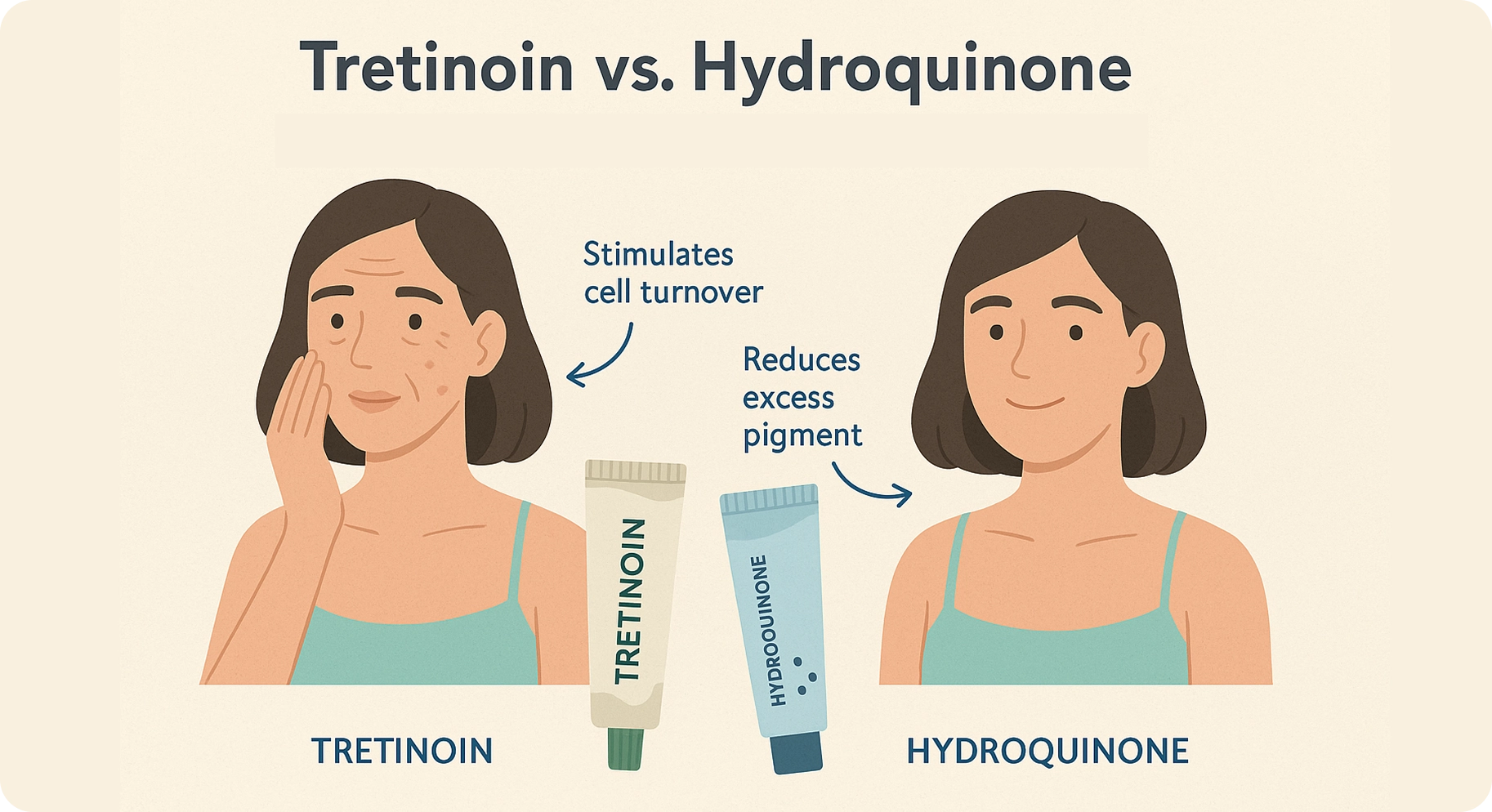
At Perfect B, we often get asked about the difference between tretinoin and hydroquinone ,two of the most trusted ingredients in skin rejuvenation. Tretinoin is a vitamin A derivative that speeds up cell turnover, helping smooth fine lines, unclog pores, and fade uneven texture over time. Hydroquinone, on the other hand, works by reducing the overproduction of pigment, making it especially powerful for dark spots, melasma, and stubborn discoloration. The truth is, they work in very different ways, but both target some of the most common concerns of aging skin.
When we meet with patients, the choice depends on what’s most pressing for them. For someone frustrated by wrinkles and rough skin, tretinoin usually takes the lead. For patients battling sun damage or pigmentation, hydroquinone becomes the star player. And in many cases, the best results come from combining the two, since one refreshes skin texture while the other evens out tone. Over the years, we’ve seen patients notice brighter, smoother skin in just a few months of consistent treatment,results that often feel like a “reset” for their complexion.
Not everyone is a candidate right away, though. At Perfect B, we always start with a full skin assessment, looking at lifestyle, sensitivity, and goals. From there, we create a personalized protocol, usually starting with lower strengths, monitoring closely, and layering in supportive products like sunscreen and moisturizers to protect the skin barrier. This careful, step-by-step approach ensures results are not only visible but also safe and sustainable. In the end, the goal isn’t just clearer skin, it’s confidence in the mirror every single day.
How They Work (and When Each Shines)
Tretinoin: remodeling from within
Tretinoin accelerates turnover and supports collagen, great for fine lines, texture, and acne control. If you’re wondering where it fits in tretinoin vs hydroquinone for hyperpigmentation, remember tretinoin gradually refines tone and helps prevent new marks. Many readers look for tretinoin cream before and after to visualize timelines; those images make sense once dosing and SPF are consistent. In combination plans, tretinoin and hydroquinone can amplify brightening when monitored.
Hydroquinone: shutting down excess pigment
Hydroquinone inhibits tyrosinase and reduces melanin formation, why it excels in hydroquinone for melasma and post‑inflammatory marks. Within tretinoin vs hydroquinone for hyperpigmentation, hydroquinone is the faster spot‑fader, while tretinoin maintains gains. Combination strategies with tretinoin and hydroquinone are common in practice.
Hydroquinone inhibits tyrosinase and reduces melanin formation, why it excels in hydroquinone for melasma and post‑inflammatory marks. Within tretinoin vs hydroquinone for hyperpigmentation, hydroquinone is the faster spot‑fader, while tretinoin maintains gains. Combination strategies with tretinoin and hydroquinone are common in practice.
➔ Want wrinkle support plus tone correction? Explore our Skin Rejuvenation pathway to see how we pair tretinoin for texture and tretinoin before and after wrinkles improvements with targeted brightening, ideal if you’re searching a skin rejuvenation clinic pa or locally.
➔ Want wrinkle support plus tone correction? Explore our Skin Rejuvenation pathway to see how tretinoin vs hydroquinone choices integrate with long‑term maintenance.
Tretinoin vs Hydroquinone (Clear, Quick Comparison)
Use this table to orient decisions in tretinoin vs hydroquinone for hyperpigmentation, wrinkles, and texture. It also shows where hydroquinone for melasma leads and how tretinoin and hydroquinone complement each other.
| Goal | Better first lever | Why | Time to visible change | Notes |
|---|---|---|---|---|
| Fine lines, texture, photoaging | Tretinoin | Collagen stimulation + turnover | 8–12+ weeks | Long‑term mainstay; SPF critical |
| Melasma (patchy brown/gray) | Hydroquinone | Direct melanin suppression | 6–12+ weeks | Hydroquinone for melasma under supervision, then maintain with tretinoin |
| Post‑acne marks (PIH) | Hydroquinone → add tretinoin | Faster fading + prevention | 4–12+ weeks | Tretinoin and hydroquinone often paired |
| Active acne + tone | Tretinoin | Unclogs pores + anti‑inflammatory | 6–12+ weeks | May flare before it clears |
| Global unevenness | Tretinoin ± Hydroquinone | Turnover + targeted brightening | 8–16+ weeks | Balance comfort and speed |
(…) Pricing/access note: compare options via reputable sources; your clinician will tailor strengths and vehicles.
➔ Need a side‑by‑side plan? Visit our Skin Rejuvenation page for a clinician‑built comparison centered on tretinoin vs hydroquinone and tretinoin vs hydroquinone for hyperpigmentation.
When to Combine (and Exactly How to do it Safely)
Many protocols pair tretinoin and hydroquinone in the same regimen. We may alternate or layer at night, adjusting frequency to tolerance. This aligns with practical realities behind tretinoin vs hydroquinone for hyperpigmentation decisions, use hydroquinone to fade, then keep gains with tretinoin.
- Who should consider combo? Resistant melasma, widespread PIH, or uneven tone where a single lever was too slow.
- Sequence (typical): cleanse → (optional) buffer → apply actives; photos support tretinoin cream before and after tracking.
- Frequency: begin 2–3 nights/week; build as tolerated.
- Cycle: limit hydroquinone to defined cycles; continue tretinoin for maintenance.
- Melasma note: hydroquinone for melasma is time‑limited; monitor for response.
➔ Curious how we combine safely in real life? Our Skin Brightening Treatment page outlines protocols for tretinoin vs hydroquinone for hyperpigmentation and staged tapering.
- Who should consider combo? Resistant melasma, widespread PIH, or uneven tone where a single lever was too slow.
- Sequence (typical): cleanse → moisturizer buffer (optional) → tretinoin with hydroquinone or alternate nights.
- Frequency: begin 2–3 nights/week; build as tolerated.
- Cycle: limit hydroquinone to defined cycles; keep tretinoin for maintenance.
- Common questions: can i use tretinoin and hydroquinone together? Usually yes—with professional guidance. retin a and hydroquinone together? Same answer. can i use hydroquinone with tretinoin everyday? Not initially; frequency depends on tolerance and your clinician’s plan.
➔ Curious how we combine safely in real life? Our Skin Brightening Treatment page outlines protocols for tretinoin and hydroquinone for hyperpigmentation, including when to pause, switch, or taper.
- Who should consider combo? Resistant melasma, widespread PIH, or uneven tone where a single lever was too slow.
- Sequence (typical): cleanse → moisturizer buffer (optional) → tretinoin with hydroquinone or alternate nights.
- Frequency: begin 2–3 nights/week; build as tolerated.
- Cycle: limit hydroquinone to defined cycles; keep tretinoin for maintenance.
- Common questions: can i use tretinoin and hydroquinone together? Usually yes—with professional guidance. retin a and hydroquinone together? Same answer. can i use hydroquinone with tretinoin everyday? Not initially; frequency depends on tolerance and your clinician’s plan.
Timelines & Realistic Results
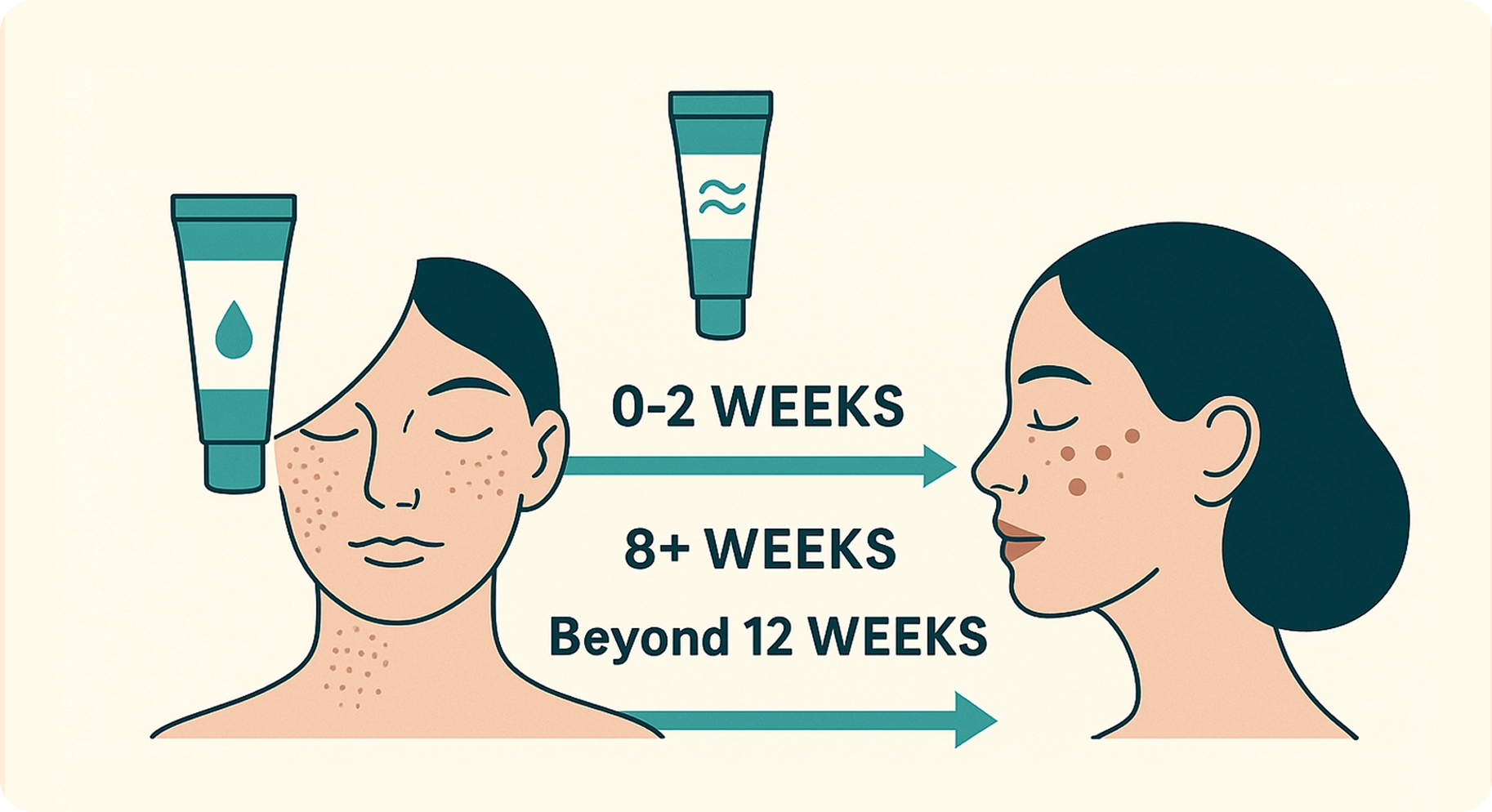
Expectations drive satisfaction. Progress varies by concern and skin type, but the tretinoin cream before and after arc is a helpful guide.
- Weeks 0–2: adaptation; mild dryness/peel possible.
- Weeks 4–8: early tonal improvement; in tretinoin vs hydroquinone for hyperpigmentation plans, focal areas start to lighten.
- Weeks 8–12: melasma and PIH soften; supervised hydroquinone for melasma often shows clear benefit; combination tretinoin and hydroquinone maintains momentum.
- Beyond 12 weeks: taper hydroquinone; keep tretinoin for texture and prevention.
We capture standardized photos to document tretinoin cream before and after changes and link them to decisions made within tretinoin vs hydroquinone frameworks.
➔ Ready to start a measured plan? Our Skin Brightening Treatment page explains check‑in timelines anchored to tretinoin vs hydroquinone for hyperpigmentation strategies.
(…) Different clinical reviews discuss why combination therapy is not one‑size‑fits‑all, especially for melasma. We’ll add authoritative external links here to compare algorithms and combination options.
Safety First: What to Watch
- Irritation management: moisturize, micro‑dose, avoid harsh scrubs.
- Sun protection: daily broad‑spectrum SPF; reapply.
- Hydroquinone cautions: understand risks and cycles when using hydroquinone for melasma within broader tretinoin vs hydroquinone for hyperpigmentation plans.
- Special scenarios: pregnancy/breastfeeding—avoid hydroquinone and tretinoin.
- Layering tips: be cautious with aggressive acids or astringents.
Our Clinic Protocol: Precise, Personal, and Measurable
We begin with goals (wrinkles, melasma, PIH, acne), map Fitzpatrick type and triggers, and then decide the best tretinoin vs hydroquinone entry point. For pigment‑led care, we prioritize tretinoin vs hydroquinone for hyperpigmentation sequencing and test tolerance.
- Induction (6–12 weeks): hydroquinone for melasma or PIH focus; cautious introduction of tretinoin.
- Transition: taper hydroquinone; continue tretinoin.
- Maintenance: tretinoin long‑term, sunscreen daily; occasional touch‑ups.
If you’re evaluating clinics, ask how they document tretinoin cream before and after and whether combination tretinoin and hydroquinone is offered with supervision.
FAQs
Does tretinoin help with hyperpigmentation?
Yes, it really does. Tretinoin speeds up how quickly your skin sheds old, pigmented cells and replaces them with fresh new ones. Over time, this helps fade dark spots, sun damage, and post-acne marks. The key is patience results build gradually, usually becoming noticeable after several weeks of consistent use.
Can I use hydroquinone with tretinoin every day?
They can be powerful partners, but not always every single day. Both ingredients can cause dryness or irritation if overused. At Perfect B, we often recommend alternating days or combining them in a carefully tailored plan. Think of it as a balancing act: enough to brighten and correct, but not so much that your skin gets angry, that is why we personalized our recommendations.
How to use tretinoin for skin rejuvenation?
Start slow. A pea-sized amount, applied at night on clean, dry skin, is usually plenty. Less is more with tretinoin. Always follow with a good moisturizer, and never skip sunscreen in the morning, your skin will be more sensitive to sunlight. Over time, this routine encourages smoother texture, a brighter tone, and overall rejuvenation.
What are the side effects of hydroquinone in skin treatments?
Most people do well with hydroquinone, but some may notice redness, dryness, or temporary irritation. Rarely, long-term use without medical guidance can lead to ochronosis, a bluish discoloration of the skin. That’s why we always emphasize professional supervision and time-limited use.
What are the benefits of a skin brightening treatment using tretinoin and hydroquinone?
Together, they’re a powerhouse duo. Hydroquinone slows down excess pigment production, while tretinoin speeds up skin turnover. The result? A more even, radiant complexion that feels refreshed and youthful. It’s like tackling both the root cause and the surface signs of pigmentation at once.
What results can I expect from tretinoin cream before and after use?
In the early weeks, you might see some dryness or mild flaking, that’s a sign the skin is adjusting. Stick with it. Over the months, your skin becomes smoother, fine lines soften, dark spots fade, and pores look more refined. Patients often describe it as looking “fresh-faced” again.
Can tretinoin help with wrinkles and fine lines?
Yes, this is one of its most famous benefits. Tretinoin stimulates collagen production, the protein that keeps skin firm and elastic. Over time, this reduces the appearance of fine lines and wrinkles, helping skin look more youthful and resilient. It’s one of the most scientifically proven ingredients we use at Perfect B for anti-aging.
Your Next Step
Ready to personalize tretinoin vs hydroquinone to your skin goals? Book a consult. We’ll map a plan grounded in tretinoin vs hydroquinone for hyperpigmentation, incorporate supervised hydroquinone for melasma when appropriate, and document progress with tretinoin cream before and after checkpoints.
If you are ready to achieve lasting clarity and youthfulness, the next step is to seek professional guidance.