
Perfect B, Doral Fl. | 10.27.25 | 5 min read.
Overview
Patients ask two simple questions at the start of a consultation. What is bio filler and what is biofiller. In everyday language, biofiller means an autologous option created from your own tissue. The two common routes are fat transfer and a plasma derived gel that some people casually call prp bio filler. By contrast, hyaluronic acid fillers are smooth gels that are carefully cross linked in a laboratory and designed to mimic the hyaluronic acid found in skin.
Both families can soften lines, restore volume, and improve contour. Biofiller can appeal to people who want an autologous material or who are already planning surgery and fat transfer. Hyaluronic acid is precise, predictable, and reversible, which is helpful when we are shaping delicate areas or when a patient is new to treatment. In this guide we compare choices for facial structure enhancement through the lens of biofiller vs hyaluronic acid, explain our decision process, and show where each option shines. The word biofiller will appear throughout because it is central to the topic, and the simpler form bio filler is used as well for readers who search with that phrase.
Our core approach at Perfect B
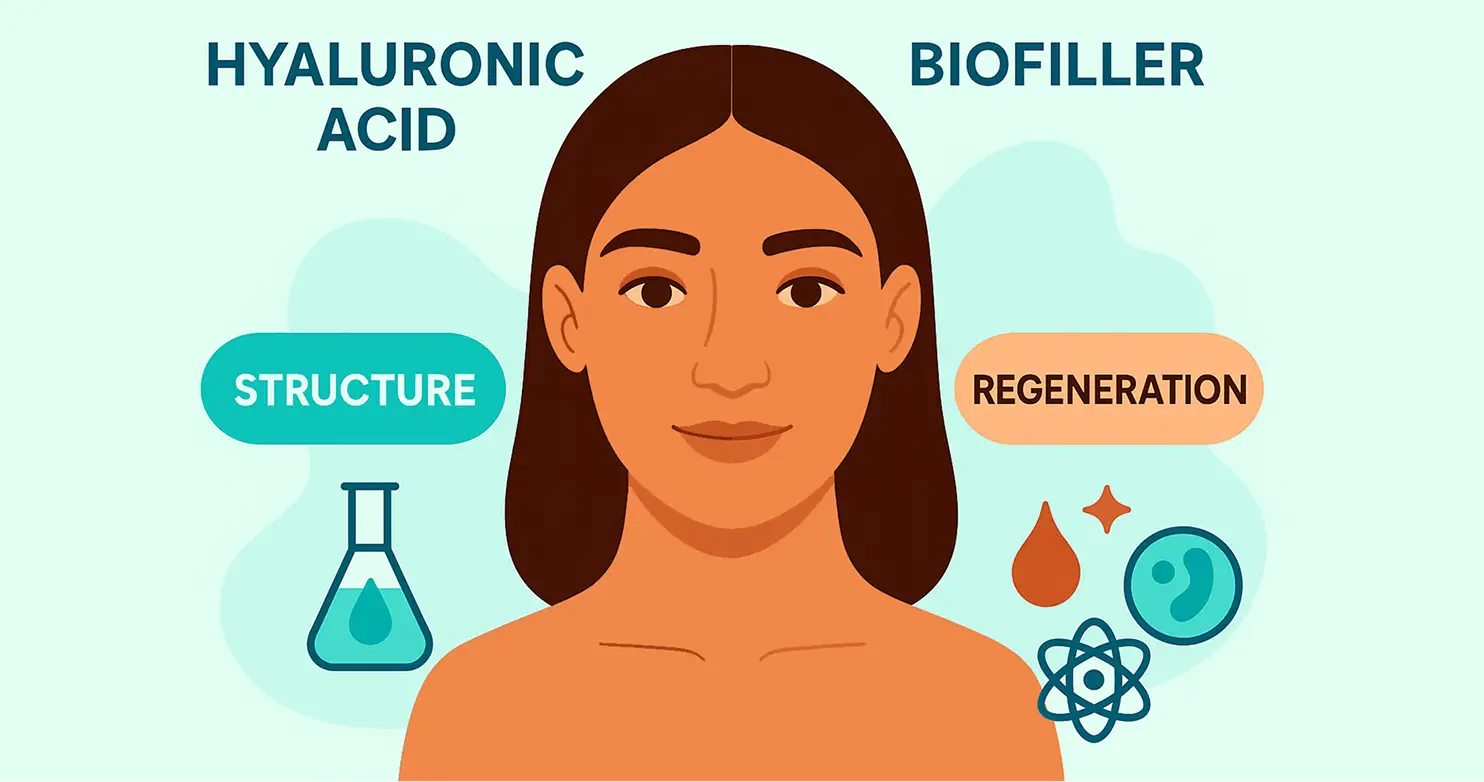
Many patients arrive with a simple question. Should I choose hyaluronic acid or biofiller. Our position is that both can work beautifully, and they work in different ways. Hyaluronic acid is a lab created gel and in our hands it works like a sculptor tool. It is ideal when we want crisp definition at the cheekbone, chin, or jawline and when we need precision that can be refined. Biofiller in the form of a plasma gel is made from your own plasma. Because it is natural it restores soft volume and encourages the skin to regenerate. We explain it this way during consultation. HA creates instant structure while biofiller nurtures your skin from the inside out. We often combine them. HA builds the frame and biofiller refreshes delicate zones such as smile lines and the under eye area.
Quick take

If you are searching for dermal fillers nasolabial folds or dermal fillers smile lines, the smartest first move is to check whether the cheek has lost support. Rebuilding the midface often softens the fold, and then a gentle touch at the crease is all that is needed. When the concern is lower face balance or projection, requests for dermal fillers for chin are common and are often paired with jawline shaping. When lift of the midface is the focus, dermal fillers on cheeks can restore youthful curvature and improve transitions. In the real world choice of technique follows the idea of biofiller vs hyaluronic acid based on whether we need instant structure or skin nurturing volume.
Biofiller is considered when a patient prefers an autologous plan or when fat transfer is already on the table. Hyaluronic acid is chosen when ultra precise shaping and reversibility are the priority. For folds that still show after cheek support, we again weigh biofiller vs hyaluronic acid to decide between soft blending or crisp contour.
How we decide in clinic
We begin with a conversation about what you hope to see in the mirror. The right plan is not about which filler is better. It is about which method matches your goals. Some patients want sharper contour and clear edges while others want gentle fullness and a healthier look to the skin. We then evaluate anatomy and sequence the work so the result looks natural in motion. This is the practical meaning of biofiller vs hyaluronic acid in our clinic.
Our assessment starts with where support has been lost. We look at skin thickness, depth of the crease, and whether the line is mostly static or mostly due to movement. If the midface has flattened, cheek support comes first because it improves the lower face in a natural way. We then decide whether a soft, medium, or firm gel is needed, whether a collagen stimulator is appropriate, or whether an autologous approach is the right fit. Photography from consistent angles guides planning, and we agree on a maintenance plan so changes look steady rather than episodic. We apply the biofiller vs hyaluronic acid decision again at follow up to keep outcomes consistent over time.
Indications by area
Our area by area choices continually reference biofiller vs hyaluronic acid so that structure and skin quality are balanced for each concern.
Nasolabial folds and smile lines
People who search dermal fillers nasolabial folds or dermal fillers smile lines are usually noticing a crease that deepens when they smile but also shows at rest. The best result often comes from a two step idea. First, restore cheek support, then blend the crease with a soft to medium gel. This strategy respects the way the face naturally carries weight and it tends to age well. When cheek lift is complete we revisit biofiller vs hyaluronic acid to decide whether a soft autologous blend or a precise hyaluronic contour will finish the fold. For patients who continue to search dermal fillers nasolabial folds after a first session we map staged touch ups so correction looks natural.
Marionette lines
For dermal fillers for marionette lines we soften the downturn at the corners of the mouth and add support in the prejowl hollow. When reasonable, we include cheek and chin balance so that lift above and structure below both contribute. This is how we avoid an overfilled look at the corners.
Cheeks and midface
Requests for dermal fillers on cheeks aim to restore youthful convexity and a cleaner lid cheek junction. Medium to firm gels or calcium based products can add support, and in some plans we layer a collagen stimulator for slow structural improvement. We often repeat the exact phrase dermal fillers on cheeks in our notes so that the plan stays focused on midface lift before fold blending. After cheek support is in place we compare biofiller vs hyaluronic acid to choose the ideal finishing method for the lower face.
Chin and jawline
When people ask about dermal fillers for chin they are often chasing profile balance. Adding forward projection cleans up the neck jaw angle and often helps early heaviness along the jawline. In stronger reshaping cases we also address the area that contributes to the look of dermal fillers jowls by building a firm line along the mandibular border. Patients comparing options for dermal fillers for chin will hear us explain how biofiller vs hyaluronic acid changes the edge control and lift we can achieve.
How we choose products here
For contour and edge control at the chin and jawline we favor hyaluronic acid because it functions like a sculptor tool. It lets us place structure with accuracy and adjust when needed. If the surrounding skin quality would benefit from support we may add a plasma gel session to encourage a healthier surface.
Forehead
Interest in dermal fillers for forehead is rising. This area requires cautious planning because of vascular anatomy and skin thickness. Many patients do better with alternative approaches. If filler is used here the injector must be highly experienced and the plan conservative. Midface plans that start with dermal fillers on cheeks often make the forehead look more relaxed by improving overall balance.
Under eyes
Some patients ask for bio filler under eyes while others prefer a carefully chosen hyaluronic acid. Suitability depends on skin thickness, tendency to swell, ligament support, and lighting conditions. In many cases we start with a conservative hyaluronic acid and stage further care once we see how the area responds. For delicate hollows we revisit biofiller vs hyaluronic acid at each step so that comfort, brightness, and texture improve together.
Case insight from our practice
A patient who felt that her under eyes looked tired and hollow chose biofiller as a plasma gel. It provided soft natural fullness and over time the skin texture looked healthier. In contrast a patient seeking a sharper profile chose a precise hyaluronic acid plan for chin and jawline. The difference was not which filler was better. It was which plan matched the goal. Many readers who search bio filler under eyes are good candidates for a gentle two stage plan. We use the phrase bio filler under eyes in our instructions so patients understand the aim and limits of treatment. Another group who types bio filler under eyes into search is looking for recovery timelines and we provide those details during consult.
Materials guide
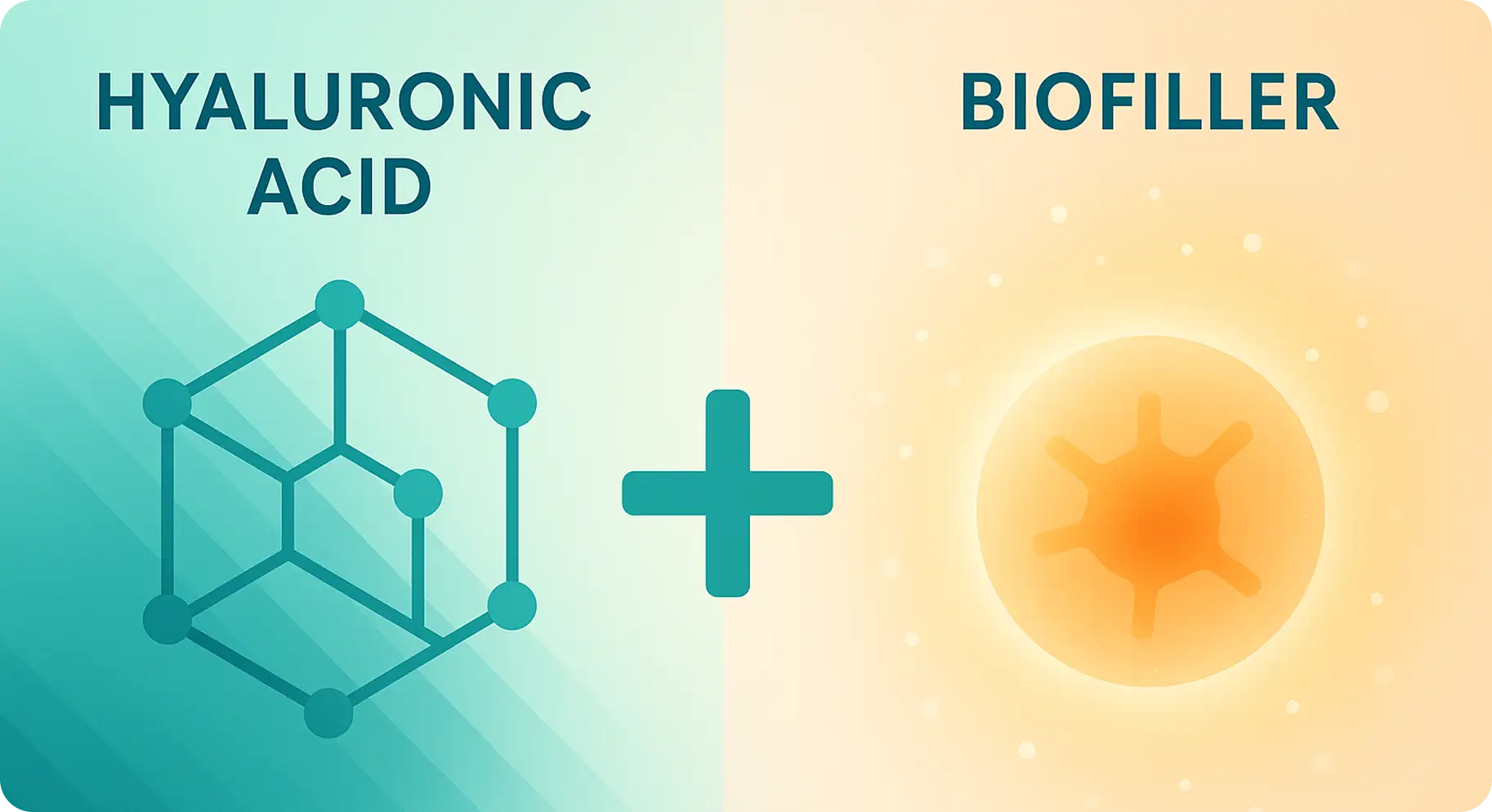
We describe each product class in the context of biofiller vs hyaluronic acid so that expectations stay clear.
Hyaluronic acid
Soft through firm options allow precise shaping in many layers of the face. The biggest advantage is that the material is reversible with an enzyme if we ever need to fine tune.
Calcium hydroxylapatite
This gel contains microscopic calcium particles that add structure and can stimulate collagen. We use it mainly for cheeks, jawline, and deeper facial lines.
Poly L lactic acid
This stimulator encourages your own collagen to form over months. It is not a plumping gel. It is best for diffuse thinning and for patients who want slow changes that last.
PMMA
This is a semi permanent option that is reserved for specific cases after careful counseling.
Biofiller and plasma derived gel
When we say biofiller here we include fat transfer and a plasma derived gel created from your own blood products. Some people refer to the latter as prp bio filler. Autologous choices may be attractive for surgery combined plans or for patients who strongly prefer material from their own body. Candidacy and expectations are key because take rate and behavior differ from standard gels.
Why we combine
HA has one limitation. It corrects but it does not heal. Plasma gel steps in by supporting the skin from within. We often highlight cheekbones or chin with HA for instant structure and refresh smile lines or the under eye zone with biofiller for a softer and healthier look over time.
How long results last
Longevity varies by product, area, and individual metabolism. Hyaluronic acid can last from about six months to more than a year. Cheeks and chin often last longer than lips. Calcium based gels are often close to a year. Poly L lactic acid changes develop over several months and can persist well beyond a year once collagen forms. With fat transfer some of the grafted fat may not survive, and the portion that does survive can last a long time. Maintenance visits keep shape and texture consistent so that friends notice freshness rather than a sudden change. During reviews we may adjust course using the same biofiller vs hyaluronic acid framework to keep results steady.
Finding a Provider Who Listens
Price depends on the number of syringes, the class of product, the complexity of the plan, and whether treatments are staged. We provide a clear estimate before we treat and we often build packages for multi area sculpting. Membership or seasonal events can lower maintenance costs. Biofiller that involves fat transfer is quoted differently because it includes a harvest and processing step. Planning with biofiller vs hyaluronic acid also helps forecast touch up schedules and long term budget.
Finding a Provider Who Listens
Fillers rebuild shape. Skin quality often needs its own plan. That is where platelet based treatments and energy devices come in. When someone is researching facial prp treatment or prp face treatment it helps to know that PRP is not a filler. It is a biologic used to encourage better tone and texture. We sometimes combine prp injections on face with fillers when the goal includes both structure and surface.
At Perfect B the most reliable gains often come from pairing methods. HA can define the cheekbone or chin with instant structure while biofiller as a plasma gel restores gentle volume and nurtures the skin in delicate areas such as smile lines and the under eye region. The blend gives immediate contour and long term skin rejuvenation. When we plan combinations we compare biofiller vs hyaluronic acid in each facial unit so that the final result is balanced.
When you browse galleries it is common to see labels such as vampire facial before and after and before after vampire facial. People also search for vampire facials near me. Galleries can be informative, yet lighting and angles matter. That is why we label images carefully, including before and after platelet rich plasma, platelet rich plasma face before and after, prp face before and after, prp for face before and after, prp before and after face, and platelet rich plasma for face before and after. We will also show what happens when we combine skin quality work with midface or chin structure so you can set realistic expectations.
Other helpful options include radiofrequency tightening, ultrasound lifting, and laser resurfacing. In select cases surgery or fat transfer is the most efficient choice. We can build a simple road map that begins with structure, then moves to texture, then maintains the result with light touch visits.
Other helpful options include radiofrequency tightening, ultrasound lifting, and laser resurfacing. In select cases surgery or fat transfer is the most efficient choice. We can build a simple road map that begins with structure, then moves to texture, then maintains the result with light touch visits.
Before, during, and after
Before treatment we review your medical history and current medicines including blood thinners and supplements. We agree on goals, take photographs from consistent angles, and draw a simple plan. On the day of treatment your skin is cleansed and numbing options are used when needed. Small amounts of product are placed precisely with either a fine needle or a soft cannula. You may feel pressure or a brief pinch. After treatment we apply a gentle cleanse and give you clear aftercare. Expect swelling or bruising for a few days. Sleep slightly elevated the first night, avoid heavy exercise and heat for a day or two, and call if anything feels out of the ordinary.
Before, during, and after
Before treatment we review your medical history and current medicines including blood thinners and supplements. We agree on goals, take photographs from consistent angles, and draw a simple plan. On the day of treatment your skin is cleansed and numbing options are used when needed. Small amounts of product are placed precisely with either a fine needle or a soft cannula. You may feel pressure or a brief pinch. After treatment we apply a gentle cleanse and give you clear aftercare. Expect swelling or bruising for a few days. Sleep slightly elevated the first night, avoid heavy exercise and heat for a day or two, and call if anything feels out of the ordinary.
Safety and when to call
Fillers are medical procedures and safety comes first. Typical effects include tenderness, swelling, and bruising. These usually resolve quickly. Call urgently for severe pain, patchy pale skin, spreading redness, vision changes, or marked asymmetry. We only use authentic products, plan with anatomy in mind, and keep an emergency kit ready. Your consent visit includes a full discussion of benefits and risks so you can make an informed choice. If you came here after searching dermal fillers nasolabial folds or dermal fillers for chin, we will also provide a clear list of red flags specific to those areas.
Before and after gallery
Galleries can teach you what a realistic change looks like. We standardize camera height, lighting, and expression. Images are labeled by area and product family so that comparisons are fair. If you are focused on folds, you can look for dermal fillers smile lines and dermal fillers nasolabial folds sets. If your interest is the lower face, seek examples that include midface support along with chin or jawline work. For midface lift studies we also label images with dermal fillers on cheeks so you can track how support changes the fold.
FAQs About PDRN
Q1: Biofiller vs hyaluronic acid. Which should I choose
We choose the tool that fits the job. The heart of this article is biofiller vs hyaluronic acid so we will guide you to the right choice based on structure needs and skin goals. Hyaluronic acid is ideal for precise shaping and is reversible. Biofiller is attractive when an autologous route is desired or when surgery with fat transfer is planned.
Q2: Can fillers help my smile lines and nasolabial folds
Yes, especially when we first restore cheek support and then blend the crease. This is the method behind many strong results for dermal fillers nasolabial folds and for cases labeled as dermal fillers smile lines.
Q3: What about marionette lines and early jowl shadows
We soften corners of the mouth and support the prejowl hollow, sometimes paired with chin and jawline work. This plan improves concerns seen in searches for dermal fillers for marionette lines and dermal fillers jowls.
Q4: Is forehead filler for me
Only after careful evaluation. The forehead is a special case. Many people will be better served by alternative approaches. If you do proceed with dermal fillers for forehead, expect a conservative plan.
Q5: Can you treat jowls with biofiller, or is synthetic filler more suitable?
For mild jowls, Plasma Gel can gently soften the area and improve skin quality. But for heavier sagging, synthetic fillers, or even combined techniques are often more effective. We sometimes pair treatments for the best balance of lift and natural feel.
Q6: Under eye options
We often begin with a careful hyaluronic acid. Many readers discover this page by searching bio filler under eyes and we address that interest directly. Some patients ask about bio filler under eyes. Suitability depends on anatomy and swelling risk. Photography is key for honest comparisons.
Q7: How do I begin if I am searching biofiller near me
Book a consultation. We will assess your goals, discuss options, and map a simple plan that fits your timeline and budget.
Your Journey Begins with a Conversation
You do not have to choose between science and nature. The most reliable results come from a plan that respects structure and skin quality. That is why our consultations focus on biofiller vs hyaluronic acid and how each supports your goals in real areas such as nasolabial folds, cheeks, chin, jawline, and under eyes. We map a simple sequence so results look fresh and stay consistent over time.
If you are curious about biologic options that nurture the skin from within, start with our Regenerative Medicine page. If your priority is texture, tone, and noninvasive refreshers, explore Skin Rejuvenation Treatment. When you are ready, book a consultation and bring a few photos of how you would like to look. We will listen, measure, and build a plan that matches your timeline and budget.
We look forward to meeting you in clinic and helping you feel at home in your features.
➔ Book your consultation and explore our Regenerative Medicine services, see how PDRN can be tailored to your skin needs.