
Perfect B, Doral Fl. | 09.16.25 | 5 min read.
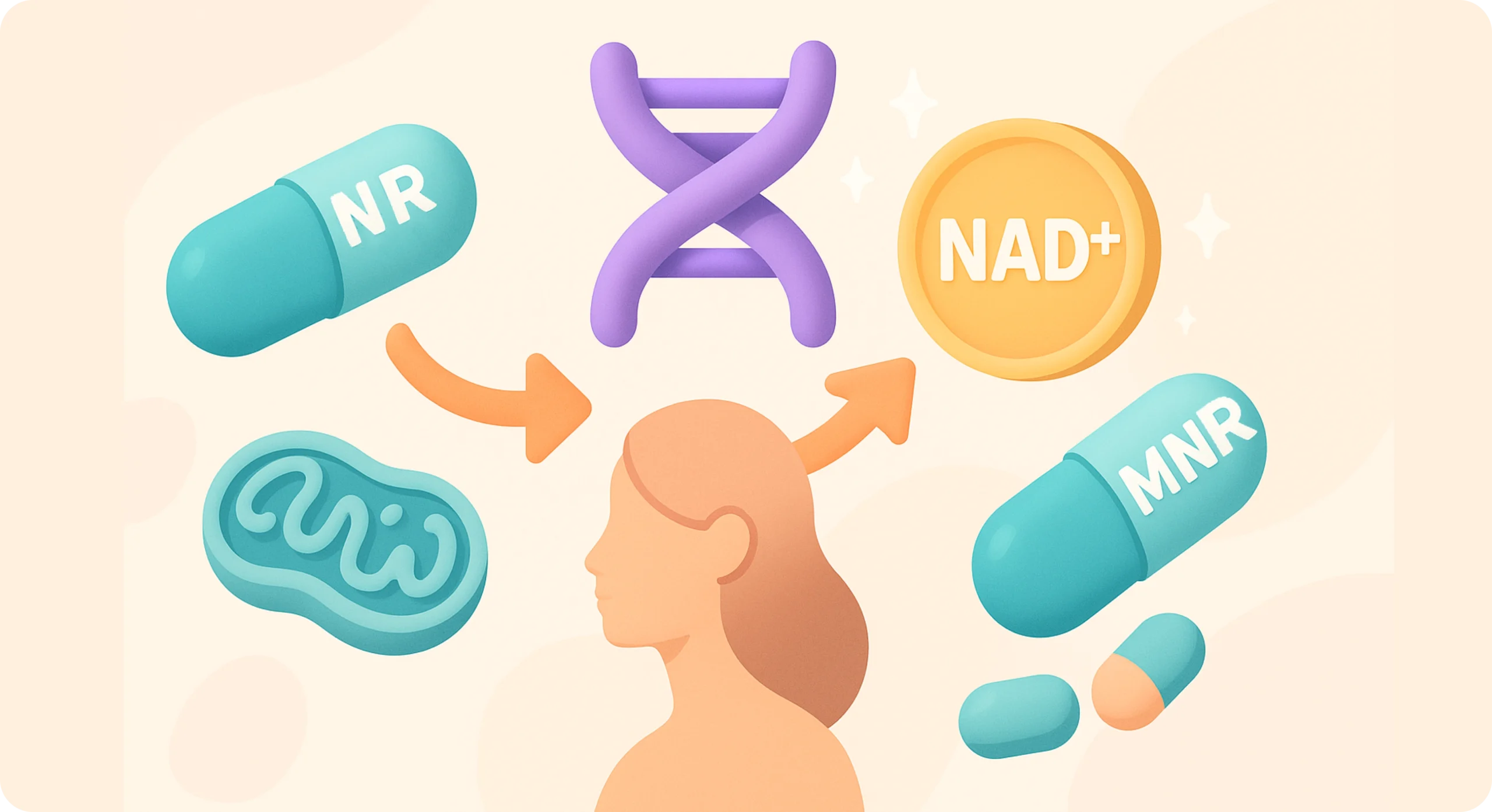
In the pursuit of wellness and healthy aging, the focus is shifting to cellular health. Central to this is NAD+, a vital molecule for cellular function. When considering any nad supplement, understanding the science is paramount. This guide will clarify the science of NAD+, its precursors, and the core debate of nr vs nmn. We will explore both nicotinamide riboside and nicotinamide mononucleotide to provide a clear picture. The goal is not just to find a nad supplement, but to understand the benefits that come from supporting your body at a cellular level, a key reason many seek out a nicotinamide riboside supplement.
➔ To see how this science is applied in advanced wellness protocols, learn more about the powerful connection between NAD+ and Regenerative Medicine.
NAD+ Precursors: Why Can’t We Just Take NAD+ Directly?
A common question is, “Why not just take an NAD+ pill?” The answer lies in its molecular structure. NAD+ is too large to be efficiently absorbed or to pass through cell membranes. Instead, we use “precursors”—smaller molecules your body can convert into NAD+. This is why you see products designed to boost NAD+ levels. Understanding this is key to finding an effective nad supplement and avoiding side effects from poorly formulated products. The choice of precursor is the most critical factor, which leads directly to the nr vs nmn discussion.
Diving Deeper: Nicotinamide Riboside (NR)
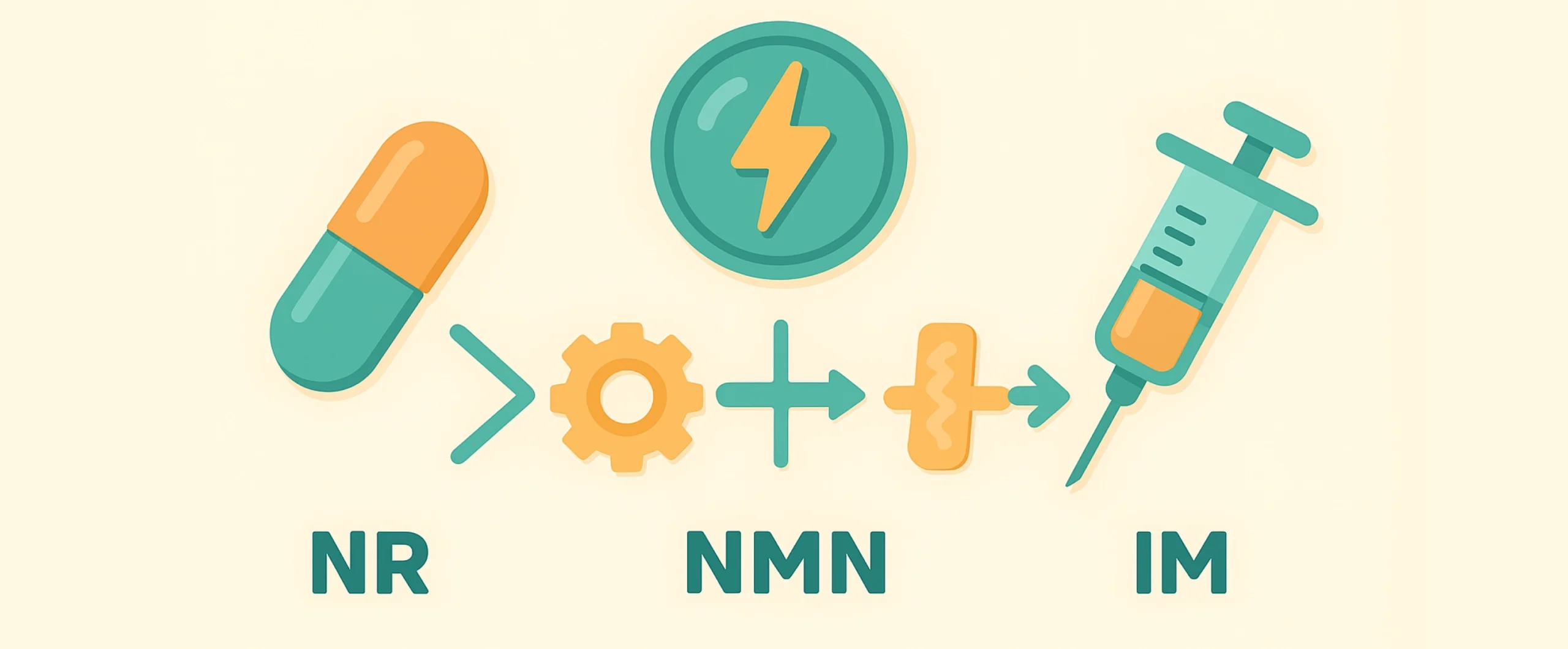
One of the most researched precursors is Nicotinamide Riboside (NR). So, what is nicotinamide riboside? It is a form of vitamin B3 found in trace amounts in milk. The primary nicotinamide riboside benefits are directly linked to its efficiency in boosting NAD+. When you take a nicotinamide riboside supplement, it can directly enter the body’s cells to begin the conversion process.
The core question for many is, what does nicotinamide riboside do? The nicotinamide riboside benefits include supporting cellular energy, promoting cellular repair, and maintaining a healthy metabolism. To fully appreciate the nicotinamide riboside benefits, we must look at the cellular level. This efficiency is why a high-quality nicotinamide riboside supplement is a leading choice. The extensive research behind the nicotinamide riboside benefits provides confidence in its use. Ultimately, the consistent nicotinamide riboside benefits are what make it a standout option. A well-formulated nicotinamide riboside supplement offers a reliable way to support your cellular health.
Diving Deeper: Nicotinamide Mononucleotide (NMN)
The other major player is Nicotinamide Mononucleotide (NMN). Like NR, nicotinamide nmn is a critical intermediary in NAD+ production. However, the prevailing research indicates that NMN is too large to enter cells directly and must first be converted into NR to cross the cell membrane. This adds an extra, less efficient step to the process and is a crucial point in the nr vs nmn debate.
➔ If you’re considering moving beyond oral supplements for more direct results, see if our NAD+ injection therapies are the right fit for your wellness goals.
NR vs. NMN: A Head-to-Head Comparison from a Clinical Perspective
While the scientific differences are important, the most crucial factor in the nr vs nmn debate is how these precursors work in real people. This is where clinical guidance becomes the center of the conversation.
When it comes to NAD therapy, one of the biggest mistakes we see is people jumping straight into supplements without really understanding how they work. Some reach for oral NAD itself, not realizing it isn’t absorbed well, while others buy whatever is trending online without checking the quality, formulation, or whether it fits their personal health needs. The truth is, boosting NAD isn’t a one-size-fits-all process. Your body needs the right building blocks, like NR (nicotinamide riboside) or NMN (nicotinamide mononucleotide), and which one works best depends on your biology and your goals.
For patients looking to support energy, metabolism, and general wellness, NR often works beautifully because it’s well studied and raises NAD reliably in blood and tissue. On the other hand, NMN is just one step away from NAD, making it especially interesting for those focused on healthy aging, vascular support, and recovery from metabolic stress. We’ve seen patients report clearer thinking, more consistent energy, and even faster post-exercise recovery. Those aiming at long-term cellular health and longevity often do best with NMN, while others respond better to NR’s steady boost. It really comes down to matching the precursor with the person.
Of course, results depend not just on what you take, but how your body absorbs and converts it. That’s why we monitor markers of metabolic health and, when needed, pair NAD precursors with supportive nutrients, lifestyle guidance, or IV therapy for deeper replenishment. What worries us most today is self-supplementation without guidance—too much, too little, or poor-quality products that may not even contain what the label promises. Our advice? NAD therapy is powerful, but like any tool, it works best when used wisely and with oversight.
This clinical experience is supported by key scientific and regulatory differences that underscore the need for professional guidance in the nr vs nmn choice:
- Regulatory Status: The risk of using poor-quality products is especially relevant for NMN. In the United States, the FDA has stated that NMN is excluded from the definition of a dietary supplement. This makes professional guidance essential to navigate the market. In contrast, NR is considered Generally Recognized as Safe (GRAS). This is a critical factor in the nr vs nmn comparison.
➔Unsure which path to take? Visit our NAD+ services page to learn more about our expert consultation methods.
Safety First: Potential Side Effects and Precautions
Regardless of the precursor, safety is the top priority. When considering a new nad supplement, understanding the potential nad supplement side effects is a crucial first step. The question, can nad be harmful?, is a valid one. Generally, the most common nad supplement side effects reported are mild and can include nausea, fatigue, or stomach discomfort.
The discussion around nad supplement side effects often centers on these mild issues, which are typically associated with high doses. It is important to look at the full picture of any potential nad supplement side effects. Even with a high-quality nad supplement, being aware of possible nad supplement side effects is part of being an informed consumer.
➔ For those concerned about potential reactions, read this to learn more about the professionally supervised, non-invasive options available to mitigate the side effects of NAD+.
Practical Questions Patients Ask
Q1: What are NAD precursors and how do precursor-to-NAD supplements work?
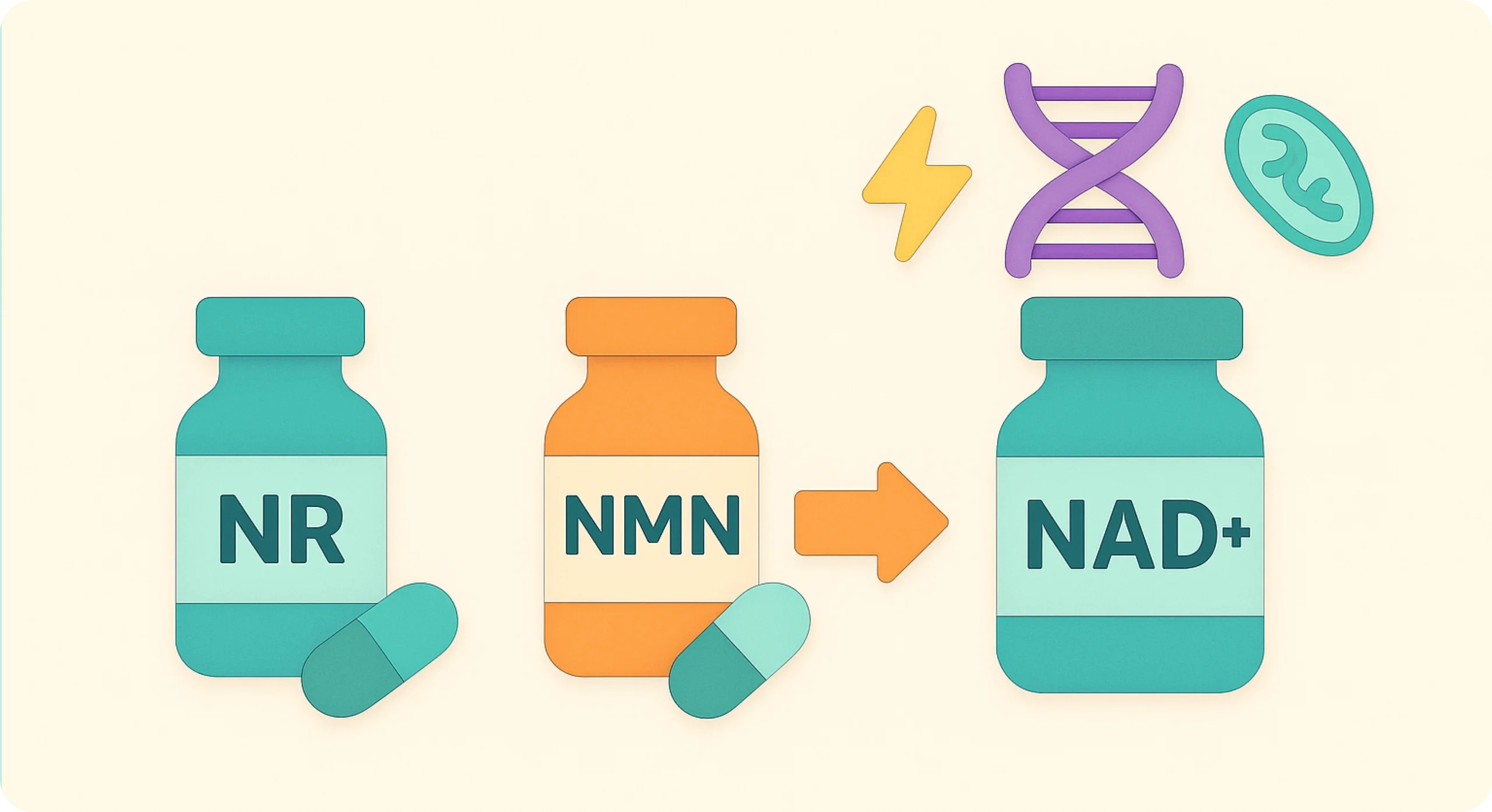
NAD precursors are small nutrient molecules (like nicotinamide, nicotinamide riboside — NR, and nicotinamide mononucleotide — NMN) that the body can convert into NAD + a vital coenzyme used in energy metabolism and cell repair. Think of NAD as the battery that powers many cellular machines; precursors are the raw materials the body uses to recharge that battery. When you take a precursor supplement, your cells use existing biochemical pathways to convert the supplement into NAD, which can then support metabolic processes, DNA repair enzymes (sirtuins), and mitochondrial function.
Q2: Capsules vs. powders vs. “enhanced delivery”?
Formulations vary. Some companies market emulsions or liposomes; that’s where you’ll see terms like liposomal nicotinamide riboside. Salt forms also appear on labels—for example, nicotinamide riboside hydrogen malate. The active moiety is still NR.
Q3: How effective is a nicotinamide riboside (NR) supplement in boosting NAD levels?
NR has been shown in multiple human studies to raise blood and tissue NAD levels reliably, though the magnitude varies with dose and individual factors (age, baseline NAD, health status). In short: NR works to increase NAD, and people usually see measurable increases after taking it, but responses aren’t identical for everyone.
Q4: Should I pick NR or NMN?
If you’ve typed nr vs nmn into a search bar, the honest answer is that both routes are precursors with overlapping biology. Preference often comes down to regulation, sourcing, price, and personal tolerance.
Q5: Is an NR supplement better than taking NAD directly?
For oral supplements, yes precursors like NR are generally more practical and effective than taking NAD itself. Oral NAD⁺ has poor stability and limited absorption, so it doesn’t reliably raise intracellular NAD. By contrast, precursors are smaller, better absorbed, and enter the metabolic pathways that rebuild NAD inside cells. (Intravenous NAD treatments are another route but those are a different clinical approach.)
Q6: Are brand articles reliable?
Consumer summaries such as life extension nad plus, life extension nmn, nmn life extension, or comparisons like nmn vs niagen, niagen vs nmn, and even nicotinamide mononucleotide vs niagen can be useful overviews. Balance them with clinician input and primary research.
Q7: What are the most common comparison phrases I’ll run into?
You’ll see nearly identical queries framed as nmn vs nr, nr vs nmn, nmn versus nr, nmn vs nicotinamide riboside, nicotinamide riboside vs nmn, nicotinamide riboside vs nicotinamide mononucleotide, nicotinamide mononucleotide vs nicotinamide riboside, nicotinamide mononucleotide vs riboside, nmn vs nad, and nad vs nmn. They all ask the same thing: which route best fits me?
Q8: Are nicotinamide riboside supplements safe and well-researched?
NR is among the better studied NAD precursors in humans. Short term clinical trials report it is generally well tolerated with mild side effects in a minority of people. That said, long term safety data are still emerging. So: promising safety profile, reasonable evidence, but continued research is needed and as always, discuss with a clinician before starting, especially if you’re pregnant, breastfeeding, or taking other medications.
Q9: What is NMN (nicotinamide mononucleotide), is it different from NAD?
NMN is a direct precursor to NAD (one enzymatic step away). It is not NAD itself; rather it’s a building block the cell converts into NAD. If NAD is the charged battery, NMN is the almost finished battery cell that just needs one final click to be active.
Conclusion: Making an Informed Choice for Your Health
Navigating the world of NAD+ requires more than just reading a label; it requires a personalized strategy. The nr vs nmn debate is not about which molecule is universally “better,” but which is right for you. As our clinical experience shows, the answer depends on your unique biology and health goals. The risks of unguided self-supplementation are real. Making an informed choice starts with education and ends with a conversation with a trusted healthcare provider about which nad supplement is right for you.
Ready to optimize your cellular health?
Schedule a consultation with our expert team today to discuss if NAD+ therapies are right for you.