
Perfect B, Doral Fl. | 08.26.25 | 5 min read.
The eyes are a powerful focal point of our appearance. That’s why the development of dark circles and hollows can be so frustrating. For years, the primary solution has been dermal fillers for under eyes, but as aesthetic medicine evolves, so do our options. Patients often come to us seeking the best tear troughs filler, concerned about looking tired. While many are familiar with the immediate results of synthetic fillers, a growing number are seeking a more natural, regenerative approach. This post will explore the standard treatments and introduce a groundbreaking alternative: Plasma Gel for Under Eyes.
The Common Solution: Dermal Fillers for Under Eyes
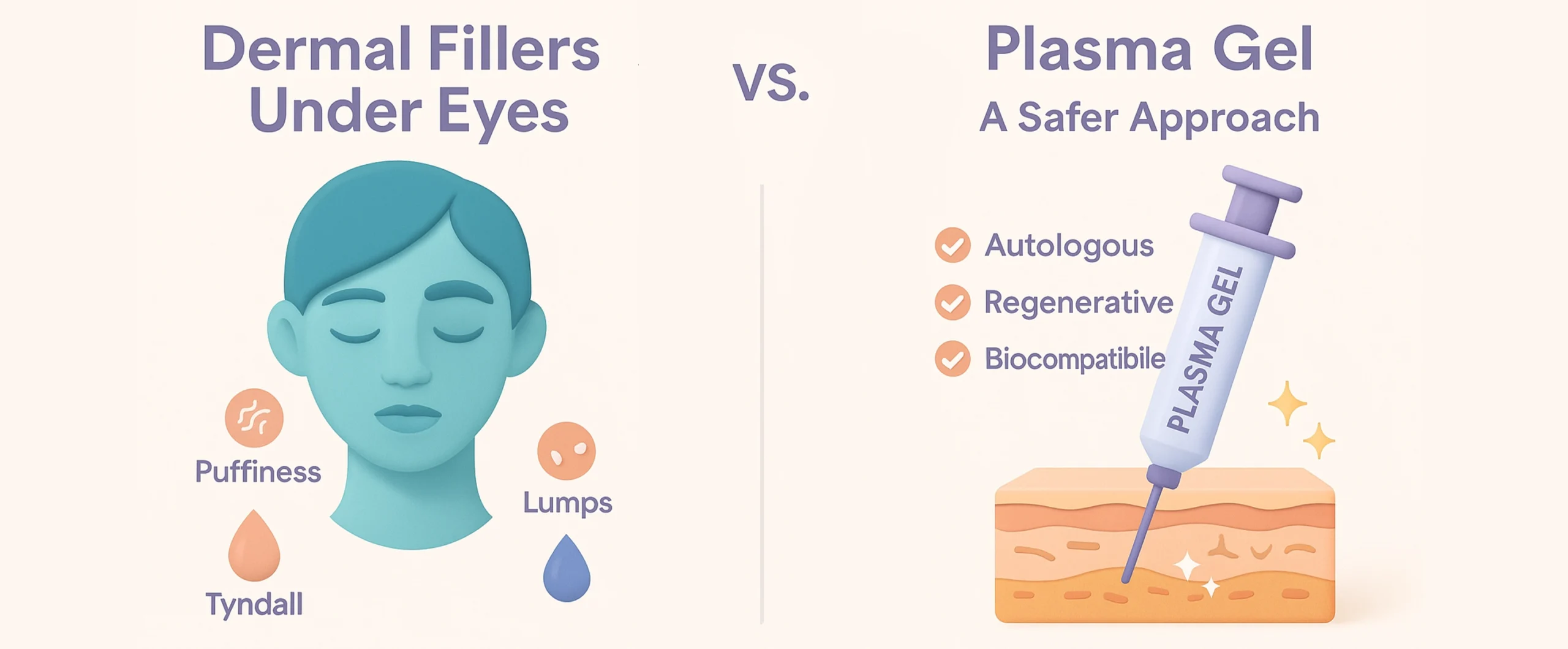
It’s impossible to ignore the popularity of dermal fillers for under eyes. These treatments have become a go-to for instantly restoring lost volume. However, the under-eye is an incredibly complex area to treat, and not all dermal fillers for under eyes are created equal. We often consult with patients who have valid concerns about potential side effects. A common question we hear is whether a standard tear troughs filler can look unnatural.
These concerns are precisely why considering alternatives to dermal fillers for under eyes is so important. The risks of puffiness or discoloration have paved the way for a new category of treatments that offer a safer, more natural, and regenerative solution, especially when compared to a basic prp injection.
➔ If you are also interested, learn more about our comprehensive approach to treating under-eye hollowness and shadows.
A Regenerative Solution: Experiences with Plasma Gel for Under Eyes
The future of aesthetic medicine is regenerative, a principle we champion at our clinic. Instead of relying on synthetic substances, we can now use your body’s own powerful healing components to rebuild tissue. This is a significant leap forward from a standard prp injection.
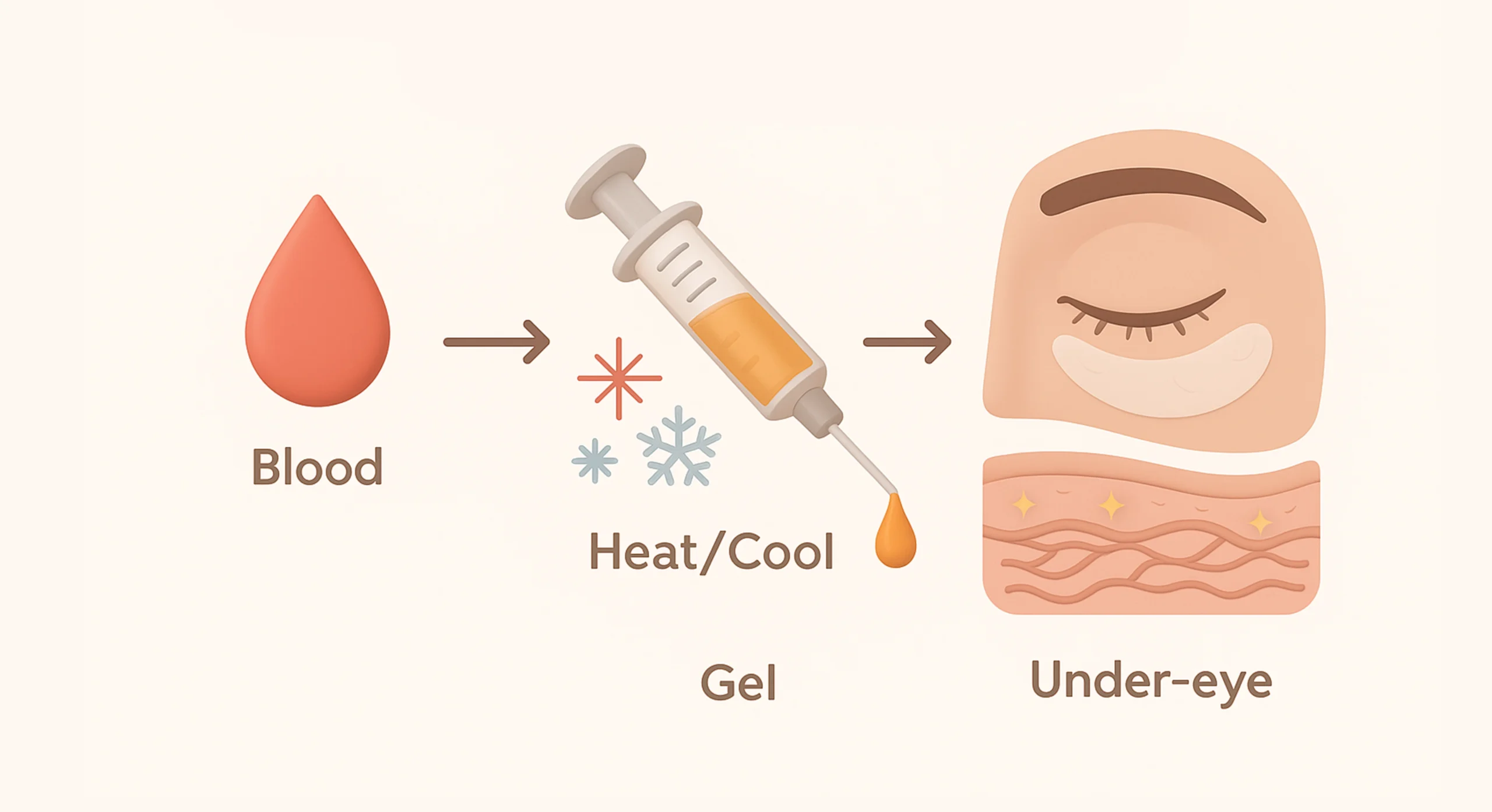
At Perfect B, we meet many patients looking for the safest tear troughs filler. Traditional dermal fillers for under eyes, while effective, can be tricky in this delicate area. This is where the Plasma Gel for Under Eyes treatment has become the core of our approach. It is a cutting-edge biofiller under eye solution created from your own blood, making it completely autologous. While many have heard of the benefits of a prp injection, Plasma Gel goes a step further by creating a natural gel that integrates perfectly with the tissue.
➔ To understand the full scope of our approach, learn more about the science behind our advanced Regenerative Medicine treatments.
From our clinic’s experience, the biofiller under eye treatment is a game-changer. Because it is derived from your own blood, it is safer for patients nervous about synthetic dermal fillers for under eyes. The results are smoother and more subtle. In our practice, the best Plasma Gel for Under Eyes is one that rejuvenates without looking “done.”
We’ve also treated patients who have had issues with a previous tear troughs filler. In those cases, a biofiller under eye treatment offers a safer, corrective approach. At Perfect B, we’ve found that this personalized technique not only enhances safety but delivers results that align beautifully with each patient’s natural features. Our preferred Plasma Gel for Under Eyes is a testament to this philosophy.
The Plasma Gel Procedure: What to Expect
The process for receiving our biofiller under eye treatment is straightforward. It begins with a consultation to confirm that a Plasma Gel for Under Eyes treatment is right for you. The procedure itself is a significant advancement over a simple prp injection.
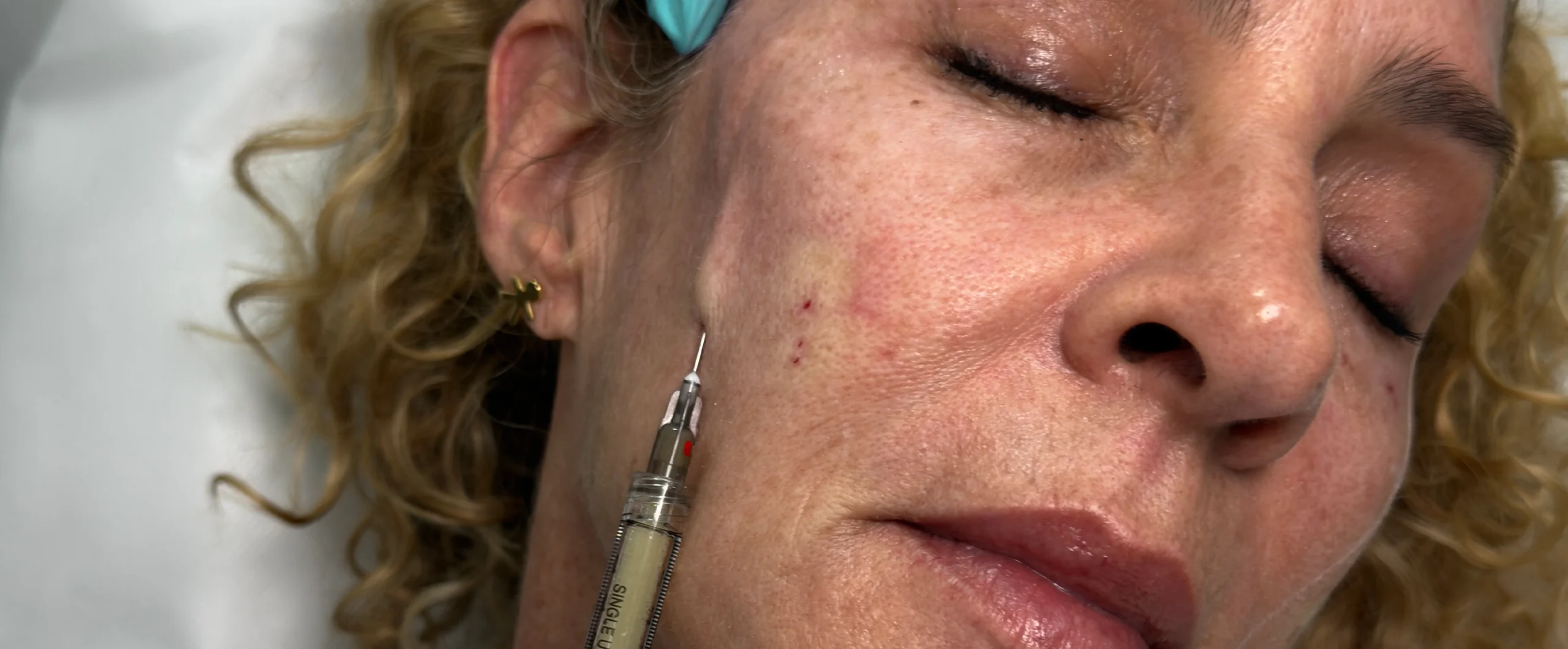
After a simple blood draw, your blood is processed to create the biofiller under eye gel. Our expert injector then skillfully places the gel, which acts as the ideal tear troughs filler. The entire process is safe, natural, and completed in about an hour. This is the future of under-eye rejuvenation.
Your Plasma Gel & Under-Eye Filler Questions Answered
Q1 Is plasma gel safer compared to dermal fillers for under eyes?:
Short answer: often yes, but it depends. Plasma gel and PRP are autologous (they’re made from the patient’s own blood) so they carry far lower risk of allergic reaction or foreign-body reaction than synthetic fillers. That said, any injection near the eye carries procedure-related risks (bruising, swelling, incorrect placement), and tear-trough work still needs a highly skilled injector.
In contrast, hyaluronic acid (HA) fillers give predictable immediate volume but have documented risks when used around the eye (long-term puffiness, lymphatic blockage, and rarely,serious vascular complications). So at Perfect B we often prefer autologous options for patients who want a lower immunologic risk profile or who prioritize regenerative effects.
Q2: What’s the difference between traditional under-eye filler and plasma gel for tear troughs?:
Think of HA fillers as instant structural volume (you inject gel and the hollow fills right away). Plasma gel/PRP works differently: it provides mild immediate volume plus a biologic stimulus growth factors that encourage collagen, extracellular matrix, and sometimes small vessel growth over weeks.
The result with plasma gel is usually subtler and more progressive; HA is faster and more dramatic. Clinically at Perfect B we choose based on the anatomy: deep hollowing or volume deficit that needs immediate correction: HA may be preferred. Crepey skin, thin skin, or patients who want a “natural, regenerative” route: plasma gel/PRP is often a better first step.
Q3: What are the typical under-eye before & after results with plasma gel?:
Typical course we see: mild improvement in skin texture and thickness within 4–6 weeks; progressive improvement at 3 months as collagen remodels; reduction in dark shadows and a softer transition from cheek to eyelid. Results are generally more natural and less “filled” than HA ,think improved tone and less hollowness rather than a dramatic bulking effect. Multiple sessions (usually 2–3 spaced 2 month apart) produce the best, longer-lasting outcome. Patients often report looking “rested” rather than “worked on.”
Q4: Can plasma gel fillers treat under-eye bags effectively?
It depends on the type of bag. If the “bag” is true protruding fat or severe laxity, plasma gel/PRP alone won’t eliminate the bulge, surgical or targeted structural treatments are usually needed. But if the issue is skin thinness, mild shadowing, or early laxity, plasma gel can thicken skin and improve the appearance of bags and dark circles by improving tissue quality and reducing hollowness. In short: very helpful for regenerative improvements and mild cases; less effective for pronounced herniated fat pads. (At Perfect B we evaluate with a careful eye exam before recommending a plan.)
Q5: What is the average under-eye filler cost when using plasma gel or PRP?
Prices vary by region and provider, but current clinical ranges we see and reference: PRP/PRF under-eye sessions commonly fall roughly $500–$2,000 per session depending on protocol and clinic; plasma-gel facial sessions (for smaller facial areas) are often listed around $750–$1,200 per session in the U.S. These are ballpark ranges, the total cost depends on how many sessions you need, whether additional treatments (microneedling, topical boosters) are combined, and the provider’s expertise. At Perfect B we give a tailored quote after an exam.
Q6: How does neovascularization improve outcomes in plasma gel under-eye treatments?
Neovascularization (formation of new, healthy microvessels) is a desirable biologic effect of PRP/plasma therapies. New microvasculature improves tissue perfusion and oxygenation, supports collagen production, and helps remodel the dermal matrix, small of which make thin under-eye skin thicker, more resilient, and less translucent.
A simple analogy: the treatment lays down scaffolding and adds tiny new “roads” so the skin can receive nutrients and repair itself over time the skin looks plumper and less shadowed. Scientific studies show PRP and plasma gels stimulate angiogenesis and collagen-related repair pathways, which explains these clinical benefits.
Q7: What’s the cost comparison: fillers for under eye cost vs. plasma gel pricing?
Comparatively: hyaluronic acid tear-trough fillers often run roughly $600–$1,500 per syringe (many patients need 1–2 syringes), so a single HA session commonly totals in the $800–$2,000 range depending on location and injector.
Plasma gel/PRP sessions are usually priced per treatment and, again, typically fall in the $1000-$1,500+ range per session depending on the clinic and whether multiple adjunctive procedures are used. In practice, HA gives a one-time, immediate correction that may need repeat treatment every 6–18 months; plasma gel/PRP usually requires a short series but can offer longer-term tissue improvement,so total cost over time can vary. We review these tradeoffs with patients at Perfect B and help match budget to goals.
The Future of Rejuvenation is You
The conversation around aesthetic treatments is shifting. It’s no longer just about filling lines; it’s about restoring skin health. Our Plasma Gel for Under Eyes treatment offers a revolutionary approach, delivering beautiful, lasting results. If you are ready to explore how a biofiller under eye treatment can refresh your appearance, we invite you to schedule your expert consultation at Perfect B today.
➔ Learn how Plasma Gel can refresh your eyes safely and naturally.