Perfect B, Doral Fl. | 09.03.25 | 5 min read.
Acne face mapping is making waves again, spreading across beauty blogs, TikTok, and skincare forums—as a trendy way to decode what your breakouts might be saying about your body. The theory? Each region of your face connects to a specific internal organ. For example, forehead acne may suggest liver imbalance, while chin pimples are often blamed on hormones.
But how accurate is this idea?
Our position at a glance: face maps can spotlight patterns, but they do not diagnose or reliably predict the cause of acne for everyone. In practice, we get real answers by looking at the whole picture during a consultation: breakout location, medical history, how lesions present (type and severity), diet, stress, skincare routine, and possible hormonal imbalance. Treatment works best when it’s multi-step and multi-modal, with strategies that control hormones and oil production while addressing daily habits.
In this guide, we break down what acne face mapping actually is, explore what modern dermatology says about breakouts by facial zone, and show how our full-picture approach turns patterns into a precise plan.
➔ If you’re looking for treatment strategies beyond traditional acne maps, explore our science-based Acne Treatment plans that address root causes with proven methods.
What Is Acne Face Mapping? Ancient Theories vs. Clinical Reality
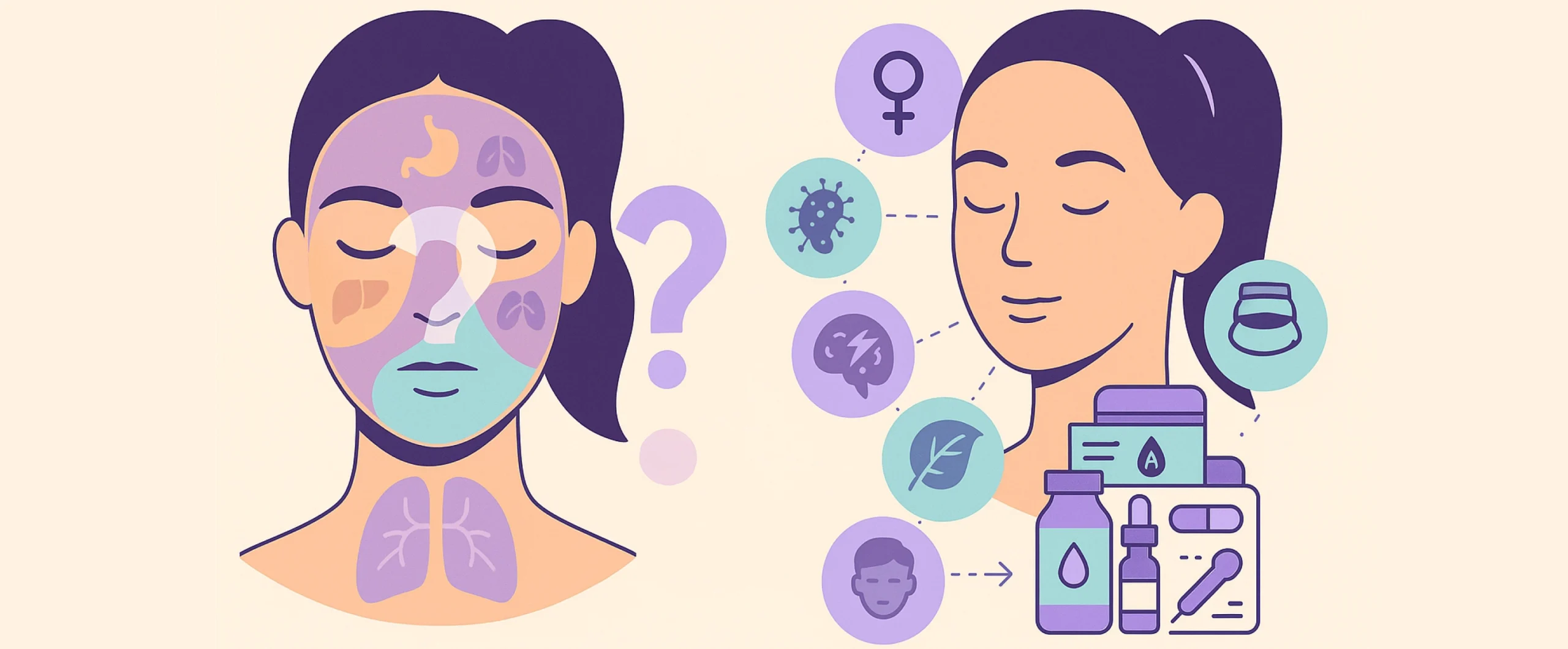
Acne face mapping (also known as mien shiang) originates from Traditional Chinese Medicine and Ayurveda. These ancient practices proposed that facial zones reflect internal organ health:
- Forehead: Digestive system
- Nose: Heart or circulatory system
- Chin and jawline: Reproductive system or hormonal imbalances
- Cheeks: Respiratory or spleen issues
Today, these ideas are often shared in the form of a “pimple face map” or “acne breakout map,” gaining traction online as a DIY diagnostic tool.
However, modern dermatology emphasizes that these claims lack solid scientific backing. While some patterns may exist, breakouts are influenced by a variety of external and internal factors, and face maps should be viewed more as observational tools than diagnostic guides.
What Your Breakouts Actually Mean, Zone by Zone
Let’s dive into the most common breakout zones and explore what science says about each one, keeping our full-picture approach in mind.
Forehead Breakouts
Clinical Explanation: Forehead acne is often linked to sweat, buildup from hair products, or friction from hats and headbands. This pattern, sometimes called pomade acne, happens when styling products migrate and clog pores. Stress can also increase oil production.
How we apply our approach: We confirm triggers by reviewing your workouts/sweat, haircare, and headwear, then layer topical exfoliants, routine timing, and product swaps.
Treatment Tips:
- Use salicylic acid to unclog pores and exfoliate
- Apply benzoyl peroxide for inflammatory breakouts
- Clean glasses daily to prevent bacteria buildup
Chin and Jawline Acne
Clinical Explanation: Breakouts here often correlate with hormonal fluctuations, especially cyclical, and can present as deeper, more painful lesions.
How we apply our approach: We assess cycle patterns and stress, adjust skin and makeup routines, minimize friction, and when indicated, consider hormonal therapy alongside topical retinoids.
Treatment Tips:
- Use topical retinoids like adapalene to regulate turnover
- Discuss hormonal treatments (e.g., spironolactone, select contraceptives) when appropriate
- Manage stress to help balance oil production
Breakout on Forehead Meaning: Products, Oil, and Stress
Clinical Explanation: Often related to contact and hygiene, phones, pillowcases, helmet straps, which drive acne mechanica.
How we apply our approach: We target the contact source, refine cleansing and exfoliation cadence, and support the barrier with non-comedogenic moisturizers.
Treatment Tips:
- Clean your phone screen daily
- Change pillowcases at least once a week
- Be gentle with exfoliants, cheek skin can be more sensitive
Neck, Mouth & Hairline Breakouts
Clinical Explanation: Frequently tied to shaving irritation, occlusive products, post-workout sweat, or residue from lip balms and conditioners.
How we apply our approach: We optimize shaving technique and products, remove occlusive triggers, and reinforce post-exercise cleansing.
Treatment Tips:
- Use fragrance-free shaving creams and avoid dull razors
- Wash your face after working out
- Avoid oily or waxy cosmetics around the mouth and hairline
Why Face Mapping Isn’t Enough
Face mapping makes for an appealing concept, but acne is multifactorial:
- Excess sebum (oil)
- Bacterial overgrowth (C. acnes)
- Clogged pores
- Inflammation
- Hormonal changes
- Stress and lifestyle factors
- Friction and cosmetic products
How our approach becomes the core of care: We use location as one data point, then layer in history, diet, stress, skincare, hormone context, and lesion morphology. From there, we build a multi-step plan that can combine:
- Topicals: retinoids, salicylic acid, benzoyl peroxide
- Systemics when indicated: spironolactone or other hormonal strategies
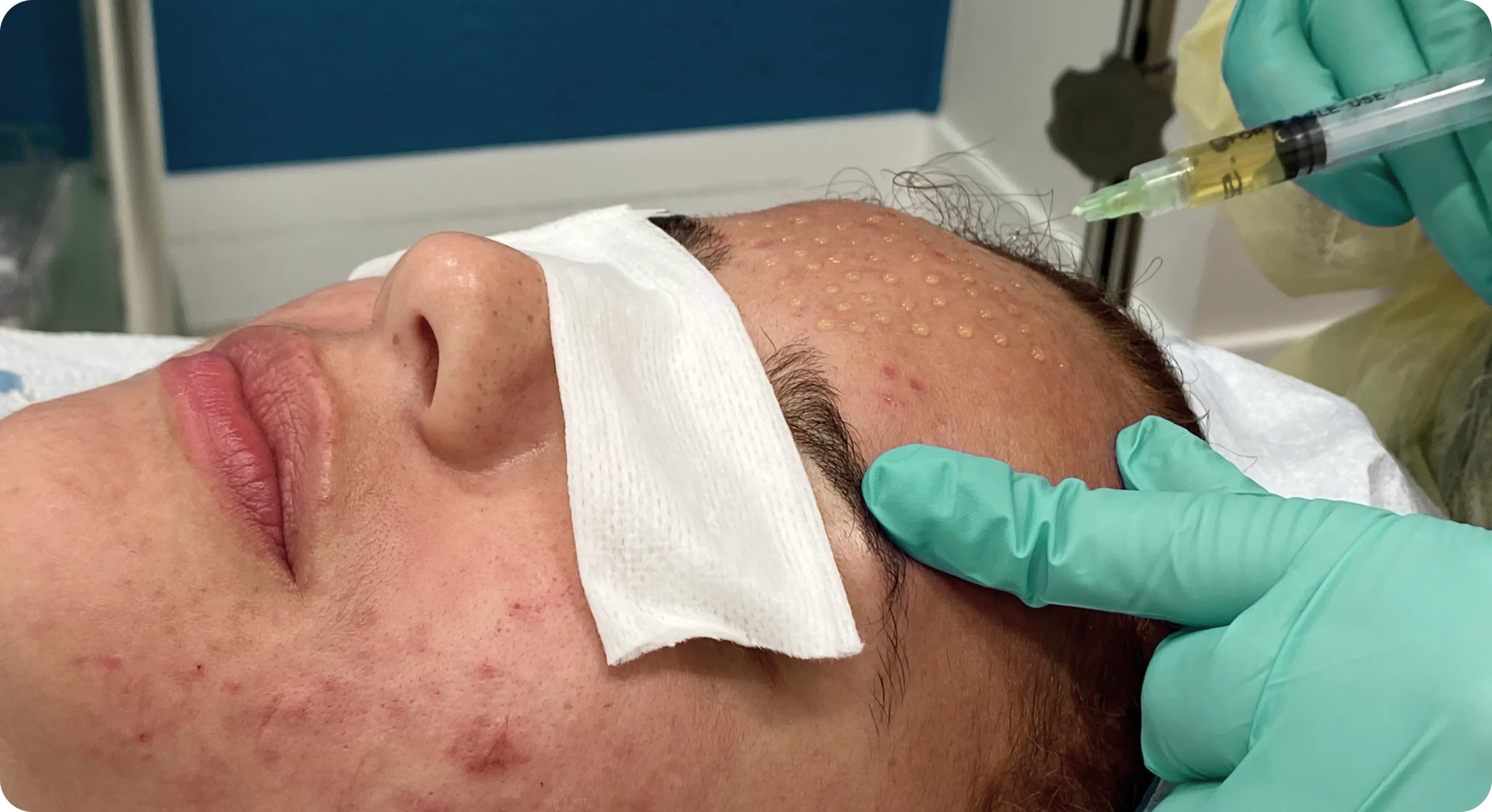
- Procedures as needed: chemical peels, extractions, energy devices
- Lifestyle coaching: product routines, sweat and friction management, diet guidance
This blended strategy is why patients see consistent, positive results, because it treats the cause, not just the map.
Medical-Backed Acne Treatment by Zone
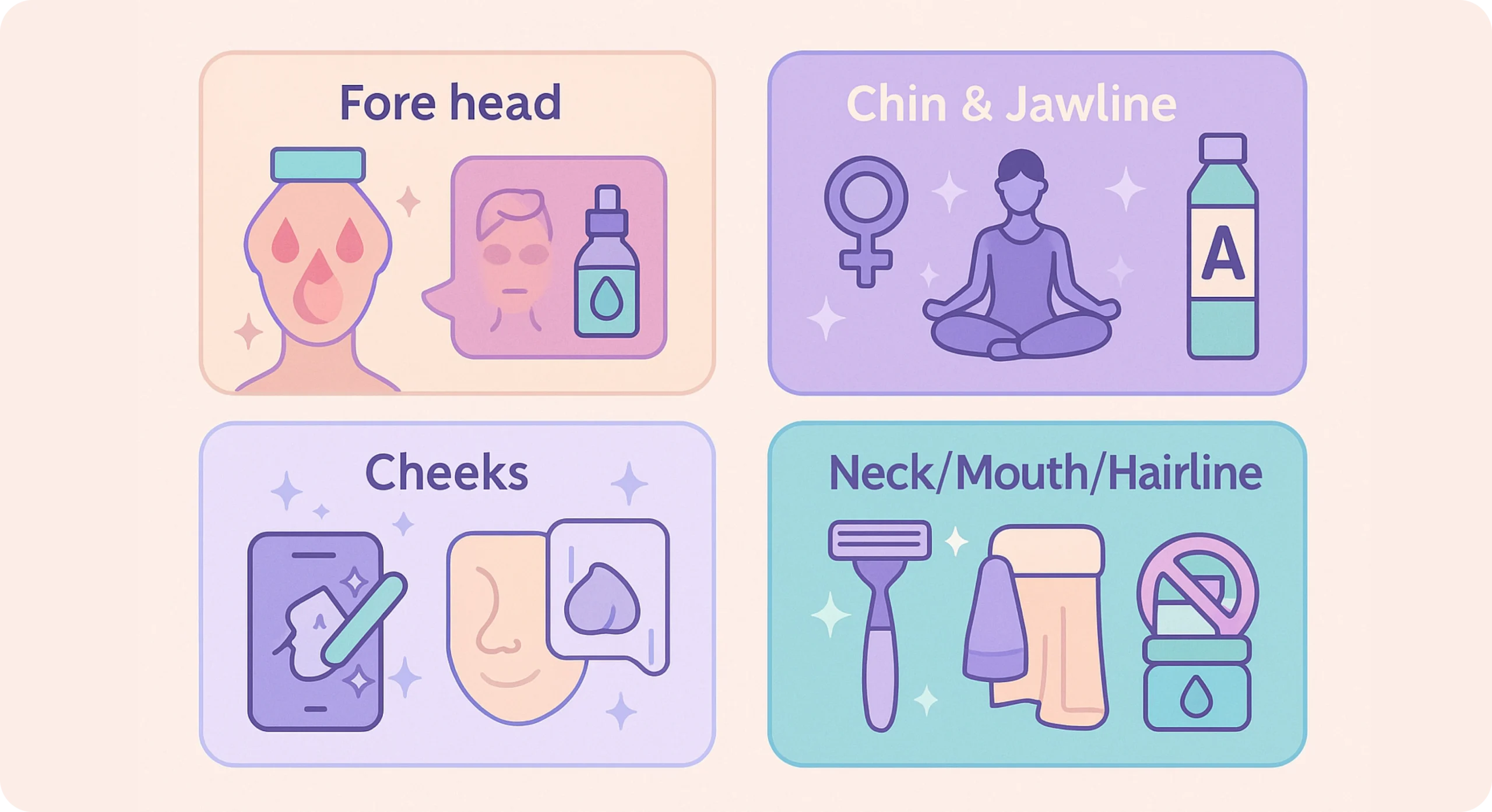
Here’s a quick location-specific guide to clearing your skin, applied through our full-picture lens:
| Facial Zone | Treatment Focus |
|---|---|
| Forehead/Nose | Salicylic acid cleanser, limit hair products, lightweight moisturizer |
| Chin/Jawline | Adapalene, consider hormonal therapy when appropriate, reduce stress |
| Cheeks | Clean phone/pillowcase, exfoliate 1–2x/week |
| Neckline/Jaw | Avoid tight collars, shave with care |
| Around Mouth | Use non-comedogenic lip products, keep hands off face |
A Word on Pimple Popping Videos
While pimple-popping content might be oddly satisfying, DIY extractions can lead to scarring, infection, and worsened inflammation. Leave extractions to licensed professionals as part of a controlled, sterile plan.
When to See a Dermatologist
If breakouts persist despite a consistent routine, or if they cluster in a specific region (like recurrent forehead or deep chin lesions), it’s time to consult an expert.
We do not rely on acne maps. We rely on:
- Hormonal evaluations
- Skin analysis and lesion patterning
- Lifestyle and diet assessments
- Tailored, multi-modal treatment protocols
Scientific Backing: The American Academy of Dermatology Association notes that hormonal acne is particularly common in adult women. Fluctuating hormone levels can lead to increased sebum (oil) production, inflammation, and clogged pores, primarily along the jawline and chin.
Your Acne Questions Answered (FAQ)
Q1: Is it ever okay to pop a pimple?
We know the temptation of zit popping is powerful, and the internet is filled with satisfying videos. However, we strongly advise against it. The act of zit popping can push bacteria deeper into the skin, leading to more inflammation, infection, and a much higher risk of permanent scarring. The popularity of videos showing zit popping has made it seem harmless, but it’s incredibly risky for your skin’s long-term health. Resisting the urge for zit popping is crucial for preventing post-inflammatory hyperpigmentation (dark spots) and pitted scars. Instead of zit popping, apply a spot treatment containing benzoyl peroxide or salicylic acid. Remember, a sterile extraction performed by a dermatologist is not the same as at-home zit popping.
Q2: Is zit popping harmful or helpful for acne recovery?
We know it’s tempting, but popping a zit usually does more harm than good. When squeezed, bacteria and inflammation can spread deeper into the skin, leading to more redness, swelling, or even scarring. The truth is, professional extractions done in a clean, controlled setting are much safer than at-home squeezing.
Q3: Is it true that pimples on the nose mean something deeper internally?
Not really. While old myths suggest that pimples on the nose reflect “internal organ health,” modern dermatology shows they’re usually linked to oil production, clogged pores, or bacteria. The nose is part of the “T-zone,” which naturally produces more oil, making it a hotspot for breakouts.
Q4: Does a pimple on the nose say something about lifestyle or skincare?
Sometimes, yes. Excess oil, heavy makeup, forgetting to cleanse properly, or using pore-clogging skincare products can make nose breakouts worse. Lifestyle habits like touching your face often or not cleaning glasses or phone screens can also add to the problem.
Q5: What about a single mouth zit?
A pimple near the mouth can be hormonal, but it can also be caused by irritation from chapstick, toothpaste, or even from resting your hand on your face.
Q6: How can I prevent breakouts on the nose caused by glasses, sweat, or diet?
A few small changes can help:
Clean glasses regularly to prevent buildup.
After sweating, gently cleanse the skin, sweat plus oil can clog pores.
Choose non-comedogenic skincare and makeup.
Diet-wise, some people notice flare-ups from excess dairy or sugary foods, so being mindful can make a difference.
Q7: Are breakouts around the mouth linked to digestion or lip products?
Breakouts near the mouth aren’t usually tied to digestion, despite what some “face maps” online suggest. More often, they come from irritants: toothpaste, lip balms, or products with heavy oils that clog pores. Mask-wearing and sweating in that area can also play a role.
Q8: What is the meaning of pimples on nose?
This is usually due to a high concentration of active oil glands, leading to clogged pores and blackheads.
Q9: Why do I get breakouts around my mouth and chin during certain times of the month?
This is classic hormonal acne. Fluctuations in estrogen and progesterone, especially before a menstrual cycle, can increase oil production and trigger chin and jawline breakouts. You’re not alone it is one of the most common patterns we see in our clinic.
Final Takeaway: Map Patterns, Treat Causes
Face maps can help you notice trends, but your skin clears when we treat why you break out. Our differential value is a full-picture consultation and a multi-step plan that blends hormone and oil control with smart routines and, when needed, in-clinic procedures. That is how we turn patterns into results.
📍 Visit us at Perfect B, Doral FL
📞 Call or message us today to schedule your consultation