
Perfect B, Doral Fl. | 09.10.25 | 5 min read.
A quick story about hype, hope… and what really works
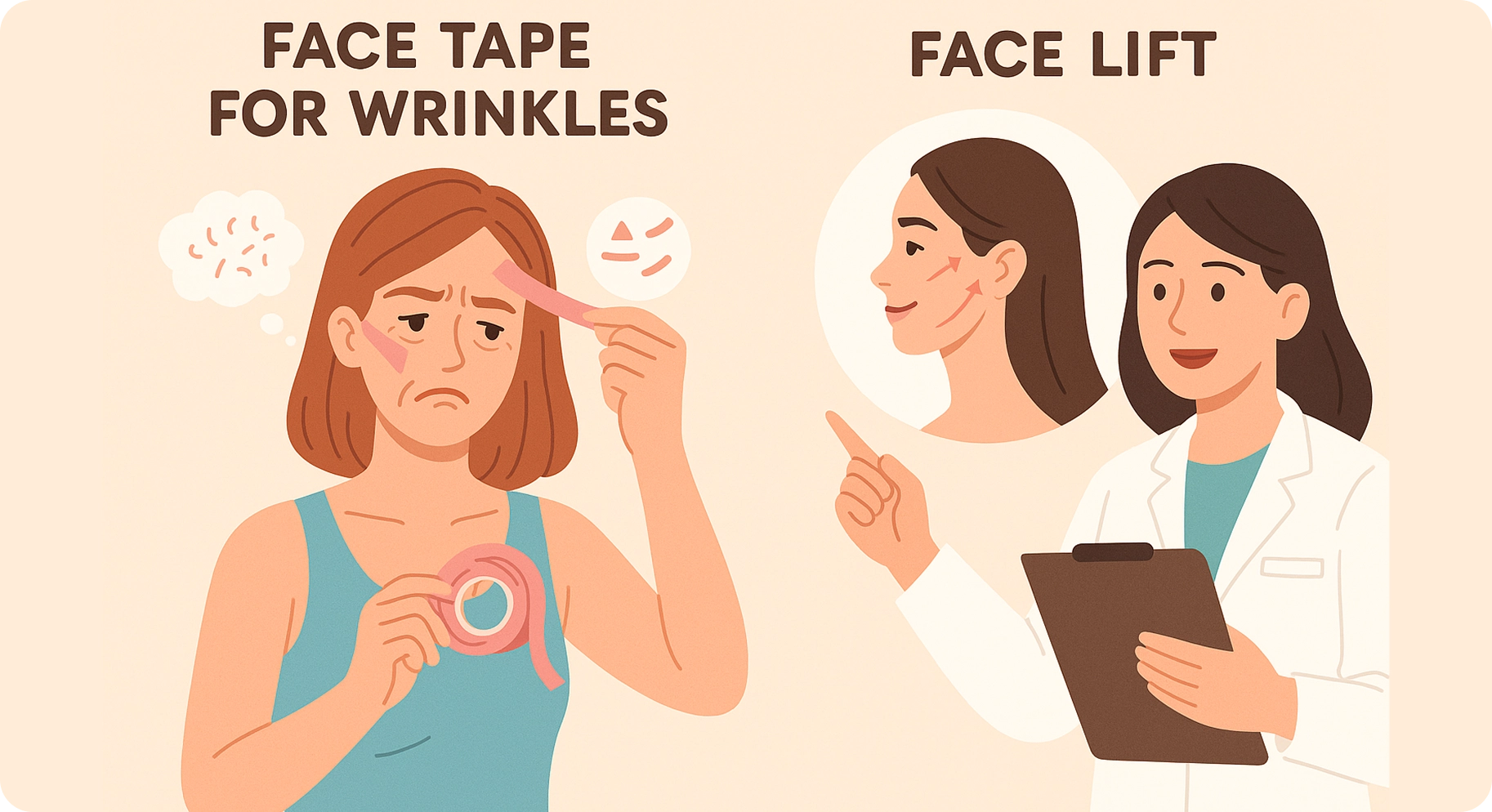
If you’re researching face tape for wrinkles or exploring face taping for wrinkles for a quick lift, this guide clarifies what tape can and cannot do.
Face tape can smooth lines while it’s on. Think camouflage, not correction. “Before & after” pictures created by tape are optical tricks of tension, lighting, and angles. If you want lasting change, compare the illusion of a face tape lift with the anatomy-changing results of medical face lifting, and consider safe, non-surgical options you can actually get in-clinic.
What Is Face Tape Really?
“Face tape” covers a family of adhesive devices designed to pull skin taut. In beauty circles you’ll see facial tape strips or patches for sleep, event-only pull systems often called face lift tapes (also written face lift tape, facial lift tape, or face lifting tape), and trend variations like Korean face tape from K-beauty tutorials. Mechanically, tape creates external tension: it repositions skin temporarily without changing muscles, collagen, fat pads, or ligaments. That’s why it can look dramatic in the mirror, and also why your skin returns to baseline when the tape comes off.
When people talk about facial taping for wrinkles or an at-home face tape lift, they’re describing this optical tightening. It’s a styling technique, not a tissue treatment.
In searches about face taping for wrinkles, many readers ask what tape to use for face taping. For clarity, face tape for wrinkles offers only temporary tension and styling. These devices are also marketed as face lift tape for wrinkles, face lift tapes, facial lift tape, or face lifting tape.
Direct access (internal link): Explore our regenerative medicine approach to collagen remodeling for wrinkle reduction without surgery in Doral, FL, how biologic therapies support the results you actually want.
(…) According to medically reviewed dermatologists of Byrdie, the primary risks involve skin irritation from adhesives and potential damage to the skin barrier with repeated use, which can worsen skin texture over time.
Safety First: What Are the Risks?
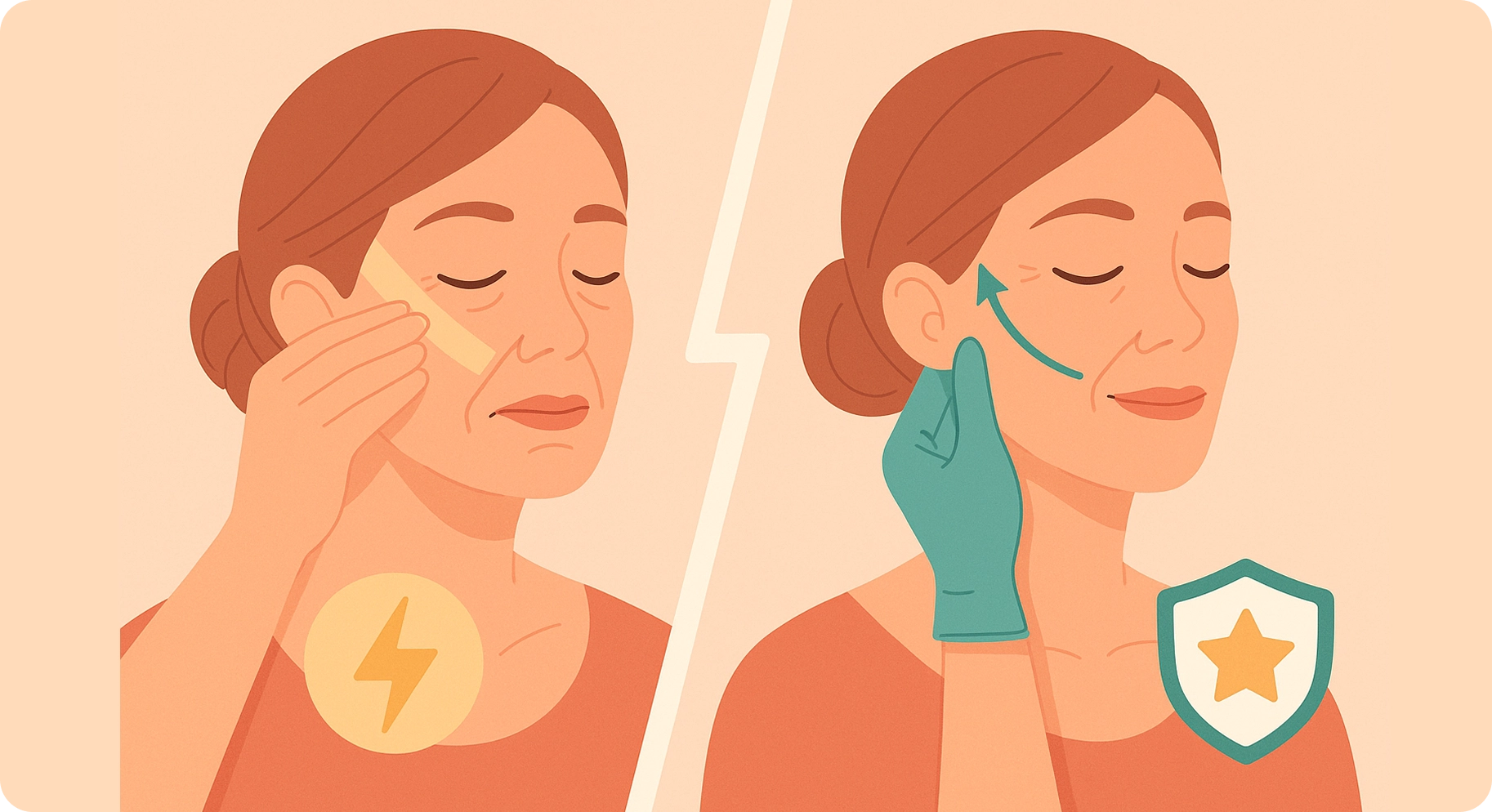
Adhesives can irritate delicate facial skin. Prolonged adhesive taping for lines may disrupt the barrier, causing redness, dryness, or acne from occlusion. Phrases you’ll see online such as anti wrinkle tape, forehead wrinkle tape, skin taping for wrinkles, and collagen tape for wrinkles all describe versions of the same idea: hold skin still so lines look smoother. None of these add collagen or fix muscle pull.
If you’ll experiment for a one-off event, silicone is gentler. Many people specifically search silicone tape for wrinkles or silicone tape for face wrinkles, and some even call it silicone scar tape for wrinkles. Does silicone tape help wrinkles? It can reduce friction and temporarily smooth the surface, but it won’t remodel tissue. Avoid using household medical tape for wrinkles, as its adhesive isn’t formulated for repeated facial use. Be especially careful with taping forehead wrinkles or the thin under-eye where removal can cause micro-tears.
If you experiment with silicone tape for wrinkles, treat it as short-term. Silicone tape for wrinkles may smooth temporarily, but face taping for wrinkles can irritate delicate skin. For sensitive users wondering what tape to use for face taping, patch-test first.
Our Clinical Perspective at Perfect B
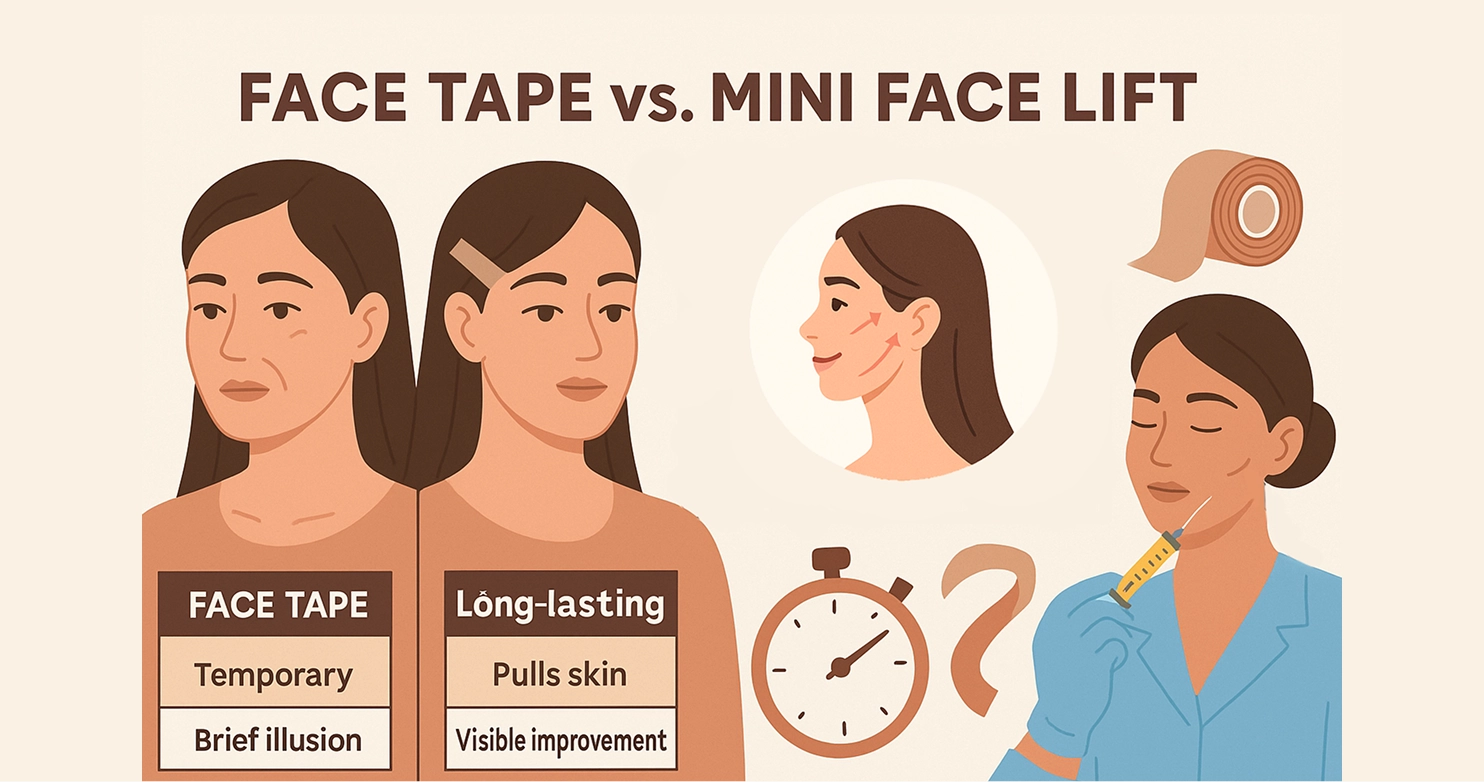
Face tape has definitely become one of those “Instagram-famous” trends. At first glance, it seems simple: stick it on, pull a little, and voilà, a smoother face. And truthfully, adhesive tapes can give a quick, surface-level change by restricting movement and lightly stretching skin. Some people, especially those with drier skin, even notice that silicone-based tapes soften fine lines overnight by holding in hydration. But the reality is, these results are fleeting. Once the tape comes off, the skin goes right back to its natural state. And if you’re acne-prone, the occlusive layer can sometimes trigger breakouts or irritation.
At Perfect B, we see patients who ask about face tape all the time, often right before deciding on a non-surgical lifting treatment. We welcome these questions, because curiosity means people are paying attention to their skin and exploring options. Our team always takes the time to explain the difference: tape can smooth for a night, but professional treatments (like Botox for expression lines, PDO threads for a V-line effect, or collagen-stimulating devices) actually remodel skin or muscle, giving results that last months to years instead of hours. That’s why we personalize every plan, matching treatments to the individual’s skin type, goals, and comfort level, with no cookie-cutter approaches.
And when it comes to preserving those results, that’s where the real magic lies. Maintenance goes beyond trendy hacks like face tape. Consistent SPF use, medical-grade skincare, proper hydration, and timely touch-ups with energy devices or injectables all help extend and protect your investment. In other words, while tape may playfully smooth things out for a selfie, clinic-grade care builds a foundation that keeps you looking refreshed and confident in the long run.
Face Tape vs. Medical Face Lifting (and Why the Comparison Feels Unfair)
Tape creates tension on the surface; surgery repositions structures beneath the skin. That’s why lifting patches for wrinkles can mimic a subtle, temporary sweep, while a surgical lift changes contours after healing.
For event nights only, silicone tape for wrinkles can smooth temporarily, but limit wear and avoid delicate skin.
Because readers often ask about money, people search face lift price, face lift how much, and face lift cost, or look at a smaller procedure via mini face lift price and cost of a mini face lift. Price depends on surgeon, setting, anesthesia, and the exact procedure; clinics post a wide range. Similarly, results are usually shown as mini face lift before and after or full facelift galleries. Our clinic focuses on non-surgical care; we provide the comparison to set expectations, not to sell surgery. If you want lift-like change without an operation, minimally invasive threads for face lift may be discussed with qualified providers; they mechanically suspend tissue but still don’t equal surgical longevity.
➔ Visit our Face Lift page to see a gallery of results and learn about the procedure in detail.
When People Use Tape (and Safer Ways to Do It)
Some readers will try tape for a photoshoot or big night. If you’re in that camp and Googling what tape to use for face taping, best face tapes for wrinkles, or best face taping for wrinkles, stick to skin-safe silicone adhesives, apply to oil-free skin, and keep wear time short. Be careful with hairline anchors and removal.
Overnight approaches such as night face tape for wrinkles or face taping at night are more irritating because friction, occlusion, and long contact time stress the barrier. If you’re repeatedly waking up with redness or breakouts, stop. It’s a sign your skin is telling you no.
➔ See if a mini face lift is the right procedure for you by exploring other non surgical options.
Evidence-Based (Non-Surgical) Alternatives That Actually Work
Here’s how to transform the “look lifted only while taped” effect into changes you can see without adhesives:
- Neurotoxins for dynamic lines: For motion-driven creases (frown, crow’s feet, forehead), small, targeted doses relax the muscle pattern. Timeline: onset in ~3–7 days; typical duration ~3–4 months. Great when you’re tempted by adhesive taping for lines on the forehead, this solves the cause instead of immobilizing the skin with forehead wrinkle tape.
- Microneedling / collagen induction therapy (with or without biologic serums such as PDRN/PRF): A series stimulates collagen for texture and fine lines. Expect gradual remodeling over 4–6+ weeks. It won’t copy a surgical vector, but it will improve the canvas that tape tries to fake.
- Peels (series-based)Ñ Chemical peels refine dullness and shallow lines and pair well with sunscreen/retinoid routines.
- Energy-based tightening (when appropriate). Best for mild laxity; results take months as collagen reorganizes.
These in-clinic options are why you don’t have to rely on lifting patches to get a smoother look. For anyone relying on face tape for wrinkles nightly, shifting to treatments beats face taping for wrinkles. You won’t need to ask what tape to use for face taping once collagen improves.
Decision Flow: Is Tape “Okay for Tonight,” or Is It Time for a Consult?
Big event, zero downtime? A single, short application may be acceptable if your skin tolerates adhesives. Choose a skin-safe option (what tape to use for face taping), keep wear minimal, and remove slowly with oil. If you’re shopping best face tapes for wrinkles, prioritize medical-grade silicone and read return policies.
Bothered daily or breaking out? Skip night face tape for wrinkles and face taping at night. Book a consult so we can match the concern (dynamic lines vs. static folds vs. texture) to the correct treatment sequence.
For those who still prefer silicone tape for wrinkles, limit wear time and avoid fragile zones like the upper eyelid and thin under-eye.
Not sure what tape to use for face taping for a one-time event? We outline what tape to use for face taping and safer alternatives during your consult.
(…) As publications like Allure have noted, this trend has resurfaced from old Hollywood tricks into a modern social media phenomenon, leaving many to wonder about its efficacy
FAQ (Direct Answers for People-Also-Ask)
Q1 Does tretinoin help with hyperpigmentation?
Yes, it really does. Tretinoin speeds up how quickly your skin sheds old, pigmented cells and replaces them with fresh new ones. Over time, this helps fade dark spots, sun damage, and post-acne marks. The key is patience results build gradually, usually becoming noticeable after several weeks of consistent use.
Q2 Can I use hydroquinone with tretinoin every day?
They can be powerful partners, but not always every single day. Both ingredients can cause dryness or irritation if overused. At Perfect B, we often recommend alternating days or combining them in a carefully tailored plan. Think of it as a balancing act: enough to brighten and correct, but not so much that your skin gets angry, that is why we personalized our recommendations.
Q3 How to use tretinoin for skin rejuvenation?
Start slow. A pea-sized amount, applied at night on clean, dry skin, is usually plenty. Less is more with tretinoin. Always follow with a good moisturizer, and never skip sunscreen in the morning, your skin will be more sensitive to sunlight. Over time, this routine encourages smoother texture, a brighter tone, and overall rejuvenation.
Q4 What are the side effects of hydroquinone in skin treatments?
Most people do well with hydroquinone, but some may notice redness, dryness, or temporary irritation. Rarely, long-term use without medical guidance can lead to ochronosis, a bluish discoloration of the skin. That’s why we always emphasize professional supervision and time-limited use.
Q5 What are the benefits of a skin brightening treatment using tretinoin and hydroquinone?
Together, they’re a powerhouse duo. Hydroquinone slows down excess pigment production, while tretinoin speeds up skin turnover. The result? A more even, radiant complexion that feels refreshed and youthful. It’s like tackling both the root cause and the surface signs of pigmentation at once.
Q6 What results can I expect from tretinoin cream before and after use?
In the early weeks, you might see some dryness or mild flaking, that’s a sign the skin is adjusting. Stick with it. Over the months, your skin becomes smoother, fine lines soften, dark spots fade, and pores look more refined. Patients often describe it as looking “fresh-faced” again.
Q7 Can tretinoin help with wrinkles and fine lines?
Yes, this is one of its most famous benefits. Tretinoin stimulates collagen production, the protein that keeps skin firm and elastic. Over time, this reduces the appearance of fine lines and wrinkles, helping skin look more youthful and resilient. It’s one of the most scientifically proven ingredients we use at Perfect B for anti-aging.
Why Comparing Tape to a Facelift Can Mislead (Money Questions Included)
It’s natural to jump from “tape works while it’s on” to wondering about surgery. Patients search face lift price, face lift how much, and face lift cost, or they consider a smaller procedure using mini face lift price and cost of a mini face lift. Prices vary substantially by geography, anesthesia, surgeon experience, and scope, which is why clinics post ranges and emphasize consultation. If you’re browsing mini face lift before and after galleries or asking about threads for face lift, use that research to clarify your aesthetic goal: lift, volume, texture. We’ll build a non-surgical plan that fits your timeline and tolerance for downtime.
The Bottom Line (and a Better Path Forward)
A face tape lift can be fun for photos, but it’s still anti wrinkle tape, not anti-aging care. The moment you remove it, skin relaxes. If you’re relying on skin taping for wrinkles every week, it’s time to invest in changes that last: neurotoxins for movement lines, collagen induction for texture, peels for clarity, and energy-based tightening when indicated. Those build toward the natural, camera-ready look tape tries to fake.
If you’ve been comparing face tape for wrinkles to clinical approaches or debating face taping for wrinkles for everyday use, a tailored plan will outperform adhesives every time.
Ready to Trade Tape for Results?
If you’re weighing tape against the promise of a more lifted look, bring your inspirations, including the face taping for wrinkles before and after screenshots and the face lift before and after galleries. Let’s map them to a safe, non-surgical plan tailored to your skin and goals. Book a no-pressure consult, and we’ll show you the path from temporary tricks to confident, lasting results.
The final verdict on face tape for wrinkles is that it’s a temporary illusion.
➔ Tired of temporary fixes? See what a real transformation looks like. Schedule a consultation with our experts today to discuss a personalized plan for your skin.