
Hair loss, a condition that affects millions of women worldwide, extends far beyond mere physical changes. It’s not just about strands falling out; it’s about losing a part of one’s identity, confidence, and self-esteem. Hair loss can deeply impact a woman’s sense of self-worth and emotional well-being, whether caused by genetics, hormonal changes, medical conditions, or lifestyle factors.
The societal expectation that thick, beautiful hair is a symbol of femininity can worsen the distress caused by hair loss. We will explore various treatment options available to address hair loss in women.
What are the causes of hair loss in women?
Sudden hair loss can be a disconcerting experience for many women, often leading to feelings of anxiety and concern about underlying health issues or changes in appearance. Understanding the causes and potential treatments for sudden hair loss is essential for addressing the condition effectively.
Nutritional Deficiencies
Inadequate intake of essential nutrients, such as iron, zinc, vitamin D, and biotin, can contribute to hair thinning and loss in women. Poor diet or conditions that impair nutrient absorption, such as celiac disease or certain gastrointestinal disorders, may exacerbate this issue.
Hormonal Balances
Fluctuations in hormone levels, particularly during pregnancy, childbirth, menopause, or as a result of conditions like polycystic ovary syndrome (PCOS), can disrupt the hair growth cycle and lead to hair shedding or thinning.
Stress and Emotional Factors
Psychological stress, anxiety, and traumatic events can trigger a type of hair loss called telogen effluvium, where a significant number of hair follicles enter the resting phase prematurely, resulting in increased shedding.
Weight loss-related hair loss
Rapid or extreme weight loss, whether due to crash dieting, excessive exercise, or medical conditions like anorexia nervosa, can shock the body and lead to temporary hair shedding as a result of nutrient deficiencies or hormonal changes.
What does Alopecia look like for women?
Patchy baldness, also known as alopecia areata, is a type of hair loss characterized by sudden and unpredictable hair loss in distinct patches on the scalp or other areas of the body. This condition is believed to be an autoimmune disorder, where the body’s immune system mistakenly attacks the hair follicles, leading to hair loss. Patchy baldness can vary in severity, with some individuals experiencing small, coin-sized bald patches, while others may lose hair more extensively.
Androgenetic Alopecia: Female Pattern Hair loss
Androgenetic alopecia, commonly referred to as female pattern hair loss (FPHL), is the most common form of hair loss in women. It is characterized by a gradual thinning of hair, primarily on the crown and frontal areas of the scalp, resulting in a widening part or visible scalp.
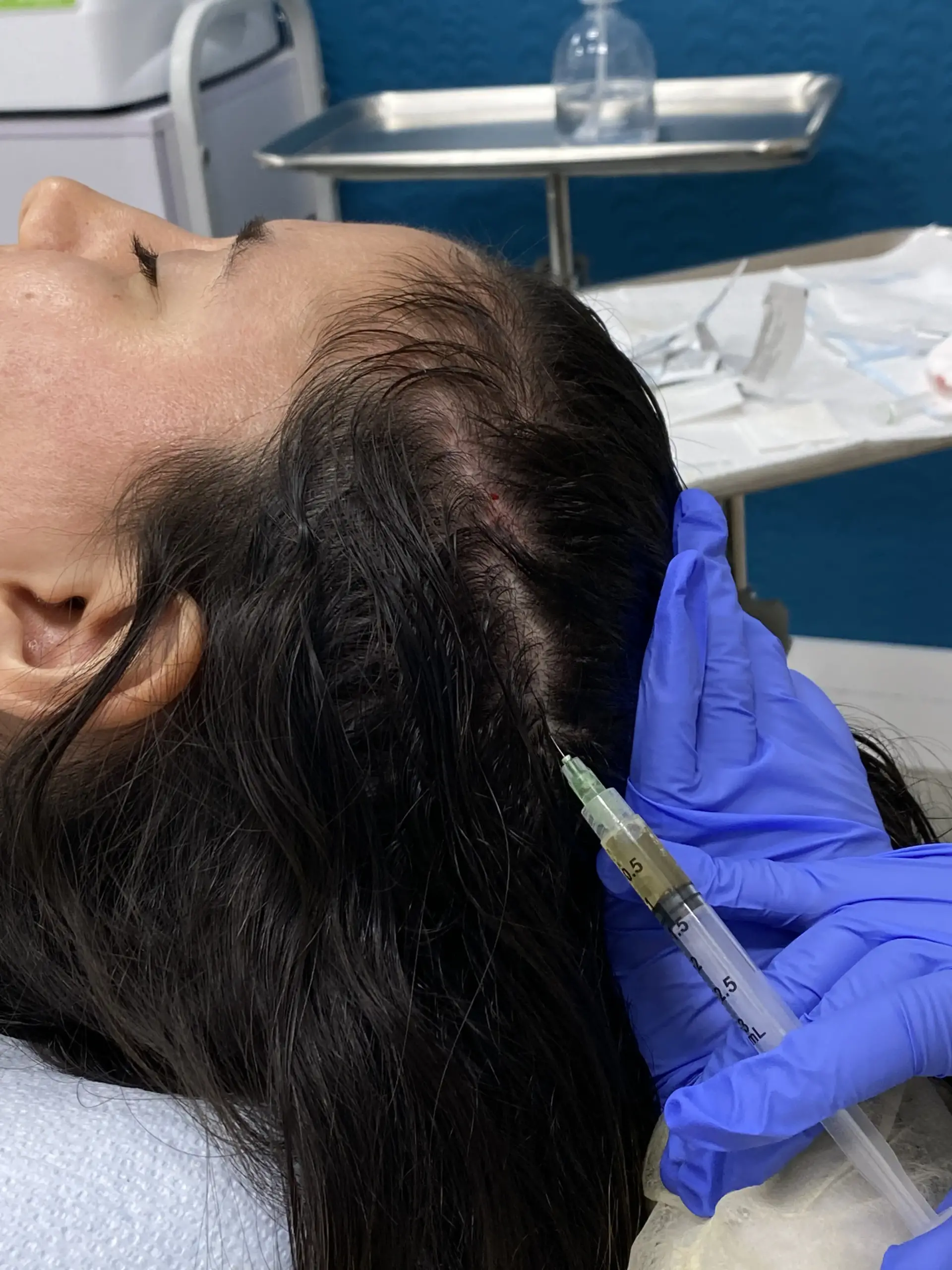
How Androgenetic Alopecia affects hair follicles
Androgenetic Alopecia disrupts the natural hair growth cycle by shortening the anagen (growth) phase and prolonging the telogen (resting) phase. This results in the production of shorter, finer hairs with each subsequent growth cycle, eventually leading to a decrease in hair density and visible thinning.
What are some effective treatments for hair loss for women?
There are numerous treatments for hair loss for women, some of which are more traditional and others that are emerging and have great results. Keep reading below for more information.
Traditional Treatments
Traditional treatments for hair loss in women include medications such as minoxidil, a topical solution that promotes hair growth, and finasteride, an oral medication that inhibits the hormone implicated in hair follicle miniaturization. Corticosteroid injections are also used to treat patchy hair loss by suppressing immune response and reducing inflammation. While minoxidil and corticosteroid injections can stimulate regrowth and halt further loss, finasteride may be prescribed with caution due to potential side effects. These treatments offer effective options for women seeking to address various forms of hair loss, providing opportunities for regaining confidence and self-assurance.
Emerging treatments
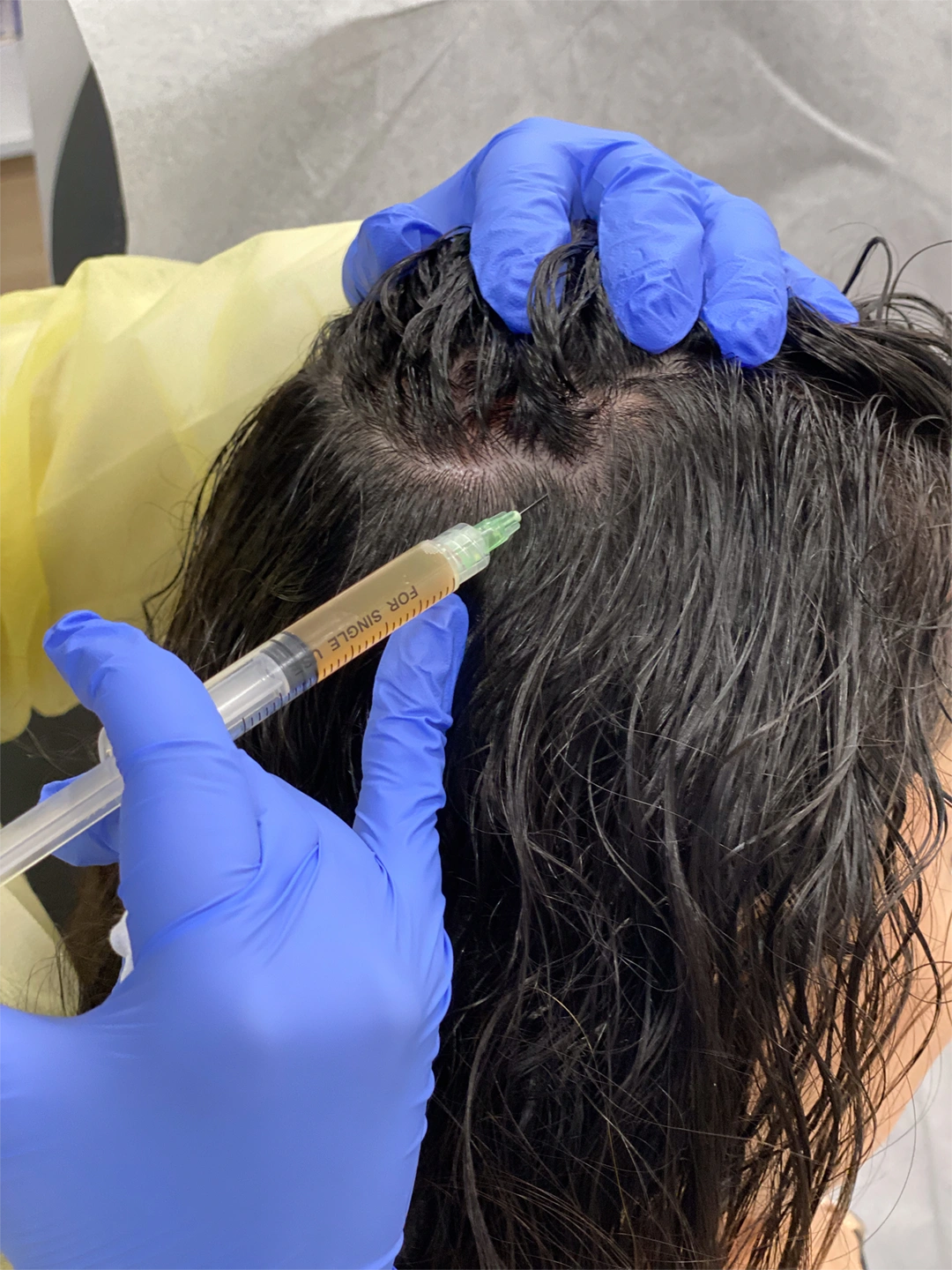
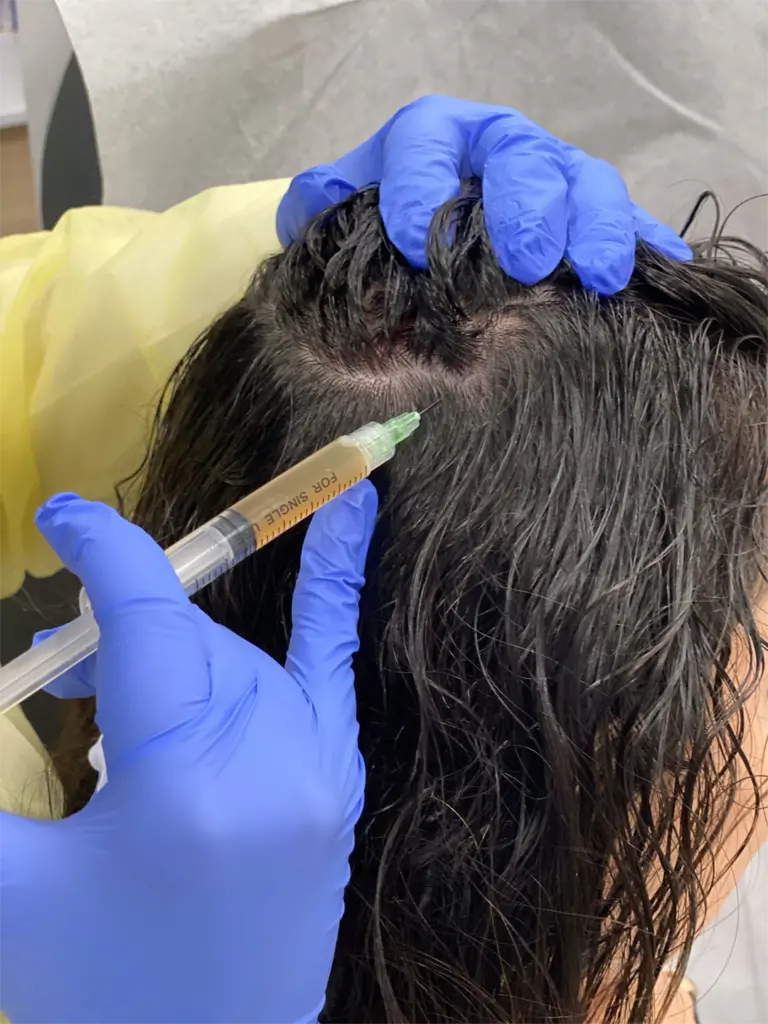
Blood Plasma Therapy, a promising treatment for hair loss for women, involves extracting a sample of the patient’s blood, processing it to concentrate platelets, and then injecting the resulting plasma directly into the scalp. This plasma contains growth factors that promote hair growth and repair damaged hair follicles, making it an effective option for addressing various types of hair loss, including female-pattern hair loss and alopecia areata.
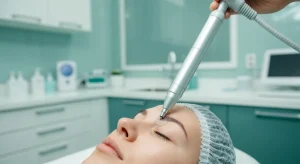
Microneedling for Hair Loss is another innovative treatment for women experiencing hair loss. This procedure, also known as collagen induction therapy, utilizes a device with fine needles to create microscopic punctures in the scalp, stimulating the body’s natural wound-healing process. In addition to improving scalp health and circulation, microneedling has shown potential to enhance the efficacy of other hair loss treatments, such as topical minoxidil or Blood Plasma Therapy.
Red Light Therapy, also referred to as low-level laser therapy (LLLT), is a non-invasive and painless option for treating hair loss in women. This therapy involves exposing the scalp to specific wavelengths of red or near-infrared light to stimulate cellular activity and improve hair follicle function. By increasing blood flow to the scalp and enhancing cellular metabolism, red light therapy promotes hair growth and reduces inflammation, offering another effective treatment for hair loss for women.
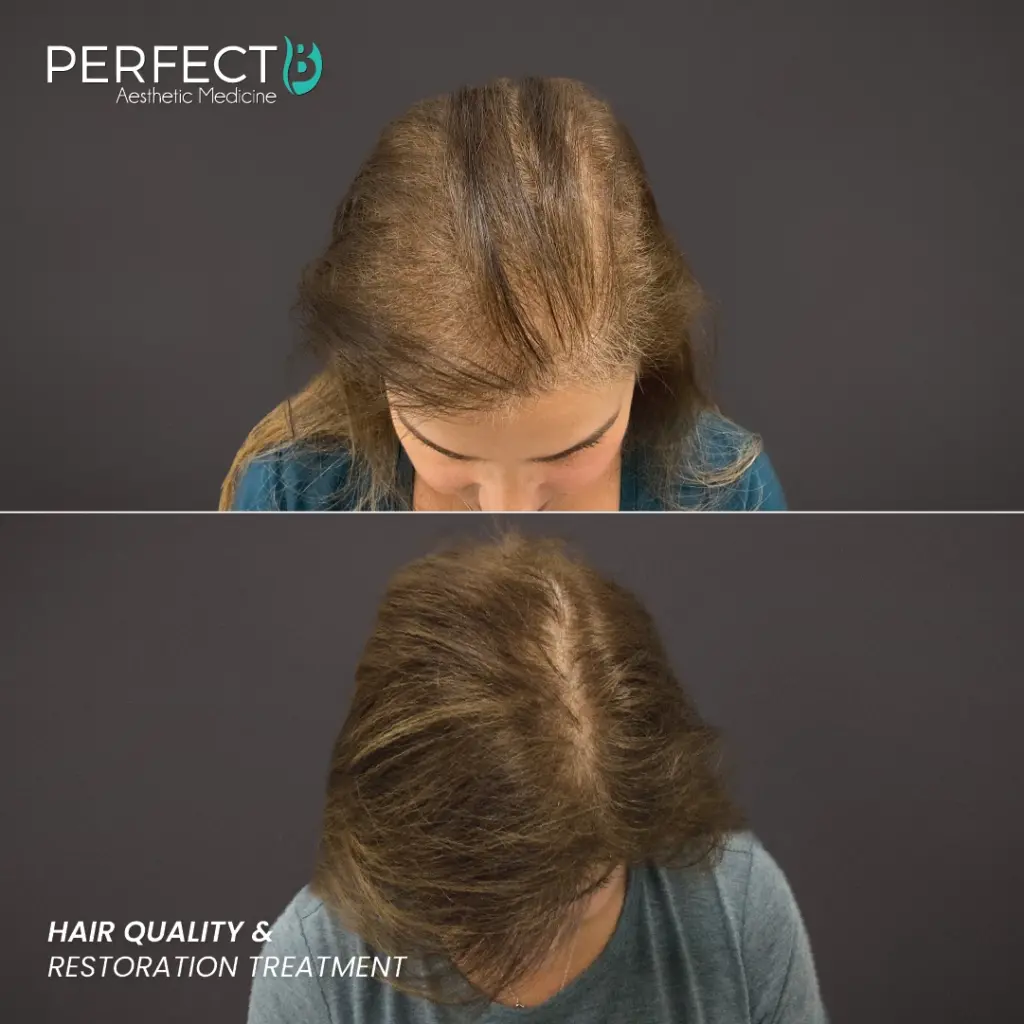
How can I reach multiple treatments for Optimal results?
Combining multiple treatment modalities to target different aspects of hair loss simultaneously and maximize results. For example, you might combine topical minoxidil with PRP therapy or microneedling to promote hair growth and improve hair follicle function synergistically.
What’s my next step?
In conclusion, addressing hair loss in women requires a comprehensive approach that combines traditional treatments with innovative therapies. It’s crucial for women experiencing hair loss to seek professional help from experienced medical providers who can offer personalized solutions. If you’re ready to take the next step towards regaining confidence and achieving fuller, healthier hair, we encourage you to visit one of our medical providers for personalized treatment recommendations. Don’t let hair loss hold you back – take control of your hair health today.