Perfect B, Doral Fl. | 11.19.25 | 5 min read.
What Is a Glycolic Peel Fast Definition
A glycolic acid peel is a type of alpha hydroxy acid treatment used to brighten tone, smooth texture, and refresh dull skin. In consumer language you will also see it called a glycolic acid face peel, a glycolic facial peel, or simply a glycolic peel. It can be performed as a superficial treatment or, at higher strengths and with technique, a more penetrating treatment that loosens built up dead cells for a clearer and more even surface. Consumer health references frame it in plain terms and confirm common uses across acne, dark spots, and photoaging. In our clinic a glycolic acid chemical peel is the most requested option for gentle resurfacing and the glycolic acid peel description above explains why it remains a core choice.
How It Works Why It Rejuvenates
To understand a glycolic acid peel session, start with a quick rejuvenation definition. A peel is a controlled exfoliation that triggers renewal and reveals smoother and brighter skin. Glycolic acid is the smallest AHA molecule, so it moves between skin cells and loosens the “glue” that holds dead cells together. This reduces surface roughness, helps lift excess oil from follicles, and can diminish the look of dark spots by interrupting pigment formation. Evidence reviews also highlight that depth depends on concentration, number of coats, and contact time. These are the levers your clinician adjusts so the peel can act as a light chemical peel or as a more assertive session when appropriate. This is why a glycolic acid chemical peel or a glycolic acid face peel can visibly refresh tone in a controlled way.
Benefits You Can See
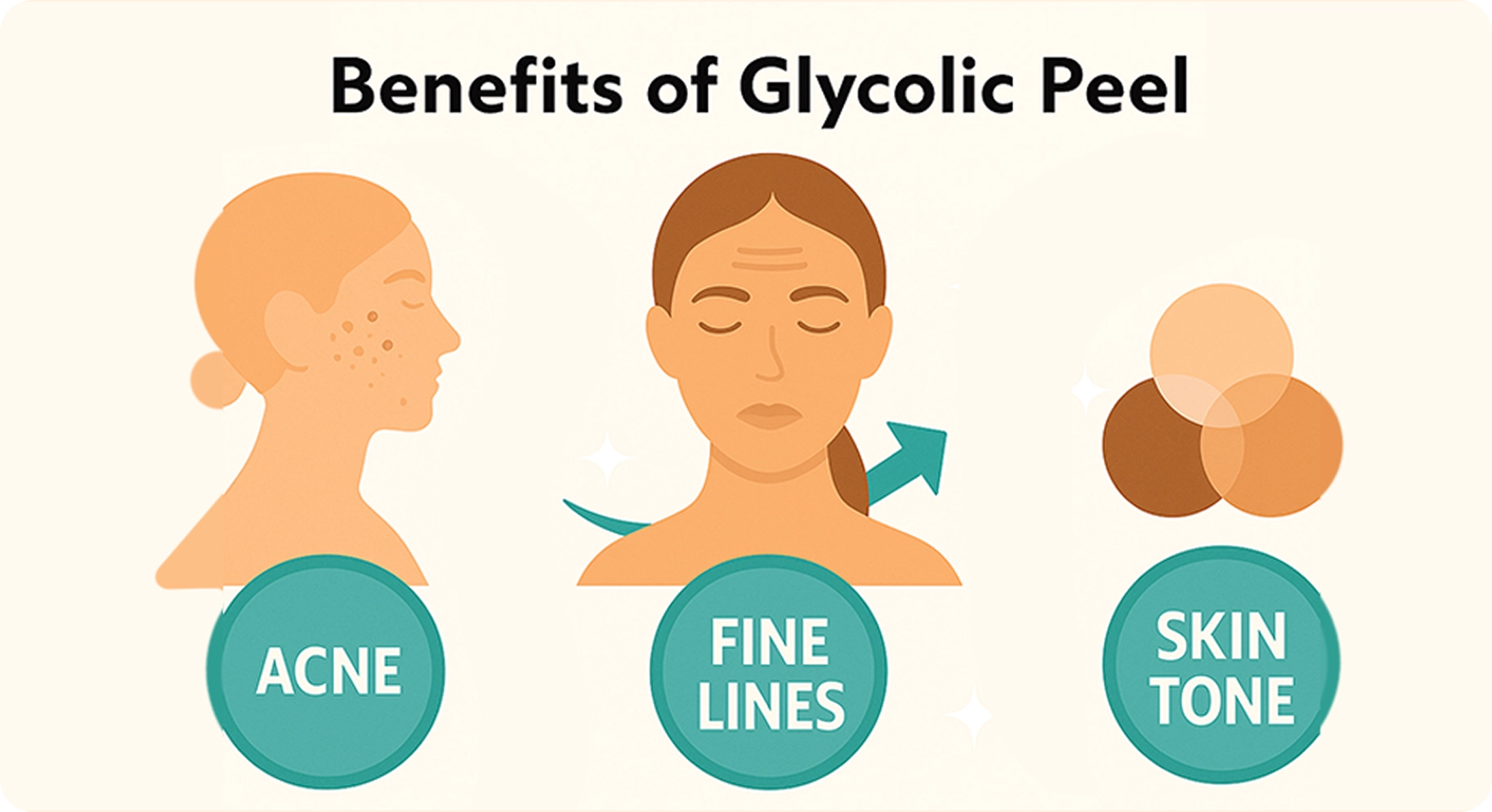
Among noninvasive skin rejuvenation options, glycolic ranks as a versatile choice. Patients often report a fresher glow, tighter looking pores, softer fine lines for mild photoaging, and more even tone after a short series. As part of face rejuvenation treatments, we use a glycolic acid chemical peel strategically for acne congestion, early texture change, and blotchy tone. Consumer facing medical pages and peer reviewed reviews align on these benefits when peels are spaced properly over several sessions. For patients comparing options, the glycolic acid chemical peel delivers consistent results across concerns without long downtime. We may pair a glycolic acid face peel with targeted skincare to extend results between visits.
Who Is a Candidate
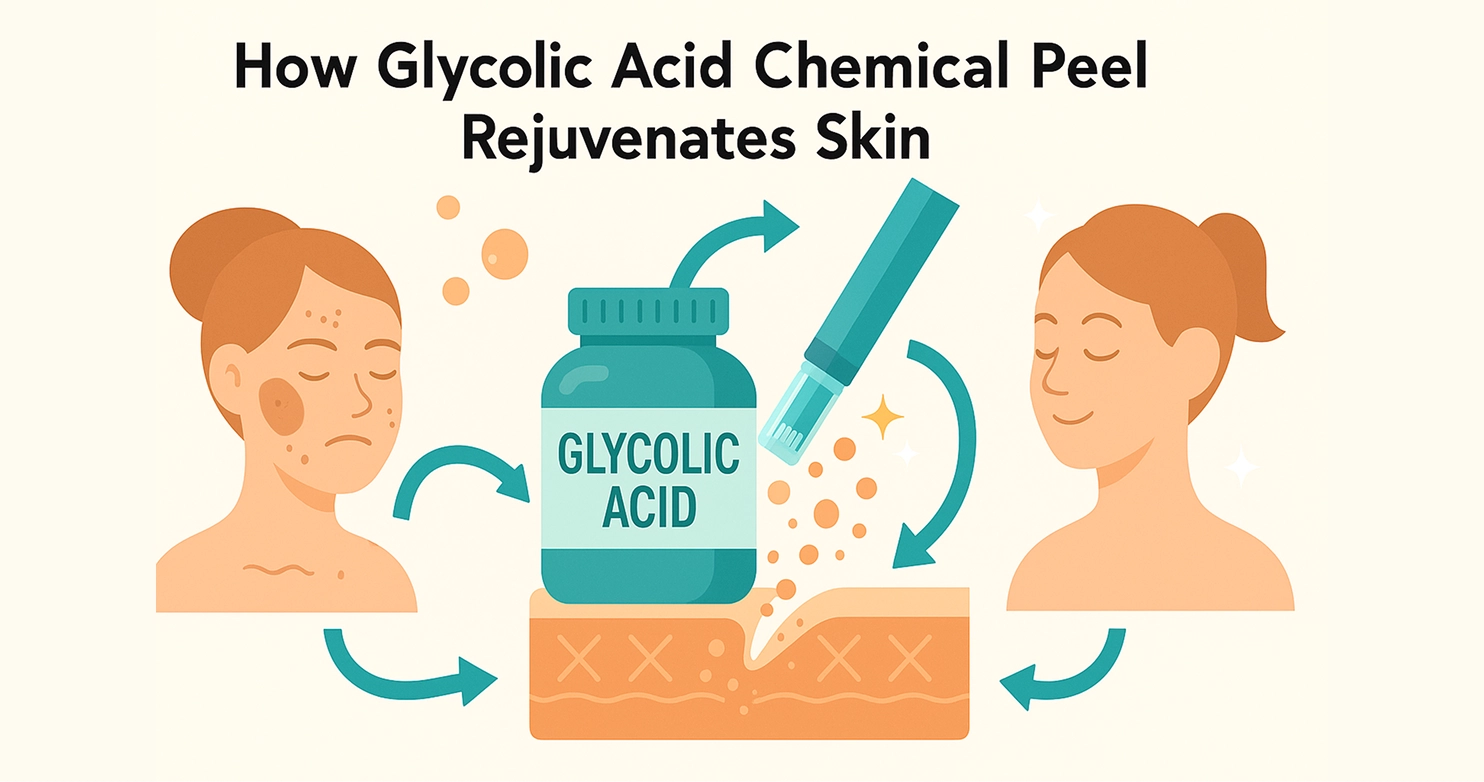
A chemical peel with glycolic acid can be a good match if you have recurrent clogged pores, superficial acne marks, blotchy pigment, or early sun damage. We will avoid or postpone if you are sunburned, have active infection, or are using sensitizing topicals. If your main need is deep wrinkle remodeling we may guide you to alternatives. Otherwise, chemical peel glycolic acid protocols are excellent for top layer renewal with minimal downtime. Consumer guidance emphasizes choosing qualified providers and tailoring strength to skin history. If you want a starter procedure, a glycolic acid chemical peel can be an ideal first step.
➔ Want wrinkle support plus tone correction? Explore our Skin Rejuvenation pathway to see how tretinoin vs hydroquinone choices integrate with long‑term maintenance.
Conditions We Treat With Glycolic
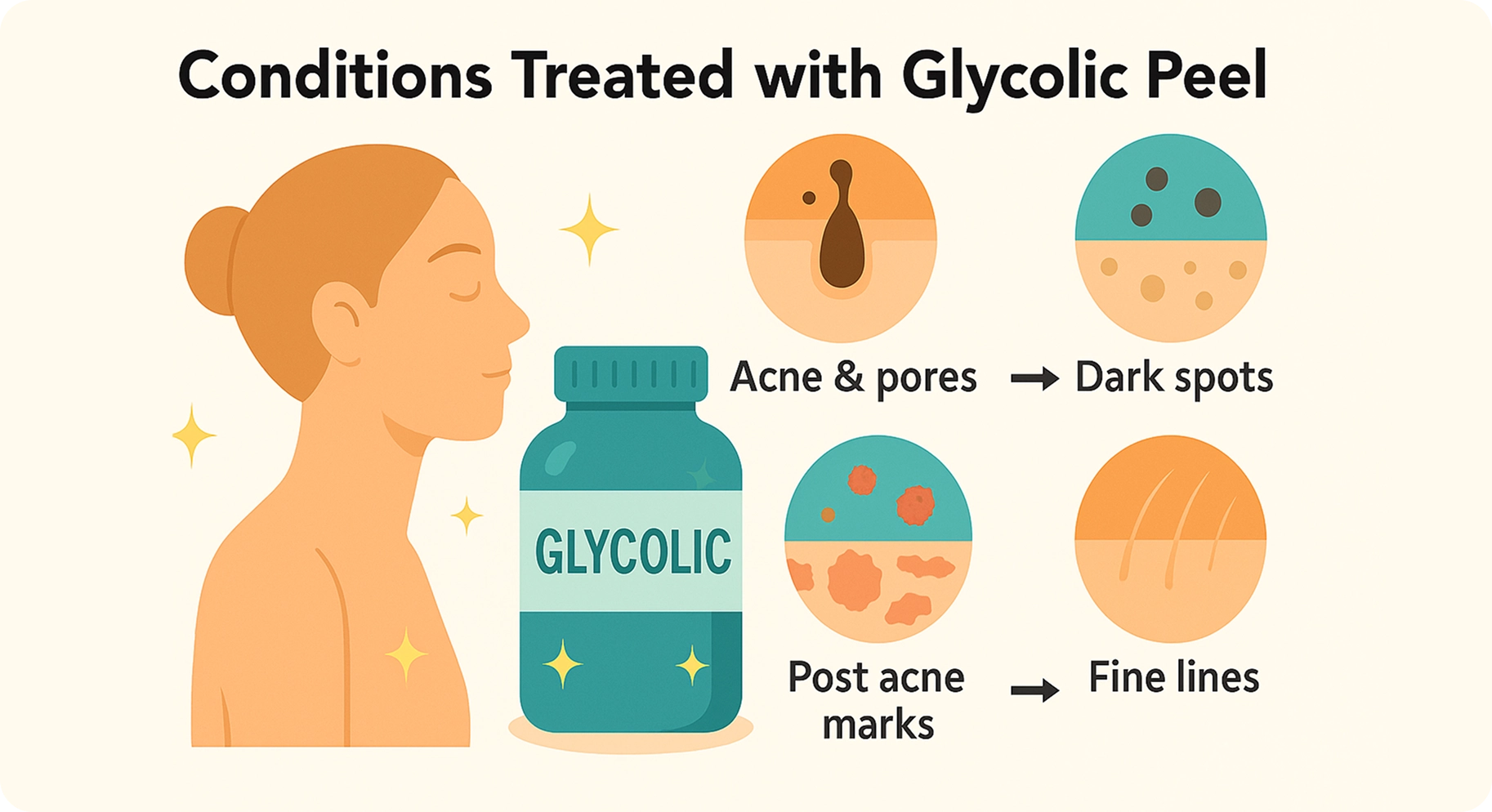
- Acne and pores: loosens compacted cells and oil within follicles to improve surface clarity and the appearance of enlarged pores.
- Post inflammatory marks: a chemical peel for dark spots can speed fading of flat brown patches after breakouts or irritation, which is a subset of chemical peel for hyperpigmentation care.
- Melasma (select cases): often paired with priming topicals such as hydroquinone and retinoids and strict sunscreen; a carefully titrated glycolic acid face peel can be incorporated when appropriate.
- Mild photoaging: small improvements in fine lines and blotchy tone. Deeper wrinkles usually need other tools, but a glycolic acid peel is frequently a helpful first rung.
A chemical peel with glycolic acid can be a good match if you have recurrent clogged pores, superficial acne marks, blotchy pigment, or early sun damage. We will avoid or postpone if you are sunburned, have active infection, or are using sensitizing topicals. If your main need is deep wrinkle remodeling we may guide you to alternatives. Otherwise, chemical peel glycolic acid protocols are excellent for top layer renewal with minimal downtime. Consumer guidance emphasizes choosing qualified providers and tailoring strength to skin history. If you want a starter procedure, a glycolic acid chemical peel can be an ideal first step.
➔ Visit Skin Brightening Treatment to understand how a chemical peel for dark spots fits into a broader regimen for uneven tone and melasma and how we design a chemical peel for hyperpigmentation plan for long term control.
Safety by Skin Tone (Fitzpatrick I to VI)
Evidence shows a glycolic acid face peel is safe in Fitzpatrick I to IV when technique is conservative and post care is strict. For types V to VI we proceed carefully, often starting with a light chemical peel, priming, and shorter contact times to reduce the risk of post inflammatory hyperpigmentation. The key safety levers are: start lower, extend time only when tolerated, neutralize precisely, and space sessions with adequate healing time. Clinical reviews underscore priming and sun protection to limit PIH. Your plan may begin with a glycolic acid face peel at conservative strength, followed by a second glycolic acid chemical peel only after your skin shows full recovery especially when designing a chemical peel for hyperpigmentation protocol.
What to Expect at Your Visit Our Protocol
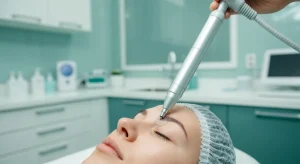
Professional glycolic peels follow a predictable flow. We cleanse, then use an acetone degrease, choose the percentage for your concern, apply evenly, monitor two to five minutes, neutralize, then apply a calming post care layer. Total chair time is usually under 30 minutes. Many people see a brighter look after one session, but durable change comes from a short series. This step by step mirrors how many dermatology clinics operate safely every day. In our clinic, a glycolic acid chemical peel visit also includes tailored aftercare and scheduling your next glycolic acid face peel when indicated.
Side Effects and Downtime
Expect a chemical peel face timeline like this: temporary tingling or warmth during application, then mild redness, tightness, and flaking over the next several days. Rare events include blistering or prolonged color change. Risk is higher with untrained application, excessive strength, or poor sun habits. Consumer guidance lists common effects and reminds patients that sun exposure and smoking can amplify irritation. Adjust both habits around peel time to reduce risk. When your goal is a chemical peel for hyperpigmentation, we pay extra attention to pre and post treatment routines to lower PIH risk while still delivering the benefits of a glycolic acid chemical peel.
At Home vs In Clinic
Store and online options are typically light chemical peel kits at lower percentages. They can freshen superficial dullness but they are not a substitute for a clinic evaluation and strength control. Many people try a glycolic acid face peel at home and later schedule an in clinic glycolic acid face peel for more pronounced issues or when treating uneven tone. An at home glycolic acid face peel can be reasonable for users who follow instructions closely, but professional oversight matters if you have sensitive skin, darker skin tones with PIH risk, or a history of irritation. Consumer health pages note that at home products cost much less but deliver gentler results; patients aiming for a chemical peel for hyperpigmentation typically benefit from a supervised glycolic acid chemical peel series.
Price and Packages
The chemical peel price varies by city, provider credentials, and peel strength. Patients researching options for a glycolic acid chemical peel often compare rates between clinics offering professional glycolic peels or bundled glycolic acid face peel sessions. Consumer references cite broad ranges, roughly $100 to $600 for mild to moderate peels, while clinics may bundle series for better value.
We will quote your exact plan in the consultation so you know the number of sessions and the aftercare included. We publish a chemical peel price range during consult so you know total spend. Package quotes list a chemical peel price per visit and any savings. If you plan a series, the total chemical peel price is discussed up front so there are no surprises. Patients comparing a chemical peel for hyperpigmentation series with other options can request a side by side that includes total sessions, projected outcomes, and the per visit chemical peel price.
Alternatives to Glycolic
Glycolic is one skin rejuvenation therapy. For oily and acne prone skin, salicylic peels (lipophilic) can sometimes work better inside pores. For more assertive remodeling, TCA peels, lasers, and microneedling may be the right step. The best results sometimes come from combining therapies across a short plan. Clinical literature describes combination protocols such as glycolic with other peels or energy devices when indicated. If your primary target is pigmentation, we may build a staged chemical peel for hyperpigmentation plan that alternates a glycolic acid chemical peel with other modalities.
Aftercare You Will Receive From Us
After a glycolic acid peel, we provide a straightforward checklist: moisturize consistently, avoid exfoliants for one to two weeks, use SPF 30 or higher every day, skip picking or scrubbing, and contact us if irritation persists. Many consumer guides recommend pausing makeup for a few days until flaking settles. Small choices reduce complications and keep results on track. Thoughtful aftercare keeps your glycolic acid chemical peel results consistent across a series, especially when your plan focuses on a chemical peel for hyperpigmentation outcome.
FAQs
Q1: What is the primary benefit of a glycolic acid chemical peel?
The primary benefit of a glycolic acid chemical peel is its ability to provide comprehensive skin rejuvenation. It deeply exfoliates to improve skin texture, tone, and clarity, making it a leading choice for those seeking effective skin rejuvenation treatments.
Q2: How does a glycolic acid face peel work on dark spots?
A glycolic acid face peel works as an excellent chemical peel for hyperpigmentation by accelerating the shedding of dead skin cells that hold excess pigment. This exfoliation reveals a brighter, more even-toned complexion underneath.
Q3: Is a glycolic acid peel a good chemical peel for hyperpigmentation?
Yes, it is one of the most effective treatments. A professionally applied glycolic acid peel is an outstanding chemical peel for hyperpigmentation because it safely lifts away pigmented cells while promoting overall skin health.
Q4: How much does it cost?
Your chemical peel price depends on strength, number of sessions, and any combinations. A glycolic acid chemical peel is typically quoted within your treatment plan and your chemical peel price line item is broken out so you can compare options. During promotions the chemical peel price may be reduced for packages.
Q5: How many sessions will I need for results?
Most plans involve four to six glycolic acid peel sessions spaced three to four weeks apart. We adjust to how your skin responds and to your goals, especially if you are following a chemical peel for hyperpigmentation roadmap.
Q6: Is it safe for darker skin tones?
Yes when supervised. We start conservatively and add priming to reduce the risk of PIH. The evidence supports safety in Fitzpatrick I to IV with proper technique. For V to VI, we plan a cautious glycolic acid face peel approach and often incorporate combination care as part of a chemical peel for hyperpigmentation strategy.
Q7: Can I do a peel before a big event?
Leave a buffer. Even a glycolic acid face peel can cause visible flaking for several days.
Q8: What is the difference between glycolic and salicylic?
Glycolic is an AHA that targets surface cohesion. Salicylic is a BHA that moves into pores and is useful for blackheads and oily T zones. We’ll discuss which fits best for you standalone or in a glycolic acid chemical peel plan.
Q9: Will I peel?
Usually you will have mild flaking. Some people have more visible shedding depending on strength and contact time. Follow aftercare to minimize irritation after your glycolic acid peel.
Your Journey to Rejuvenated Skin Starts Here
Your path to healthier, more radiant skin is a personal one. Understanding the science and benefits behind a procedure like the glycolic acid peel is the most crucial first step, and now you are equipped with that knowledge. You’ve learned how it stands as a premier tool among skin rejuvenation treatments to effectively address concerns ranging from stubborn hyperpigmentation to the early signs of aging.
While this guide provides a comprehensive overview, the most successful results always come from a treatment plan tailored specifically to you. Your skin type, goals, and lifestyle are all unique factors that deserve expert consideration.
The next step isn’t about making a final decision; it’s about starting a conversation. We invite you to bring your questions and your skincare aspirations to our team of experts. Let’s work together to determine if a glycolic acid chemical peel is the perfect next chapter in your skincare story.