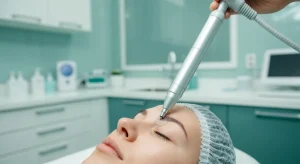
Opting for laser hair removal is an exciting step, but it’s natural to wonder: How many sessions of laser hair removal will it take? Every individual is different depending on various factors- your skin type, hair type, hormonal balance, and genetics. These all contribute to shaping the number of sessions needed to reach your desired outcome. Let’s explore the world of laser hair removal together and understand how these factors determine your individual treatment plan.
Hair phases
The hair growth cycle, consisting of three phases – anagen, catagen, and telogen – significantly influences the effectiveness of laser hair removal and the number of sessions required. These phases occur independently for each hair follicle, resulting in a staggered growth pattern across the treatment area.
Anagen (growth phase)
- Hair actively grows from the follicle.
- This is the optimal phase for laser hair removal treatment.
Catagen (transitional phase)
- The hair follicle shrinks and detaches from the dermal papilla.
- Hair stops growing and is no longer visible from the skin surface.
Telogen (resting phase)
- The hair follicle remains dormant.
- Hair is shed and new hair begins to grow in its place.
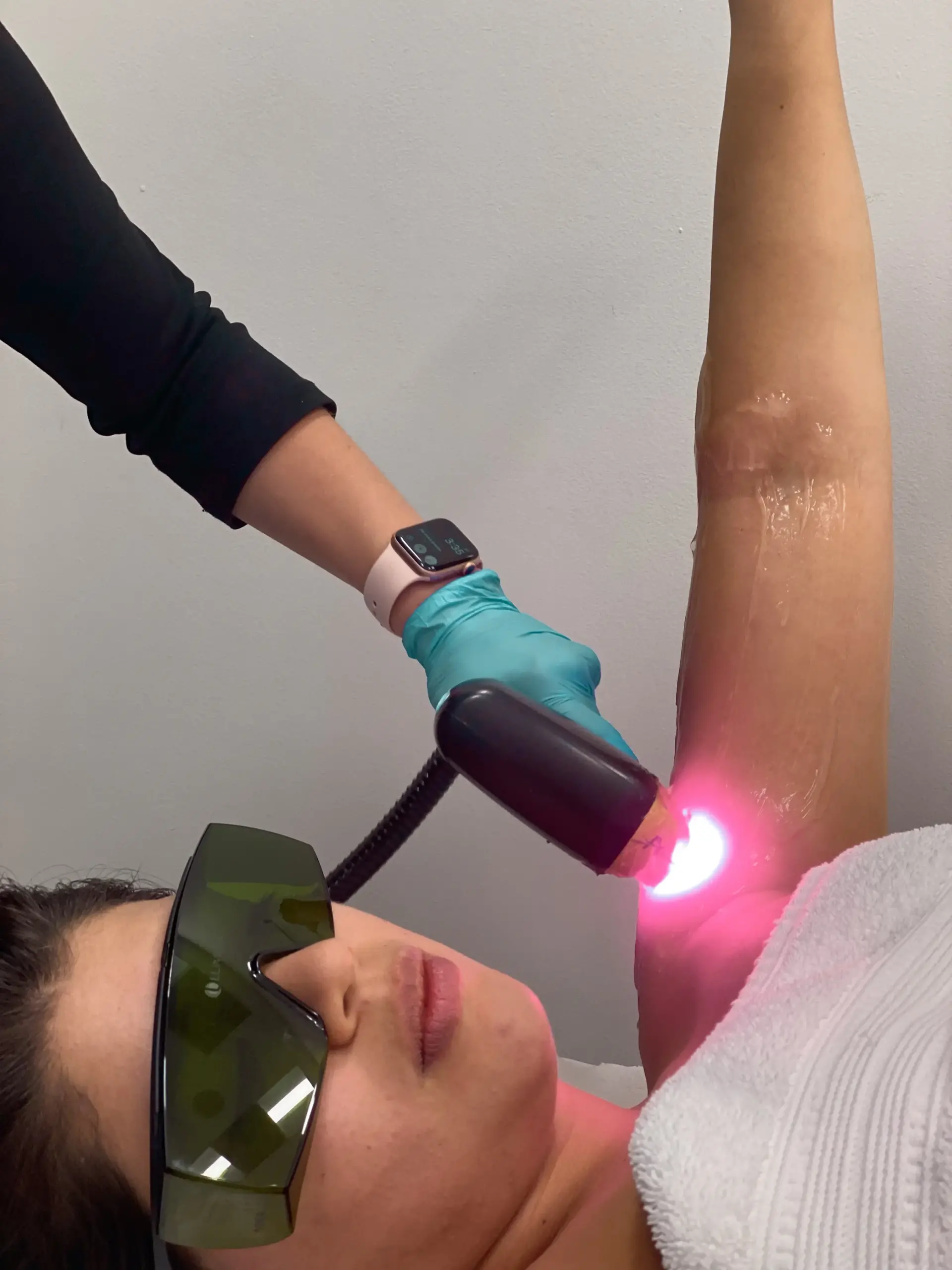
Skin sensitivity
Skin sensitivity can significantly impact the number of laser hair removal sessions needed to achieve desired results. Individuals with sensitive skin may experience more discomfort during laser treatments, leading to the use of lower energy settings or longer intervals between sessions to minimize discomfort and reduce the risk of adverse reactions such as redness or irritation.
Conversely, individuals with less sensitive skin may tolerate higher energy settings or more frequent sessions, allowing for faster and more effective hair reduction.
Hair type
Hair type can significantly influence the number of sessions required for effective laser hair removal. Generally, individuals with darker, coarser hair tend to respond better to treatment compared to those with lighter, finer hair. This is because the laser targets the pigment in the hair follicle, and darker hair absorbs more light energy, resulting in better heat absorption and destruction of the follicle.
People with darker, coarser hair usually need fewer sessions to achieve their desired results, unlike those with lighter, finer hair. Furthermore, the number of sessions needed may increase for individuals with thicker and denser hair to effectively target all follicles. A patient with darker denser hair may need an extended version of 12 sessions than someone with lighter and less hair who may need 9 sessions. Every individual is different.
Hormonal conditions
Hormonal conditions can significantly influence the number of sessions required for laser hair removal. Conditions such as polycystic ovary syndrome (PCOS) or hormonal imbalances can lead to excessive or unwanted hair growth, particularly in areas such as the face, chest, and back. In such cases, individuals may require more frequent sessions and may find that hair regrowth is more stubborn or persistent needing 12 sessions. Hormonal fluctuations can also impact the effectiveness of laser treatments, as hair growth cycles may become irregular or prolonged. Pregnancy or menopause may also exacerbate the growth of your hair. In order to really know how many sessions you may need it’s important to be consulted with a medical provider or laser technician.
External Factors
Minimizing sun exposure, avoiding certain skincare products, and disclosing any medications are important steps in optimizing the effectiveness of laser hair removal and reducing the number of sessions needed to achieve desired results.
Sun Exposure
Sun exposure can increase the risk of adverse reactions such as burns, hyperpigmentation, or blistering during laser treatment. Therefore, it’s essential to avoid sun exposure and use sun protection, such as sunscreen or protective clothing, before and after laser sessions. Sunburned or tanned skin is more sensitive and may require longer intervals between sessions to ensure safety and prevent complications.
Retinoids/Acids
Similarly, certain skincare products containing ingredients like retinoids or acids can increase skin sensitivity and make it more prone to adverse reactions during laser treatment. It’s essential to inform your laser technician about any skincare products you’re using, as they may recommend discontinuing or adjusting your skincare routine before and after laser sessions to minimize the risk of side effects.
Medications
Some medications, such as antibiotics or photosensitizing drugs, can make the skin more sensitive to light and may affect the outcome of laser hair removal. It’s crucial to disclose any medications you’re taking to your laser technician to ensure safe and effective treatment.
Consistency
Consistency is key when it comes to laser hair removal and can significantly impact the number of sessions needed to achieve desired results. Regular, consistent treatment sessions are essential for effectively targeting hair follicles in their active growth phase. Gaps or missed sessions can disrupt the treatment schedule and prolong the overall duration of the treatment process.
Consistent treatment helps to gradually weaken and reduce hair growth over time, leading to more significant and longer-lasting results. Therefore, patients who adhere to a consistent treatment schedule are likely to require fewer sessions overall compared to those who are inconsistent or sporadic with their appointments.

How many sessions of laser hair removal do I need?
In conclusion, achieving smooth, hair-free skin through laser hair removal requires careful consideration of both internal and external factors. Factors such as skin sensitivity, hormonal conditions, hair type, and treatment consistency all influence the number of sessions needed and the effectiveness of the treatment. If you are ready to be hairless, schedule a consultation with one of our experienced medical providers.