Perfect B, Doral Fl. | 12.22.25 | 6 min read.
Quick Look: Our Clinic Verdict on scar eraser cream Claims
People come in asking for a scar eraser cream that erases everything. Our clinic approach is simpler and stricter. We judge claims by scar type, proof quality, and realistic timelines.
It seems there are always new products coming out that make big claims for scarring and pigmentation. While our scar protocols can include certain medical grade products, many scars still require deeper treatments such as microneedling, RF microneedling, or resurfacing lasers to create meaningful texture change.
If the scar is raised or thick, we start with scar type assessment and a clinic plan that may include treatments like Resurfacing Lasers, Morpheus8 RF Microneedling, and biostimulators when appropriate. If it behaves like a keloid, we tell patients when it is time to see a keloid dermatologist.
If the scar is pitted acne scarring, the best treatment for acne scars removal usually includes procedures. A scar eraser cream can support surface comfort, but it rarely remodels depth on its own.
If the main issue is discoloration, we build the routine around scar sunscreen first, because sun exposure can lock in contrast.
Step 1: Identify the Scar Type
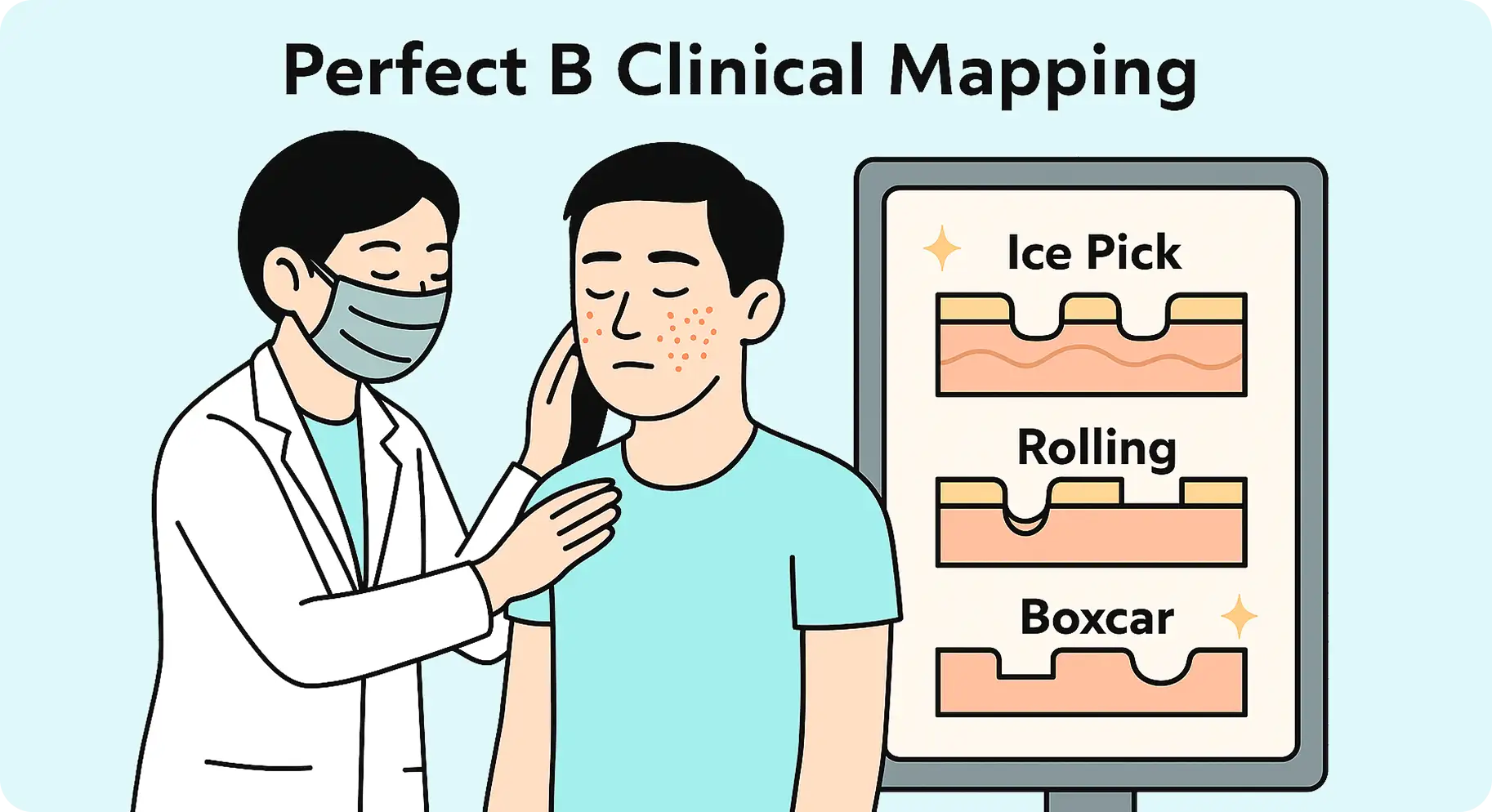
Before choosing any scar eraser cream, we classify what you are treating. This prevents the most common mistake we see, using the right product category for the wrong scar.
A second common problem is how proof is presented. Before and after photos can be useful, but only if they are documented well. We look for dates, the same background, and the same angle so lighting changes do not create a false improvement.
Atrophic acne scars
These are the dents. Icepick, rolling, and boxcar scars. If the scar is truly indented, topicals can improve surface feel and tone, but they usually cannot fully lift the depression. In this group, the best treatment for acne scars removal usually involves collagen remodeling with procedures.
Hypertrophic scars
These scars are raised but stay within the border of the original injury. The at home phase matters most when you begin it at the right time and stay consistent.
Keloid scars
Keloids can grow beyond the original injury. If a raised scar is expanding, itchy, painful, or recurring, it is a good reason to see a keloid dermatologist. In clinic, we use a scar type plan that often combines at home support with escalation when needed.
Color change versus true scar
Many people say scar when they mean post inflammatory color change. In those cases, the routine should prioritize protection and safe pigment support.
Special zone: the nose
A scar on the nose is high visibility and high sun exposure. For a scar eraser cream claim to be meaningful here, it must include consistent scar sunscreen habits, because the nose is where UV related darkening is common.
Step 2: Our Clinic Rubric for Judging Claims
When we evaluate products patients call best scar treatment products, we score five things. This rubric is the center of how we judge any scar eraser cream claim.
- Claim type. Fade pigment, flatten thickness, improve texture, or erase.
- Mechanism. Occlusion and hydration, pigment modulation, or collagen remodeling.
- Scar match. New versus old, raised versus pitted, color only versus texture.
- Evidence quality. Peer reviewed support versus marketing language.
- Timeline and safety. Realistic windows and irritation risk.
We also apply two reality checks.
What we look for when a product claims fast results
When looking at online products, one of the first things we evaluate is how fast they claim to change the skin. Any product promising a fast change within a few uses is usually not accurate. Skin takes time and consistency to change, and scars can take weeks to months to improve, sometimes longer.
How we judge before and after photos
Before and after photos can be helpful, but only when they are documented well. We look for a date, the same background, the same angle, and consistent lighting so the photo does not create an artificial improvement.
How we judge reviews
Reviews and ingredients matter, but the best way to evaluate reviews is through scientifically backed research. Online, many people can be paid to leave a review. We prefer studies, charts, or patient reported outcomes that track progress over months and show gradual, believable change.
First, speed claims. Many scar eraser cream ads rely on speed as the main selling point, but scar change is rarely fast.
Second, proof quality. We prefer data that tracks changes over months and shows consistent measurement. When we bring products into the clinic, we look for evidence that matches how skin actually changes over time.
A practical example is timeline realism. If a product is positioned as a scar eraser cream but promises a dramatic change in days, we treat that claim skeptically. Our benchmark for texture change is what clinic based collagen remodeling can realistically achieve over time with treatments like SkinPen Microneedling, Morpheus8 RF Microneedling, Subcision, and Resurfacing Lasers.
Step 3: What Actually Works at Home
The core treatments we use for scar change
These are the options we recognize openly because they can be tailored to scar type and depth.
- SkinPen Microneedling to stimulate collagen in scarred areas.
- Morpheus8 RF Microneedling to combine microneedling with heat for deeper remodeling.
- Resurfacing Lasers to refine texture and smooth the surface.
- IPL to target pigmentation and vascular redness when appropriate.
- Subcision to release tethered scar bands that pull the skin down.
- Biostimulators to encourage long term collagen rebuilding.
- Radiesse as a biostimulator option when it fits the plan.
- Exosomes as a regenerative support step where appropriate.
- Plasma Therapy using your body’s regenerative properties to support repair.
The value is not one device. The power comes from how we sequence and layer these treatments, something we have refined into a proprietary process at Perfect B.
Sunscreen is scar care
If your scar sees daylight, scar sunscreen is non negotiable. We repeat this in consults because sunscreen is not just cosmetic, it is scar management.
If you are using scar treatment silicone gel but skipping scar sunscreen, you are leaving results on the table, especially for scars on the face.
A simple rule is this. If you want a scar to fade, treat sun protection as part of treatment. Scar sunscreen is also how we protect darker skin tones from prolonged pigment contrast.
Home support that protects results
We still give at home guidance, but we do not present one gel as a universal solution. The non negotiable baseline is scar sunscreen on exposed areas, plus a gentle routine that avoids irritation and picking.
If you are spending money on a scar eraser cream, use our rubric first. Check timeline claims, check photo quality, and remember that meaningful texture change usually comes from in office remodeling.
Step 4: The At Home Limits
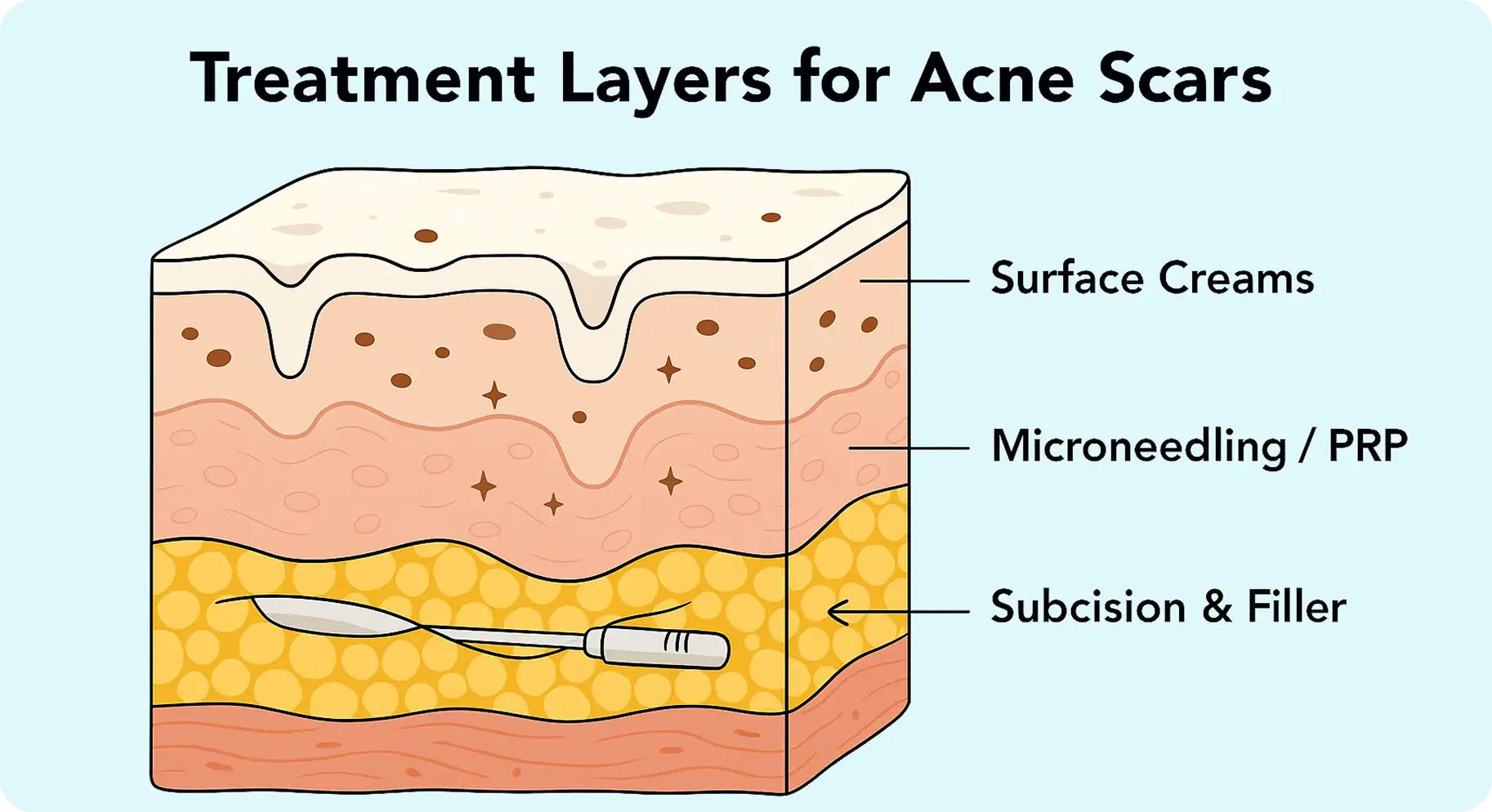
This is the clinic decision flow. Identify scar type, use evidence aligned at home support, then escalate where it makes sense.
Best treatment for acne scars removal
When patients ask for the best treatment for acne scars removal, we plan combinations based on scar type and skin tone. Options include microneedling for collagen induction, RF microneedling for deeper collagen stimulation, resurfacing lasers when appropriate, chemical peels for tone and shallow texture, and targeted techniques for tethered scars.
Most patients still use at home support during this process. We keep scar sunscreen consistent to protect results, and we tailor post care to the procedure and your skin barrier.
Raised scars and keloids
For thick scars, in office options can include injections and energy based treatments. If a lesion behaves like a keloid, we recommend evaluation by a keloid dermatologist, especially if it is expanding beyond the original borders.
At home, we emphasize scar sunscreen for any exposed area and a gentle routine that supports healing between sessions.
Step 5: In Office Escalation Path
This is the clinic decision flow. Identify scar type, use evidence aligned at home support, then escalate where it makes sense.
Best treatment for acne scars removal
When patients ask for the best treatment for acne scars removal, we plan combinations based on scar type and skin tone. Options include microneedling for collagen induction, RF microneedling for deeper collagen stimulation, resurfacing lasers when appropriate, chemical peels for tone and shallow texture, and targeted techniques for tethered scars.
Most patients still use at home support during this process. We commonly pair procedures with scar treatment silicone gel in specific scenarios and we keep scar sunscreen consistent to protect results.
Raised scars and keloids
For thick scars, in office options can include injections and energy based treatments. If a lesion behaves like a keloid, we recommend evaluation by a keloid dermatologist, especially if it is expanding beyond the original borders.
At home, we may still use scar treatment silicone gel for protection and comfort, and we still emphasize scar sunscreen for any exposed area.
Step 6: How We Judge Popular scar eraser cream Categories
Below is our conversion friendly module format. We use it to evaluate a scar eraser cream based on scar type, evidence, and the quality of the proof shown online.
Module A: Clinic based scar remodeling treatments
Claim: Improve texture and visibility over time by remodeling collagen.
Best for: Pitted acne scars, texture change after surgery once healed, and scars that need deeper remodeling.
What we like: These treatments can be personalized to scar type and layered for better outcomes.
How we use it in clinic: We choose from SkinPen Microneedling, Morpheus8 RF Microneedling, Resurfacing Lasers, IPL, Subcision, biostimulators, Radiesse, Exosomes, and Plasma Therapy based on scar type. We reinforce scar sunscreen and track progress with consistent photos.
Module B: Pigment focused routines
Claim: Reduce discoloration.
Best for: Color change more than texture.
Clinic rule: The routine is built around scar sunscreen first, because pigment care without sun protection fails.
Module C: Acne scar routines that promise too much
Claim: One product fixes everything.
Reality: If texture is the main issue, the best treatment for acne scars removal is usually procedural, not a single product.
Module D: Raised scar and keloid claims
Claim: Erase raised scars quickly.
Reality: If the scar behaves like a keloid, evaluation by a keloid dermatologist is often the safer route.
Simple At Home Plan by Scar Type
New surgical scars
If the scar is healing well and the timing is appropriate, we may start with scar treatment silicone gel and daily scar sunscreen if the area is exposed.
Raised scars and keloids
Use a scar type plan and do not rely on trial and error alone. If the scar is expanding, involve a keloid dermatologist early.
Pitted acne scars
Support the barrier and pigmentation at home, but plan procedures for depth. For many patients, the best treatment for acne scars removal is a staged in office plan with strong home consistency.
Prevention and daily care
- Do not pick. Mechanical trauma worsens scarring from pimples.
- Treat early. Retinoids and antimicrobials keep pores clear and shorten inflammation.
- Sun protection. Daily sunscreen limits the contrast between scar and surrounding skin.
- Lifestyle. Sleep, stress control, and smoke avoidance support clearer skin. Build a simple routine that you can follow rather than chasing constant changes.
For product selection, the most helpful routine is often a retinoid at night, vitamin C in the morning, and a gentle acid a couple of nights each week, plus sunscreen. This simple base pairs well with procedures and supports results.
Quick answers to common questions (FAQ)
Q1: Does a scar eraser cream really erase scars?
A scar eraser cream can help with comfort and mild appearance changes, but no single product erases every scar type. We judge the claim by scar type and proof quality.
Q2: When should I consider in office scar treatments instead of a scar eraser cream?
If your scar is indented, tethered, raised, or not improving after consistent care, the next step is usually a scar assessment. Treatments like SkinPen Microneedling, Morpheus8 RF Microneedling, Resurfacing Lasers, IPL, and Subcision can be matched to your scar type and layered over time.
Q3: What is the best treatment for acne scars removal?
The best treatment for acne scars removal depends on whether the scar is indented, tethered, or mostly a color change. Microneedling, RF microneedling, and resurfacing lasers are common options when texture is the issue.
Q4: When should I see a keloid dermatologist?
See a keloid dermatologist if a raised scar grows beyond the original borders, becomes painful or itchy, or keeps recurring.
Q5: Why is scar sunscreen part of treatment?
Scar sunscreen helps prevent darkening and prolonged contrast. We consider scar sunscreen a core part of any plan for visible areas.
Closing: The Clinic Takeaway
A scar eraser cream can be a helpful support tool for the right scar and the right phase, but it is rarely the whole solution when texture change is the goal. The consistent foundation is still basic and repeatable.
We would all love changes to happen quickly and at a low price, but that often leads to losing time and money on things that do not work. In Perfect B, treatments and medically studied products can be an investment, but you should be able to see real change when the plan matches your scar biology and you stay consistent. Identify the scar type, apply scar treatment silicone gel when appropriate, use scar sunscreen daily on exposed areas, and escalate to the best treatment for acne scars removal when procedures are needed. If a raised scar behaves like a keloid, involve a keloid dermatologist sooner rather than later.
📍 Visit us at Perfect B, Doral FL
📞 Call or message us today to schedule your consultation