

Perfect B, Doral Fl. | 02.11.26 | 5 min read.
Introduction: Why Menopause Weight Gain Feels Different
For millions of women, the transition into midlife is marked by a confusing contradiction: you are exercising more, eating less, but the scale is climbing. This is not a failure of character; it is the specific biology of hormonal imbalance weight gain.
Simultaneously, you may be navigating the unpredictable waters of irregular periods and perimenopause, wondering why your body feels like it is fighting against you. For years, the only solution offered was calorie restriction. However, searching for the best peptides for weight loss has become the new norm for women seeking answers, and for good reason.
Leading clinical data now suggests that peptides for fat loss, specifically GLP-1 agonists, are highly effective for this demographic. However, the application matters. If you are experiencing the onset of irregular periods and perimenopause, your metabolic baseline is different from a 20-year-old’s. A generic prescription often fails because it does not address the underlying hormonal imbalance weight gain driving the issue.
This article explores why integrating peptides therapy with regenerative medicine is the safest clinical path forward.
What Are Peptides for Fat Loss, and How Do They Work?

To understand the solution, we must define the mechanism. When patients ask us about the best peptides for weight loss, they are usually referring to GLP-1 agonists like Semaglutide or Tirzepatide. Technically, these are FDA-approved peptides for fat loss that mimic natural hormones produced in the gut.
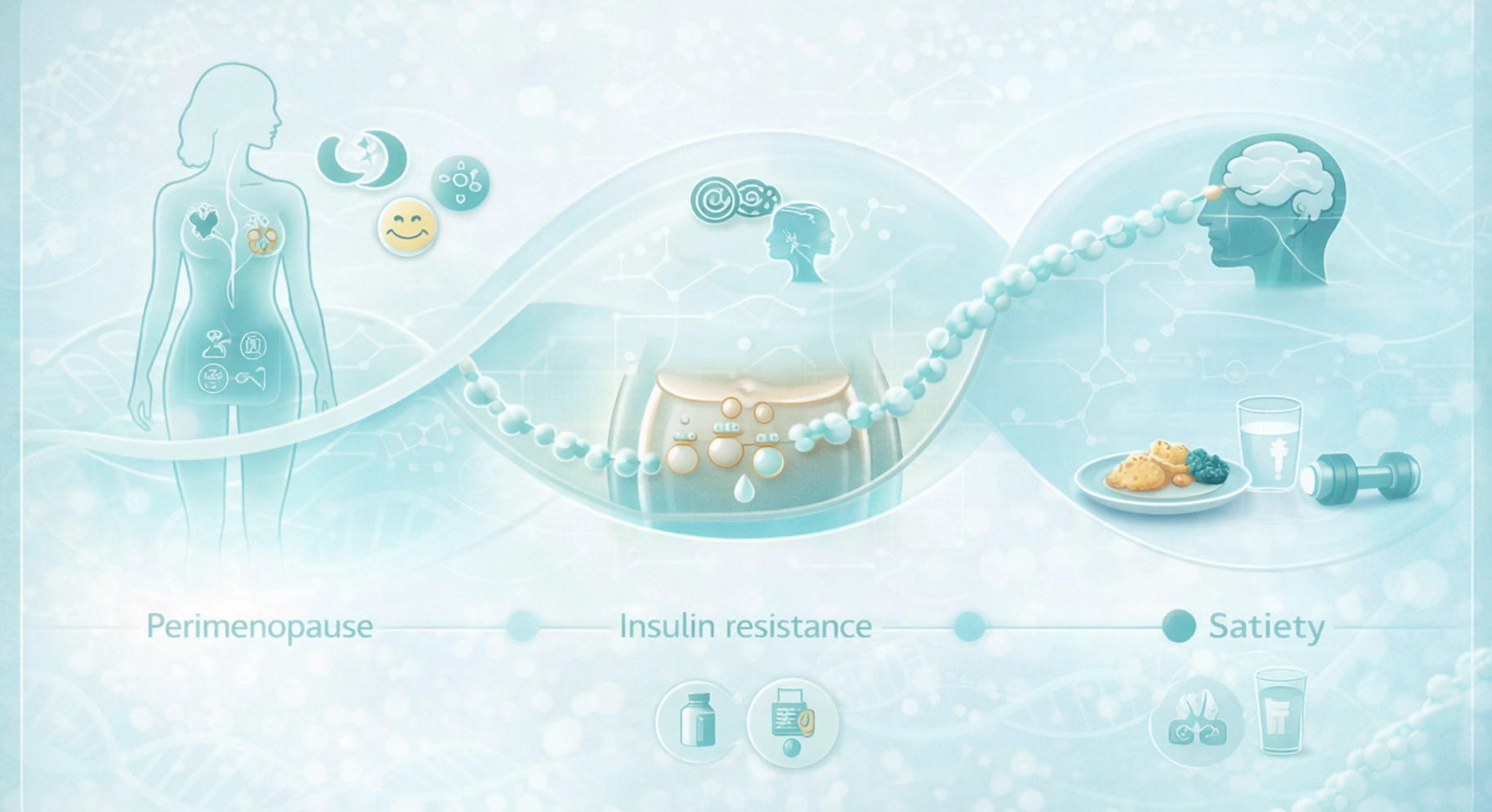
Unlike oral peptides for weight loss often sold unregulated online, clinical peptides therapy is designed to correct insulin signaling. During menopause, estrogen declines, causing insulin resistance to spike. This is why peptides for losing weight work so well, they don’t just suppress appetite; they fix the broken metabolic signal.
However, caution is required. When browsing for the best peptides for weight loss, you will encounter many options. True peptides therapy is not a transactional purchase; it is a medical intervention. These agents slow gastric emptying and target the brain’s satiety centers, allowing patients to adhere to the high-protein diet required to reverse weight loss hormone imbalance.
Is This Just ‘Second Puberty in Women’? The Hormonal Connection
Many professionals often refers to perimenopause as second puberty in women. The comparison is apt. Just as puberty creates a chaotic storm of hormonal shifts, the phase of irregular periods and perimenopause creates metabolic chaos.
You may experience night sweats before period onset, detriment (define as physical/emotional strain), or irregular cycles perimenopause causes. But the most distressing symptom is usually the accumulation of visceral fat, the hard belly fat that wraps around internal organs. This is the hallmark of hormonal imbalance weight gain.
Decoding the Cycle Chaos
Your cycle is your “vital sign.” Before the weight sets in, your body warns you through irregular periods and perimenopause:
The End Stage: As you see signs perimenopause is ending, such as a period late perimenopause scenario, the protection of estrogen vanishes, making peptides for fat loss a vital tool for preventing long-term obesity.
Cycle Frequency: You might find your menstruation late for 2 days or experience a 2 weeks late menstruation, causing panic about perimenopause or pregnancy.
Flow Intensity: Many women report heavy periods in perimenopause followed by perimenopause bleeding for 3 weeks.
The “Silent” Cycles: You might ask, “why am i not ovulating but having periods?” This results in a period without ovulation signs, where no egg is released, but progesterone is low, fueling hormonal imbalance weight gain.
The Safety Gap: Why ‘Generic’ Prescriptions Fail
While the best peptides for weight loss are effective, obtaining them from a generic telehealth company poses risks. Without the oversight included in proper peptides therapy, menopausal women are vulnerable.
The RAND Corporation notes that unsupervised rapid weight loss can accelerate muscle loss (sarcopenia). If you utilize peptides for fat loss without monitoring muscle mass, you risk frailty. Furthermore, symptoms like spotting in perimenopause or perimenopause and spotting between periods can be exacerbated by rapid fat loss, as estrogen is stored in fat cells.
A generic provider might ignore spotting perimenopause issues or fail to identify if you are battling irregular periods and perimenopause simultaneously. A specialized clinic understands that these aren’t just “side effects”; they are signs that your peptides therapy needs adjustment.
Our Clinical Protocol: The “Regenerative” Approach
Our differential value lies in the “Dual” approach. Many wonder how hormonal weight loss treatment differs We do not believe in finding the best peptides for weight loss and using them in isolation. We believe in regeneration therapy. What is the meaning of regenerative care? It means using a peptide weight loss treatment that fixes the environment of the body.
Our “Dual Therapy” tackles hormonal imbalance weight gain by combining:
- Precision Peptides Therapy: We titrate peptides for fat loss slowly. This “micro-dosing” approach reduces nausea and protects muscle mass.
- Hormone Optimization: You cannot rely on a hormone balancing weight loss supplement from a shelf. We suggest a complementary approach using clinical data to complement the use of estrogen to lose weight (improving insulin sensitivity) and correct the irregular menstruation menopause transition causes.
- Comprehensive Monitoring: We watch for signs of end of perimenopause, track perimenopause and irregular periods, and ensure issues like irregular periods and menopause symptoms are managed.
This is the difference between a fat burner peptide and a complementary regenerative medicine approach for weight loss medical strategy.
FAQs: Navigating Peptides and Menopause
Q1: What are actually the best peptides for weight loss?
A: While there is marketing hype around many compounds, FDA-approved GLP-1 agonists (Semaglutide/Tirzepatide) are currently the best peptides for weight loss clinically. We often consider Tirzepatide the best fat burning peptide because it hits two receptors. However, efficacy depends on whether you are also treating the hormonal imbalance weight gain.
Q2: Can peptides help if I have irregular periods and perimenopause symptoms?
A: Yes. In fact, peptides therapy often improves metabolic flexibility which can help regulate cycles. However, because weight loss releases hormones, you might experience period during perimenopause changes or irregular periods and perimenopause flair-ups initially.
Q3: Is peptides therapy safe if I have spotting?
A: Spotting in perimenopause is common. While peptides to lose weight don’t directly cause bleeding, the metabolic shift can. We differentiate between benign perimenopause spotting between periods and other issues.
Q4: Do you use peptides for fat loss alone?
A: No. We believe peptides for fat loss work best when paired with hormone optimization. Estrogen weight loss strategies and treating irregular periods and perimenopause ensure you keep the weight off.
Q5: Are peptides to lose weight effective for hormone-related weight gain?
A: Yes, especially when hormone imbalance is part of the problem. Hormone-related weight gain isn’t just about calories, it’s about miscommunication between the brain, fat tissue, and metabolism. Peptides can help restore that communication. They’re not magic, but when paired with proper nutrition, sleep, and hormone evaluation, they often make fat loss feel possible again instead of frustrating.
Q6: How are irregular periods and perimenopause linked to weight gain?
A: Irregular periods are one of the earliest signs that estrogen and progesterone are fluctuating. And the truth is, those fluctuations affect far more than the menstrual cycle. They influence insulin response, cortisol levels, and how efficiently your body uses energy. The result? Easier fat gain,especially around the abdomen,and slower fat loss, even if your habits haven’t changed.
Q7: How does hormonal imbalance weight gain occur in menopause?
As estrogen declines, the body becomes more insulin-resistant and less efficient at burning fat. Muscle mass may decrease, metabolism slows, and fat storage shifts toward the midsection. In addition, cortisol often rises, quietly encouraging fat retention. So the weight gain isn’t a lack of discipline, it’s a biological shift that requires a different strategy.
Q8: How does hormonal weight loss treatment differ from GLP-1 therapy?
Hormonal weight-loss treatment focuses on correcting the underlying imbalance, estrogen, progesterone, thyroid, cortisol, or growth hormone pathways. GLP-1 therapy, on the other hand, primarily works by reducing appetite, slowing gastric emptying, and improving insulin response. One addresses the root hormonal terrain; the other powerfully controls intake and glucose regulation. In many patients, they can be complementary rather than competing approaches.
A New Chapter in Women’s Health
You do not have to accept hormonal imbalance weight gain as permanent. The science has evolved. By utilizing the best peptides for weight loss under strict peptides therapy supervision, you can reverse metabolic aging.
Whether you are struggling with irregular periods and perimenopause, noticing peptides for losing weight on social media, or dealing with irregular cycles perimenopause brings, our clinic offers a safe harbor. We treat the whole woman, ensuring that losing weight with hormonal imbalance becomes a reality, not just a hope.
Ready to optimize your health?
Ready to stop guessing? Book a consultation today to start your personalized Weight Loss Treatment Plan combining hormones and peptides.